A few friends and I have been carrying on the same open conversation for a few months now about what makes art. It is a very important question for a bunch of students at Peabody, where I am studying vocal performance. To be frank, the thing we’re discussing at this point isn’t simply “What makes art?” We dance around that question as we talk about the things that are happening in our lives, like lessons, concerts, competitions, rehearsals and even practice sessions, but our conversation always comes back to art, its purpose and our place as artists.
It's so easy to get caught up in building skills as musicians. Skills are, of course, incredibly important. How could you bring a crowd to tears with a Chopin Ballade if you can’t play the piano like your fingers belong to the keys? But skills alone also can’t move a crowd to tears. No matter how fast the runs at the end of a death aria are, if you don’t sing them with grief and desperation, there’s no point in singing them at all. The audience basically just watched you put a puzzle together. It's satisfying but impersonal.
It's easier to focus on skills. You can rack up the hours spent in a practice room drilling difficult passages, and it's a safe way to perform. I often find myself wishing that the audience could just listen to the time I’ve put in rather than the music I’m making, but that’s not really art. Art is about creating an experience. Art is made when the artist opens themself up to the audience and lays themself bare. With all kinds of art, not just music, you can step into someone else’s shoes and see yourself more clearly.
Art is made by people. It's made by young people like my classmates and I who are still learning how to coax the sounds we want out of our instruments. Desperate people like Tchaikovsky as he wrote his final symphony, a suicide note to the world buried in beautiful orchestration. People in love like Robert Schumann as he fell in love with Clara Schumann, and the audiences who felt when they heard this music that all of it was written for them. Yes, it is the hours spent before an audition trying and failing to master the fingerings for the notorious Don Juan string excerpts, but art is a fuzzy imitation of life like Plato disdainfully stated in The Republic and at the same time it is full of personal and universal truth. It is the part of the world we don’t have the words for, and it is an endless, hopeless, beautiful battle for perfection.
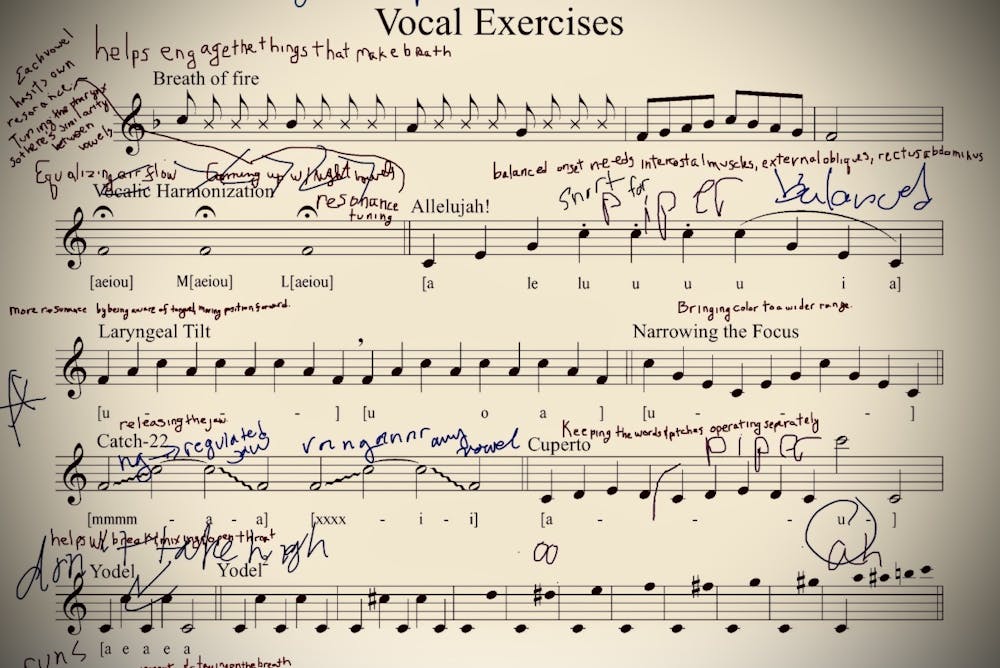
For the past semester my teacher and I have been working to alter my technique so that I can achieve stronger, more consistent sound with more control. In my case, this means that my posture, the way I use my jaw, the way I draw breath and even how much air I let leak through my nose when I sing all have to be tweaked and changed. For a while, I spent my time in the practice room in various positions to help me be more aware of my body, with my thumbs on my back molars to raise my soft palate and two fingers plugging my nose to prevent air from leaking through. I still do different versions of this in the beginning of a session to remind myself of what it is I need to pay attention to, but lately I have been spending more time with the text I am singing and the notes I have been given so that I can figure out the story the composer was trying to tell and how that story relates to me. I’ve learned that those skills we can drill forever actually come easier when they serve an emotional purpose. The more time I spend with the emotions of a piece, the freer my sound becomes and the easier it is to make accurate and beautiful music. Now I approach practicing less as a musician and more as a person, and I am becoming a better artist because of it. Art is what happens when hard work brings the artist and their audience together to glimpse something meaningful about human experience.
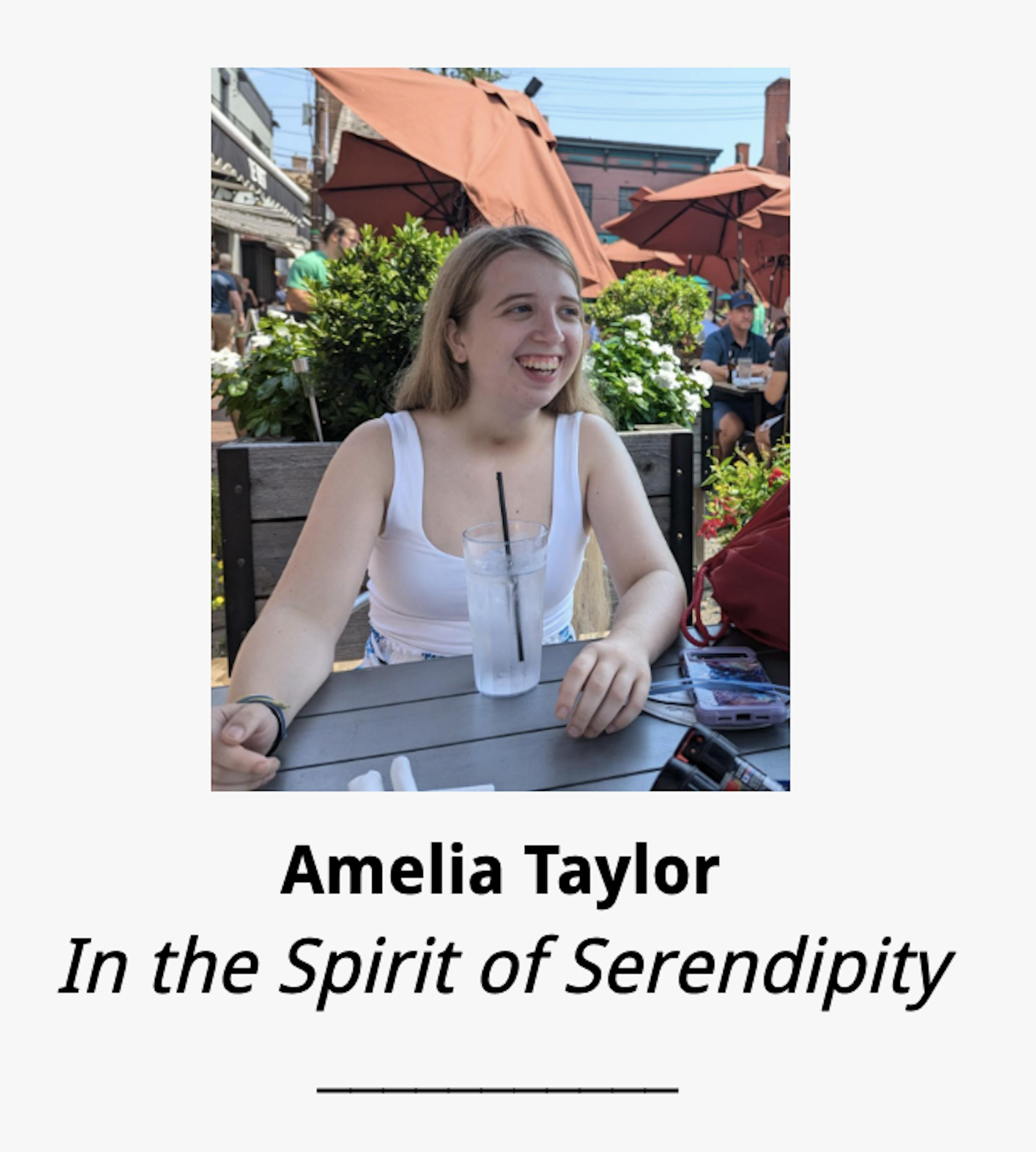
Amelia Taylor is a sophomore from Potomac, Md. studying Writing Seminars and Voice Performance. In her column, she draws insights from seemingly random experiences that present themselves in the course of ordinary life.