The 2026 Women’s National Basketball Association (WNBA) draft was filled with unpredictability. Unlike the prior 2 years where the first pick was practically set in stone (Paige Bueckers in 2025 and Caitlin Clark in 2024), this year was different. This year’s class brought in much talent, but not one unanimous first pick. ESPN predicted Olivia Miles going first, followed by Azzi Fudd and Awa Fam; CBS had Azzi Fudd going first, while other outlets predicted Awa Fam as the first pick of the draft.
The 2026 draft was notable, not just because of the incoming talent on the court, but because of the off the court stars destined to redefine the future of the WNBA.
The first pick of the draft went to the Dallas Wings, who had selected Bueckers last year. Because of this, many were thinking they would choose someone who suits Bueckers’ playing style. At 6 ft tall, she is a high IQ, elite passer with incredible ball-handling skills and high shooting percentages. The Wings had the choice of a center, such as Awa Fam to maximize their interior presence, or a guard, like Olivia Miles or Azzi Fudd, to help push the pace of the game and contribute offensively. Notably, Fudd and Bueckers were not only former teammates in their college careers, but also recently publicly announced their relationship. This drama added an additional layer of on court chemistry and attention to the duo.
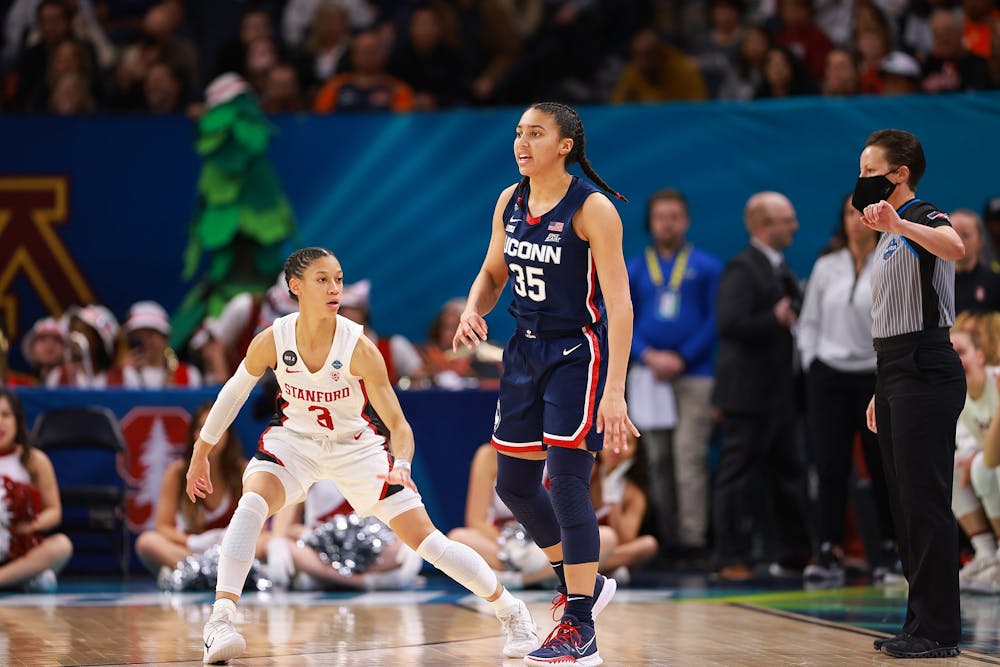
Accordingly, the Dallas Wings selected Azzi Fudd, the University of Connecticut (UConn) guard, as the first pick. Fudd was ranked #2 overall, scoring 17.3 points per game (ppg) with extraordinary efficiency (48.1 FG%, 44.1 FG3%, and 95.5 FT%). Next went #1 ranked Olivia Miles, contributing about 20 ppg, 7.2 rpg, and 6.6 apg. With the third pick, the Seattle Storm selected 19 year old Awa Fam from Spain. She is a 6 ft 4 center who played in the Euroleague. Other notable draftees included #4 pick Lauren Betts, standing 6 ft 7 from University of California, Los Angeles (UCLA). Betts was voted the most outstanding player of the National Collegiate Athletic Association tournament, averaging 17.1 ppg and 9 rpg. Another player who made incredible noise surrounding the draft was Flau’jae Johnson from Louisiana State University (LSU), known for her on the court flashiness and off the court music career. She was drafted #8 to the Storm.
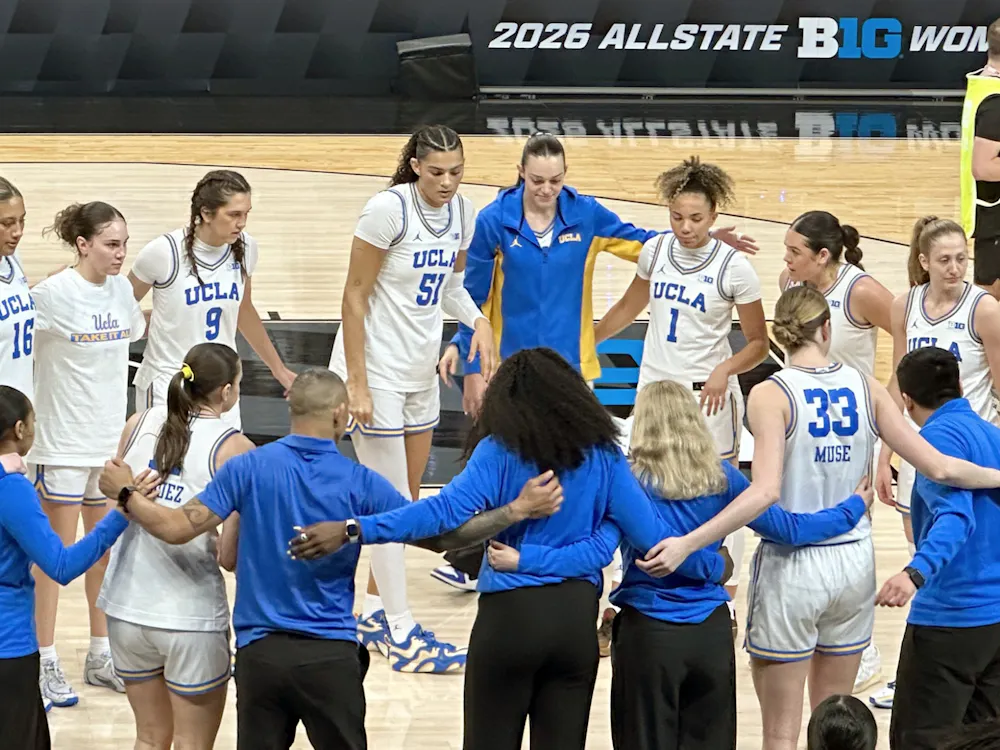
This draft was characterized by shattering records. It was the second most watched draft in history, peaking at 1.8 million viewers and averaging 1.5 million. The draft was dominated by the UCLA Bruins, who saw six players get drafted, five in the first round. This was the third straight year a LSU player has been drafted in the first round, and the second consecutive year a UConn player has been the #1 draft pick. The University of South Carolina had three players selected overall and one first rounder.
This year, there were many surprises in the draft. First, the name, image and likeness had a greater impact on the draft than ever before. One player, Caroline Ducharme, averaged 7 minutes per game last year and under 2 ppg, but was unexpectedly signed by the Golden State Valkyries after the draft took place (and has later been waived). Since the dominance of A’ja Wilson, less centers have been drafted this year, as well.
This draft unfolded under a new historic collective bargaining agreement (CBA) that reshaped the financial landscape of the WNBA. Fudd, the #1 overall pick, is expected to earn approximately $500,000 in her first season, a significant jump from the prior years’ first pick salary of $75,000. Other terms of this new CBA deal included a meaningful revenue sharing, obtaining 20% of gross revenue. Salaries also have exponentially grown, ranging from a minimum of $270,000 to $1.4 million, with each team's cap at $7 million (compared to $1.5 million in 2025). While this is still not at the level of men’s income, this is a massive step in the right direction. Other improvements include codified charter travel, health and wellness prioritization, and family first prioritizations regarding maternity leave; instead of having to play overseas in the off season and leave their families for financial needs, they can likely stay in the States throughout the season. The new CBA made rookies major investments, rather than tradable assets–teams definitely viewed the draft differently when building rosters.
As the newest players prepare for the big leagues, the impact of the 2026 draft extends far beyond draft night. With new rising stars, a novel CBA deal and unprecedented visibility, the WNBA is seeing a pivotal shift in how players are viewed and treated. As these rookies step into larger roles and brighter spotlights, they are not only shaping their own careers but also contributing to a league that is becoming more competitive, more marketable and more influential to a broader audience.