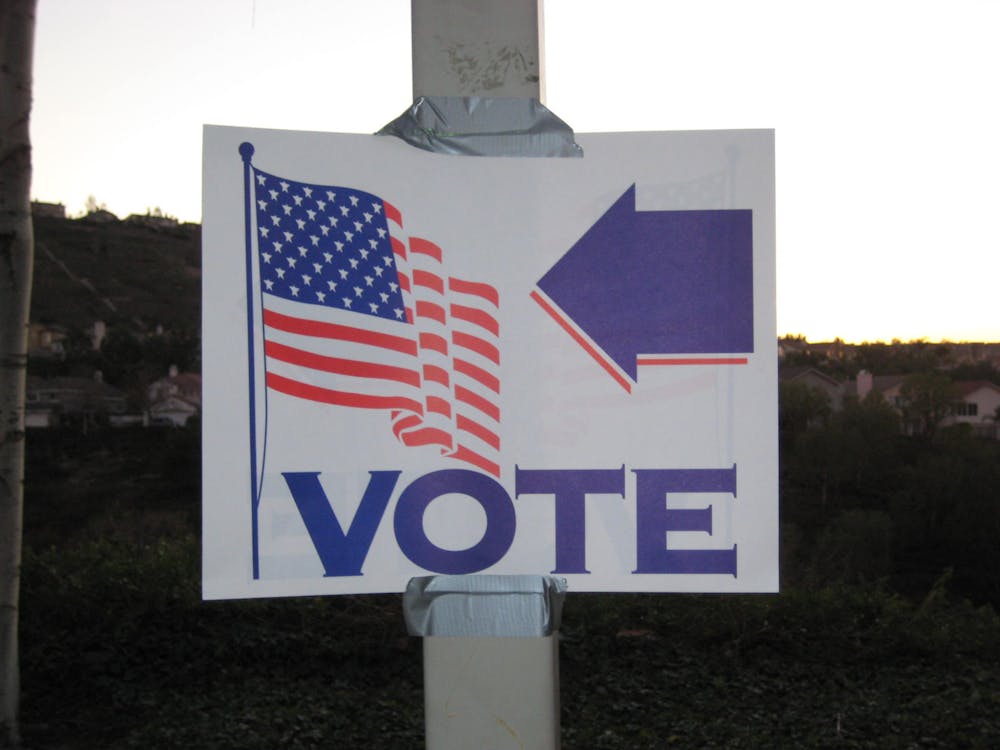
Even though the midterm elections are still more than six months away, many candidates have been campaigning for several months already. This long, dragged-out election season is in large part due to a peculiarity in our system — the primary election.
The primary is the election before the election, in which voters choose which candidates their party should nominate. Most have heard about our presidential primaries, but there are also primaries for Congress and statewide offices as well. Across the country, they are held anywhere from March all the way to September, with each state setting its own timeline.
Primary elections were first widely introduced during the Progressive Era with the intent of strengthening popular democracy. At their best, primaries are used by voters to make a statement or throw an unpopular incumbent out of office. At their worst, however, primaries can be exploited by bad actors to maximize chaos. For instance, it has become increasingly common in recent years for a party to run ads to boost controversial or divisive candidates of the opposite party in the primaries, since a more extreme candidate is much easier for their own candidate to campaign against.
However, the problems with our primaries today run far deeper than just dirty politics. Chronic low turnout and widespread disengagement with primaries by an apathetic electorate have allowed primaries to be controlled by a slice of voters who are politically and demographically unrepresentative of our nation as a whole.
The data shows that around two-thirds of Americans will turn out for high-profile elections like presidential elections, but a large chunk of the electorate disappears when midterms roll around and the presidency is not on the ballot — around half of registered voters cast a ballot in the most recent midterms. Turnout for primary elections is lower still, with nearly 80% of eligible voters skipping the primaries in 2022.
There are many reasons why voters tend to underestimate the stakes of primaries. Some might not realize that they are even eligible to vote in primaries. In fact, in most states, you are not required to be registered with a political party in order to cast a ballot in its primary. Many simply don’t see how the stakes of primary elections are high enough to be worth the effort and cost of showing up to vote. However, primaries play a significant role in determining who ultimately gets elected to office, and disengagement has already created real problems for our democracy.
When most of the population chooses to skip voting in primaries, those who do end up casting a ballot tend to be more motivated and politically engaged than the average voter and naturally the most ideologically polarized. As a result, instead of appealing to all of their constituents as they should, aspiring officeholders trying to get past the hurdle of the primary must tailor their message and platforms toward the highly engaged party base. Come November, we are often left with candidates from each party who were handpicked by voters far more progressive or more conservative than the median.
Consequently, primaries have also become a tool of the most ideologically hardline elements of each party to bend officeholders to their will. In the Trump era, the threat of a tough primary challenge has proved to be an effective way to hold Republican legislators in line, silencing open dissent. Similarly, progressive Democrats apply purity tests to legislators with moderate voting records, even in more conservative districts or states where progressive positions would be deeply unpopular in a general election. This has troubling implications for the independence of officeholders, whose job should be to represent their constituents, not their party base.
In districts or states with heavy partisan leanings, there’s an even simpler reason why primaries are so important. Since general elections are rarely competitive, winning the primary is usually tantamount to victory in November, making the primaries where the ultimate winner ends up being decided. Due to partisan gerrymandering, safe seats for one party are only becoming more and more common across the country. In fact, the vast majority of districts across the country are not considered competitive at all in the general election due to their heavy partisan lean. Primaries are increasingly the place where the critical political battles are being fought.
Primary elections are often where the real choices are made, and right now, our elected officials are being chosen and pressured by a small slice of the electorate, unrepresentative of the political values and priorities of the average voter. Voting in a primary is essential to our democracy, and it is not difficult. Don’t cede this power to others. Show up and make your voice heard.
Conner Feng is a sophomore from San Diego, Calif. majoring in Public Health and Moral and Political Economy.