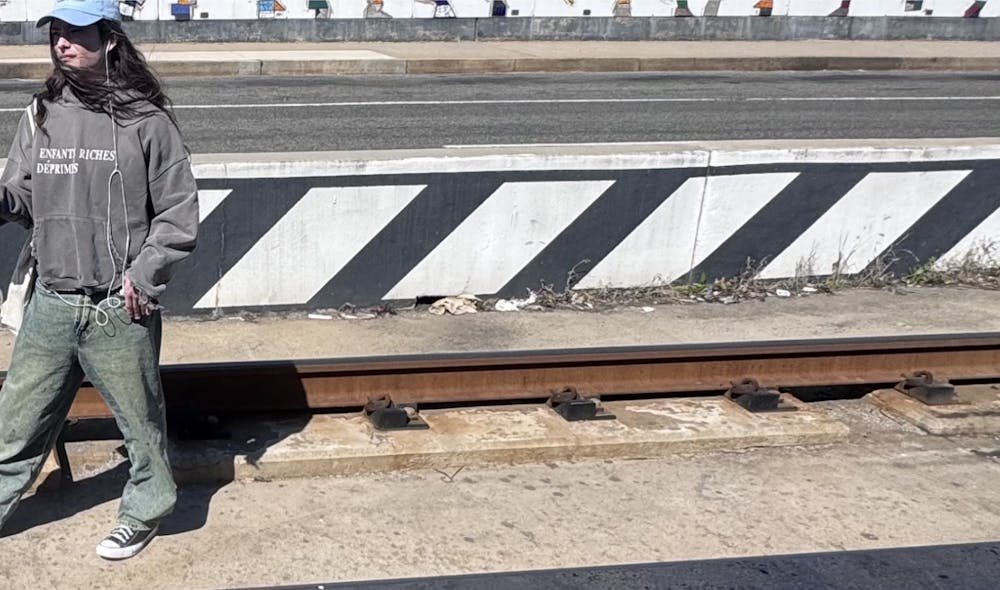
Washington D.C’s streetcar service, aptly named the DC Streetcar, officially shut down on Tuesday, March 31st. Starting service in 2016, the sole line ran along H Street in the capital’s northeastern quadrant, from Union Station to Oklahoma Avenue.
Streetcars, also known as trolleys or trams, were a popular method of transportation across North America that involved smaller trains running along street-level tracks. Before the advent of the car, streetcars were a staple of the American city. Washington, D.C., was home to a vast network of streetcars that transported city dwellers across the D.C. area. However, once buses proved to be a cheaper, more efficient option, streetcar tracks in the capital and across the country were ripped up to make way for them, leaving only a few surviving systems. Streetcars were all but sentenced to become a relic until 2001, when the country’s first modern streetcar line opened in Portland, Oregon. Portland’s system runs on newly built tracks, using modern vehicles and served as the inspiration for many other midsize American cities to reconstruct their own streetcar networks, including Seattle, Atlanta and Washington, D.C.
It’s safe to say the D.C. Streetcar was set up to fail from the beginning. In 2002, the city envisioned plans for a robust eight-line streetcar network, but ultimately only ended up building a partial segment of one of the lines, barring a line in the Anacostia neighborhood that began but never finished construction. The line boasted a connection with Union Station, the primary hub for commuter trains. Yet, as I personally found out during a visit on Sunday, March 28, the streetcar stop was remarkably difficult to find, requiring a confusing trek through the station’s parking garage. Once I was actually able to find the stop, I was informed that, as the line was winding down its operations, Sunday service had been canceled. But its shoddy connection with Union Station was far from the only criticism of the DC Streetcar. It was slow, ridership was lackluster and, despite running along the street because the trains were fixed to tracks, they weren’t able to maneuver through traffic in the same way a bus could. These factors, combined with the fact that the city’s much faster D20 bus ran along the exact same route as the streetcar, led to the line’s inevitable underutilization.
The low ridership can be blamed on the District of Columbia Department of Transportation and its refusal to construct the entire streetcar system. But the slow speeds and inability to move around stopped cars were, unfortunately, a feature, not a flaw, when it comes to streetcars as a whole. I’ll note here that I am not arguing in favor of the efficiency of streetcars. They are simply not efficient. They have to be slow for safety reasons. They are not built to withstand the capacity of a metro system, so it makes sense that they have such comparatively low ridership. The DC Streetcar, objectively, was a poorly thought-out rendition of an inefficient mode of transit, but that doesn’t mean it should have been shut down.
Instead, my argument in favor of streetcars deals with aesthetics. For lack of a better word, streetcars bring a certain level of chic to a city. While buses are undoubtedly more efficient, they’re not considered as sophisticated as rail transit. Streetcars simultaneously represent both modern urbanism and a time before car dependency, an attractive idea to residents and urban planners alike. Sure, streetcars are slow, they’re expensive and may not seem worth it, but especially when systems have already been built, it rarely makes sense to abandon them.
To see an example of this, we have to travel north of the border. Toronto was one of the only cities in North America that elected not to do away with its historic streetcar system. Despite initially planning to end their service by 1980, they eventually chose to modernize the system instead. The city’s streetcars often draw ire from Torontonians for many of the same reasons that the DC Streetcar was criticized. They’re slow and often subject to delay, especially during harsh Canadian winters. City officials have even mentioned phasing them out as recently as 2014. But the city’s iconic red streetcars have since developed a sort of cultural cachet, becoming representative of Toronto itself in a way a bus never could.
A similar example is New Orleans, home to the longest continuously operating streetcar line in the world. Unlike the many modern streetcar networks that popped up in the 2010s, including the DC Streetcar, New Orleans’ system operates as a heritage streetcar system, meaning that they operate older, more ornate trains. Heritage streetcar networks are actually somewhat common in the States, but many of them, like San Francisco’s cable cars, operate more like tourist attractions than effective public transportation. However, in New Orleans, many locals actually use the system (though it still receives its fair share of critiques). Despite worries about unreliable schedules, the historic network counts almost four times as many riders as the DC Streetcar and, like in Toronto, has become a spectacle of the city’s downtown.
The DC Streetcar never got the chance to materialize into a symbol of the city like in Toronto or New Orleans. Some proposed streetcars, like the Charles Street Trolley running from the Homewood campus all the way to the Inner Harbor, never got to materialize at all. It’s worth mentioning that Washington D.C. also has a robust metro system to rely on, so I’ll concede that the city didn’t lose much after the service’s termination. But officials cited operating costs as the reason why the DC Streetcar was discontinued, so it seems plausible that this closure will act as some sort of domino effect, encouraging other, less successful networks to shutter as well. This prospect is even graver for cities like Milwaukee and Oklahoma City, which report even fewer annual riders on their systems than the DC Streetcar did and whose streetcars are the cities’ only form of rail transit whatsoever. These tracks are already laid across the country, so perhaps we ought to bear the cost, financially and efficiency-wise, if we want to continue the cosmopolitan project.
Henry Serringer is a freshman from New York, N.Y. majoring in Writing Seminars.