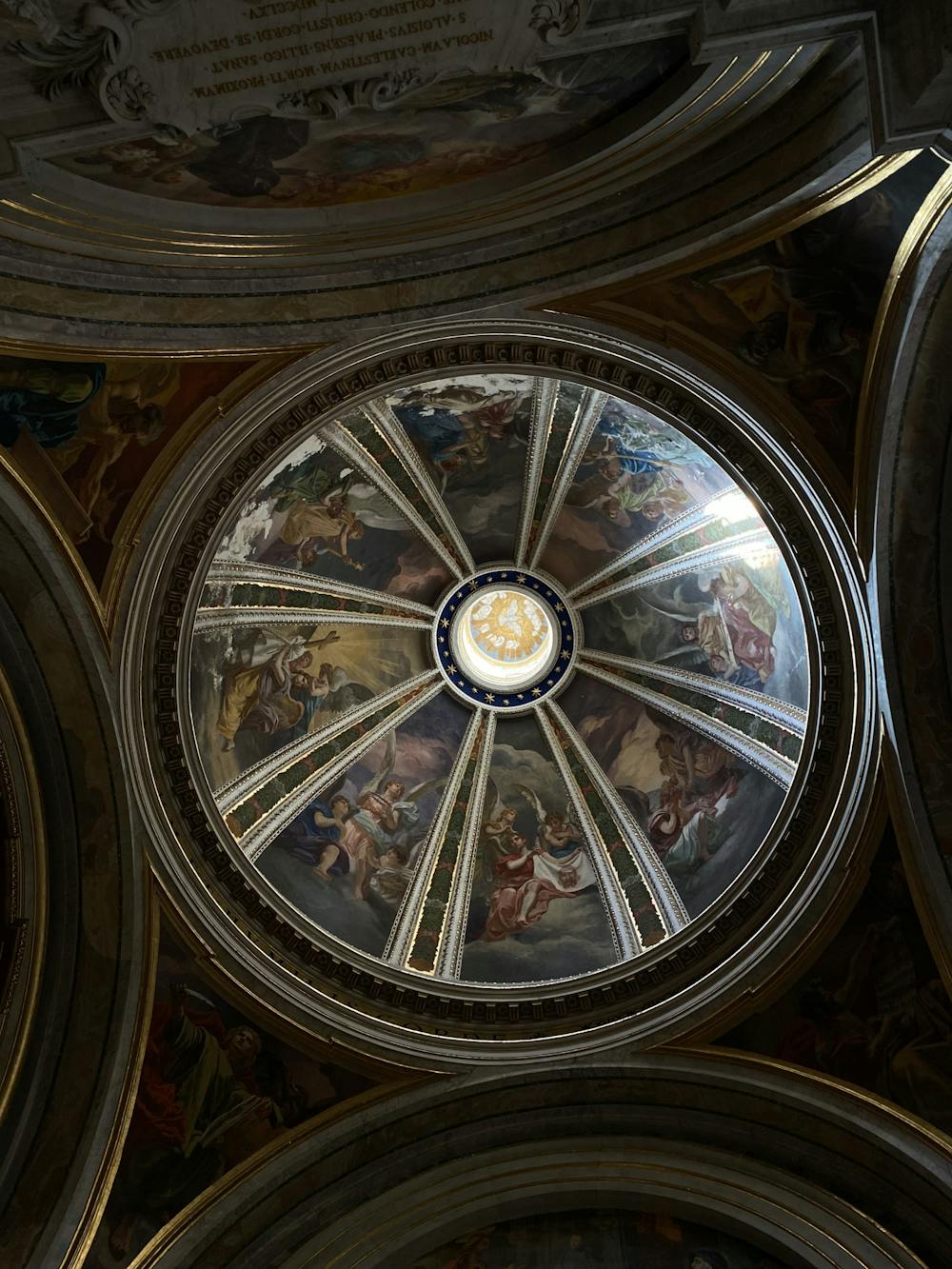
This Easter, I went back to church. Sitting in a side pew with my roommate, bumping into unexpected friends in the basement and trading candlelight with smiling strangers had me thinking about faith.
I, perhaps misguidedly, viewed faith as a swerve away from reason for much of my Catholic upbringing. Rather than exploring an unknown, faith seemed like a call to accept not-knowing with open arms. As a child whose favorite word was “why,” I wanted more. When “Why does the earth spin?” and “Why can’t I run out in the rain?” were questions that deserved answers, it became infuriating to hit a standstill at the heaviest hitters: Why do we exist? What defines moral good? To relinquish this questioning on the basis that stopping was an act of dignity and belief seemed, to me, like giving up.
This time around, I found myself less skeptical. Listening to the priest’s sermon, I didn’t catch myself fighting the same mental tug-of-war, the same tailspin of endless “why”s. And this, I think, is linked directly to the fact that I’ve had more reason as of late to believe in what I don’t know.
The weekend before the last day of class, I left town with one of my closest friends to run off to a literary ball in New York with the pipe dream of seeing one of my favorite writers in person. I’d unintentionally missed the senior send-off celebrations for several communities that I hold close to my heart, something I wouldn’t have done had I known the way things were lining up. But, weeks out, seeing the opportunity to hear from a writer I so admired, someone I never thought I would possibly share space with, was something I knew I couldn’t pass up.
Even a month out, I had an inkling this weekend would be important for other reasons, that there’d surely be a reason to stay in town, but after a week of tossing and turning, I decided that I couldn’t miss it. I realized, too, that I believed enough in the communities I was leaving behind to trust that they’d still be around when I came back. That train from Baltimore to Brooklyn was my most recent leap of faith.
A couple weeks ago, my roommate asked that I help her with a pitch for her entrepreneurship course since I was a speaker coach at TEDx, which I found very silly. Still, I helped with what I could. The following day was terrible — one of those laughably bad coffee-on-your-favorite-jeans, elevator-closes-right-before-you-get-there, car-honks-at-you-jaywalking bad days. I came home, morale in the dumps, to my roommate saying her pitch went excellently, which made me so very happy. After another hilariously bad time, a great friend said they met another friend of mine and an acquaintance who both said kind things about me. What’s more, this all happened in the middle of the woods. What odd timing. What odd luck.
When in doubt, I have historically been the impossible breed of human that assumes the worst. If I hear an ambiguous response, I assume I am despised. If I leave a task for the next day, I declare myself incapable of succeeding at anything. I am fraught at trusting in the good, which is why I’ve been compelling myself to view optimism as an act of faith.
If someone can be saying something nice about me as I stumble over a cobbled campus path, if my friend can succeed with something that I played even a tiny role in as I wait on an island in the middle of the street, eating my hair, underdressed on a frigid day, perhaps good can be a thing that happens outside our field of vision on even the worst days. Maybe good can be a little like heaven: believe strongly enough and you’re halfway there.
With graduation upon me, my fear-mongering self has had more and more reason to take over, but rather than appeal to reason as I have in the past, I’ve taken to an argument of faith. Reasons for doubt may be abundant, but if I am certain in good, however blindly, however uncertainly, there is little else my fear can say. And I’ve been lucky enough to have abundant reason to believe. My time at Hopkins has been better — warmer, kinder, gentler — than I could have hoped because of this same unlikely good. If not the good of the world or life, then the good of people.
I’ve been privileged enough to move from an underclassman looking to her upperclassman mentors to filling their shoes. And I’ve realized it does little good to doubt in good. Any time I’ve caught myself feeling less certain, I’ve caught, too, the trickle effects of my own uncertainty into those I hold to the highest esteem. So, I’ve decided that there will be no more room for it. If it takes faith to believe in the good, then consider me, if a late convert, a willing believer.
In my freshman year, I named this column “White Noise” to symbolize the everyday blur that I found myself constantly parsing through for meaning, for something to hold onto. Now, rather than searching for something external from which I might derive meaning, I’m starting to find that it might be worthwhile to work in the reverse, too. To place an equal amount of energy in believing that there is meaning, even as I continue to search the world for signs of it. To have faith, belief in the unseen, in honor of the good that has come by me — and in the good still to come.
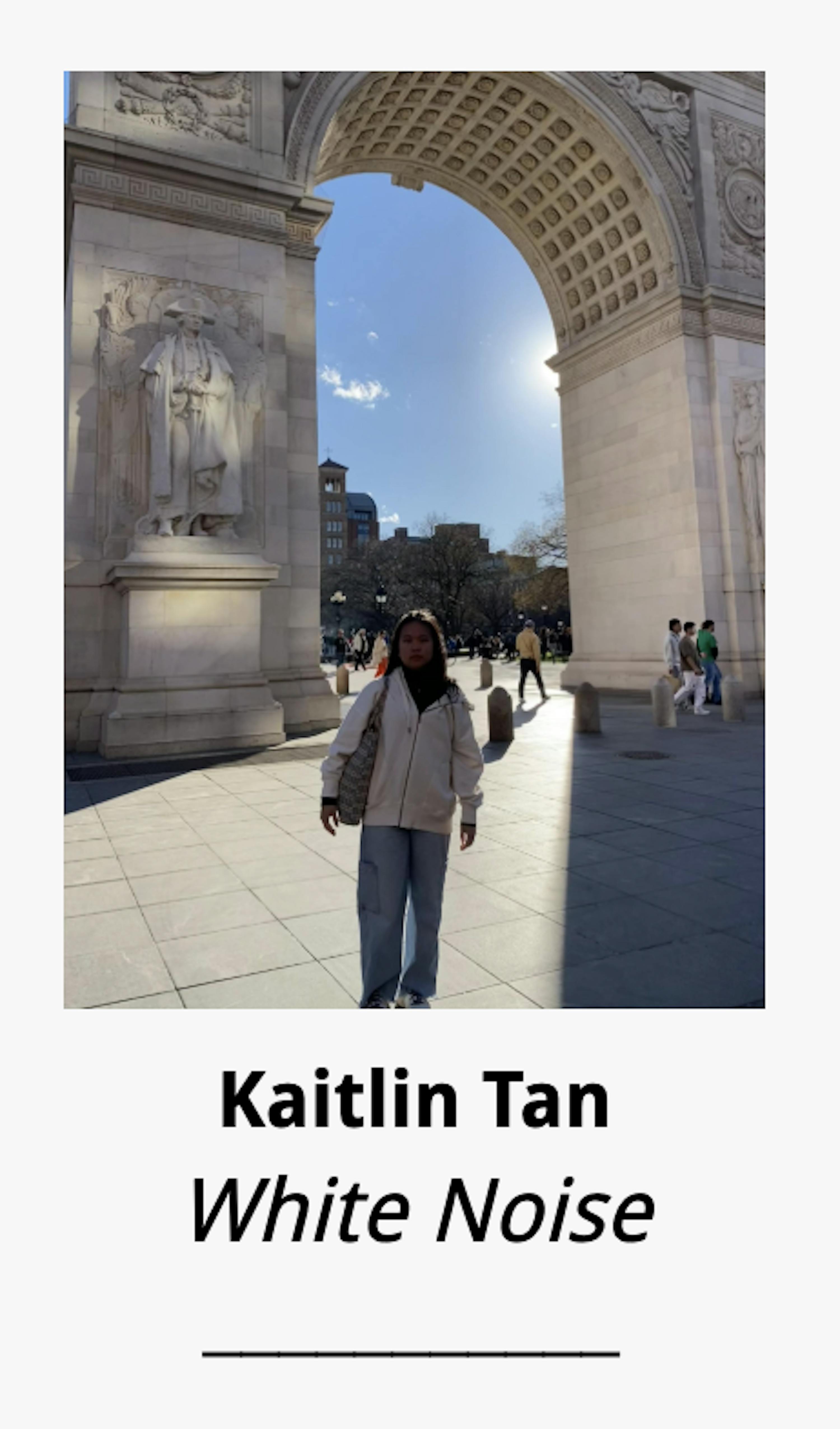
Kaitlin Tan is a senior from Manila, Philippines, majoring in Writing Seminars and Cognitive Science. She is the Voices Editor for The News-Letter. In her column, she tries to parse through the everyday static for something to hold onto.