I learned about traditional herbal medicine during the last year of my enrollment in Chinese school. I remembered feeling that most subjects covered in class were historically distant, like memorizing Confucian proverbs that more often doubled as tongue twisters, or reciting ancient poems contained in their perfect, rectangular stanzas. But herbal medicine felt important to become attuned to, as I had already begun to see a strange resurgence of such methods in contemporary culture, where shifting away from traditional Western medicine and toward Eastern “healing practices” had become popular. There appeared to be an appeal to using simple tools, such as stones, teas or cupping treatments, to achieve healthier complexions and detoxify the body. More notably, these means were rendered an enigma to the masses, making Eastern medicine compelling, while discourse grew questioning its empirical validity.
In general terms, traditional medicine uses a holistic approach to treat ill individuals, prioritizing assessing the composition of one’s energy and restoring its balance. To an extent, this kind of medical philosophy places the human body in a position of mystery. But unlike in Western medicine, where the treatment is a therapeutic approach targeted to relieve the burden of a defined symptom, Eastern medicine acknowledges the uncertainty of the body’s condition as a truth. Holding this truth and probing for treatment are not mutually exclusive.
And although there are growing fields of respectable research setting out to pin down the exact biological mechanisms and chemical reactions that make traditional medicine effective toward combatting disease, I am more interested in a different kind of question: whether it is possible to amend the current attitudes and state of pharmaceutics.
I’ve found the most important tenet of herbal medicine is its reinforcement of the connection between humans and the earth. Human energies are divided into basic elements, like fire, metal and air. And although these determinations may seem archaic, they offer up a framework for understanding the body as embedded within the natural world, rather than isolated from it. There is merit in treatment that focuses on the longevity and sustainability of an individual’s health and their health practices, especially as dominating viewpoints diminish Eastern medicine as largely pseudoscience.
I can pull forward my memory and experience of waiting, legs crossed firmly atop the colorful cotton floor mats, for my magical elixir each evening. Its contents were extraordinarily bitter, an amber cup that I could fill with my own tears if I raised a fuss, but I would gulp down the liquid determinately, reaching for the sugar crystals that would accumulate at the bottom.
Even amid that stinging taste, I remembered my lift of admiration reading the tale of one of the most renowned herbalists, Shennong, who was famously fabled to test the efficacy of herbs on himself, risking his own health to record information that would be later passed down in his The Divine Farmer’s Materia Medica.
To me, herbal medicine was always about oral history, about knowledge of the terrain that gave rise to numerous crops that could be helpful to humans if they were collected carefully and considerately. These plants were not simply prescribed, but rather inherited. This relationship, I believe, is most sacred and special. I also think of how there had been a surge of “barefoot doctors” a few decades before my birth, and that these people were often individuals with little schooling who would administer basic health services to rural communities that lacked robust health care systems. From a health policy perspective, it was a hugely successful effort that used a ground-up approach to care.
Although I ultimately have no definitive answer to my original query, maybe it is worth it to implement a return of medicine that is born from communities themselves, tailored to their customs and invested in their well-being for the long, long term.
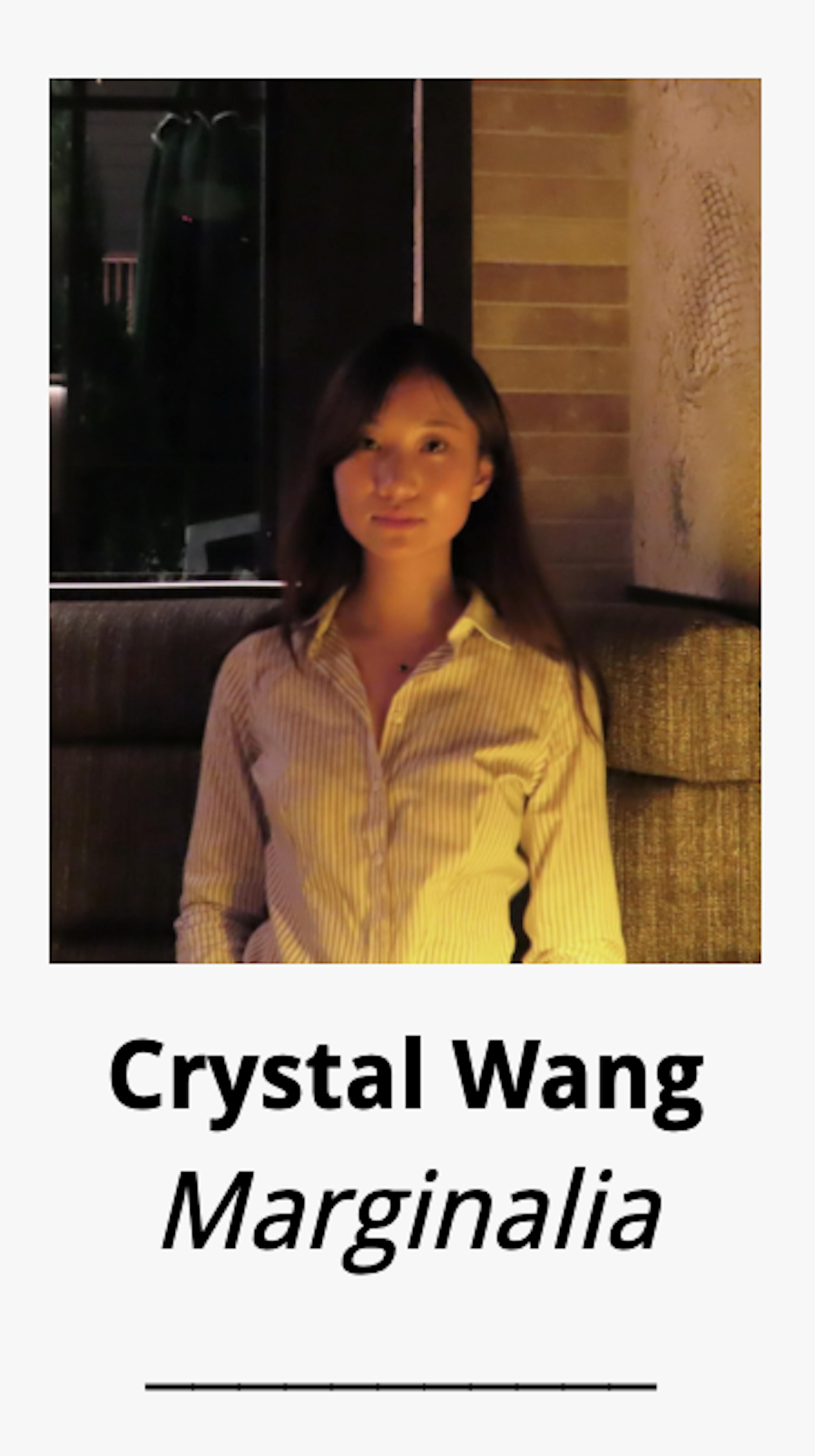
Crystal Wang is a sophomore from Baltimore, Md., studying Molecular and Cellular Biology and Writing Seminars. Her column pairs miscellaneous observations and ruminations on the past in hopes of capturing life occurring in the periphery.