
In chemical engineering, we are taught the technique of process optimization. Simply put, any process — like making the adhesive for the dinosaur sticker on my laptop — can be analyzed and broken down to the various inputs, outputs and parameters involved. These variables can then be systematically adjusted to find some combination that produces the best result. Given a set of parameters, you can always carefully tune the knobs you are given to find an optimum.
Perhaps I have always been too much of an engineer because even before college, I have always viewed life as a series of processes for optimization. For every scenario, I believed there was some combination of perfect conditions I could find that would propel me to the optimal outcome.
Yet too often, this mindset froze me in place. It left me waiting for the perfect time to start writing that book, the “right” time to ask that girl out to maximize her chances of saying yes. I was mesmerized by the elusive ideal scenario that seemed to dance just out of reach, tantalizingly attainable.
The truth is, I was completely overestimating my ability to shape outcomes.
I’ve been thinking a lot about author Oliver Burkeman’s discussions of human “finitude” lately. Burkeman uses this term to remind readers that humans are finite — and extremely so. As he explains, there is astoundingly little we are logistically capable of accomplishing and experiencing within our very limited lifetimes. Moreover, we are so often shaped by our uncontrollable circumstances, cast off from birth into a raging river that pushes and pulls us along a path courtesy of where we happen to be dropped into it. This doesn’t mean we are incapable of swimming, but simply that our agency is more limited than we realize amid the forces at play.
While the tunable knobs presented to me offered an appealing comfort through a sense of control, this false sense of agency is an illusion manifested by my anxiety, by a desperate desire for predictability and control. Like the unplugged controller an older brother hands you to make you feel like you are doing something, it is little more than a placebo. The harsh reality is that I am not in control — at least not completely.
A part of this compulsive optimization comes from hindsight of past scenarios that did not go my way. Just a few adjustments, I think, and I could’ve totally shifted the outcome. But viewed more frankly, this delusion of control is evident through this lens as well.
Would going to bed earlier have made my audition sound a little better? Maybe. Would a better hair day and a straighter tie on the day of my interview have gotten me that internship? Entirely possible. But more likely than not, while these would have done something to help, the magnitude of their effect is probably not significant. While they are easy fixes and simple scapegoats, they most likely were not the straw that broke the camel’s back.
This may sound bleak, but on the contrary, I think it is freeing to realize how little I can actually control. It shows me that I need not obsess over ensuring all the details are perfect, or lose faith when a detail doesn’t go my way. It means that that pimple isn’t going to ruin the date. It means that, hard as I try, I’m not going to be able to perfectly curate my personality and my words to charm everyone into loving me. So why bother trying? I can simply be myself and what will happen will happen regardless.
And when you realize the scope of what you can’t influence, it highlights the things you can, allowing you to devote more time to them, rather than fruitlessly fretting over factors you can’t possibly impact.
The truth is, even in chemical engineering, process optimization is not as clean-cut as we like to characterize it. As my professors remind us constantly, even the best models and calculations are based on some assumptions and some idealized conditions. In practice, even engineers don’t have as precise control over their processes as they would like to believe.
So while trying to explain this to my boss at my future engineering job instead of completing the process optimization like I was asked may get me fired, until then, it is a lovely mantra to remind myself to focus on the right details.
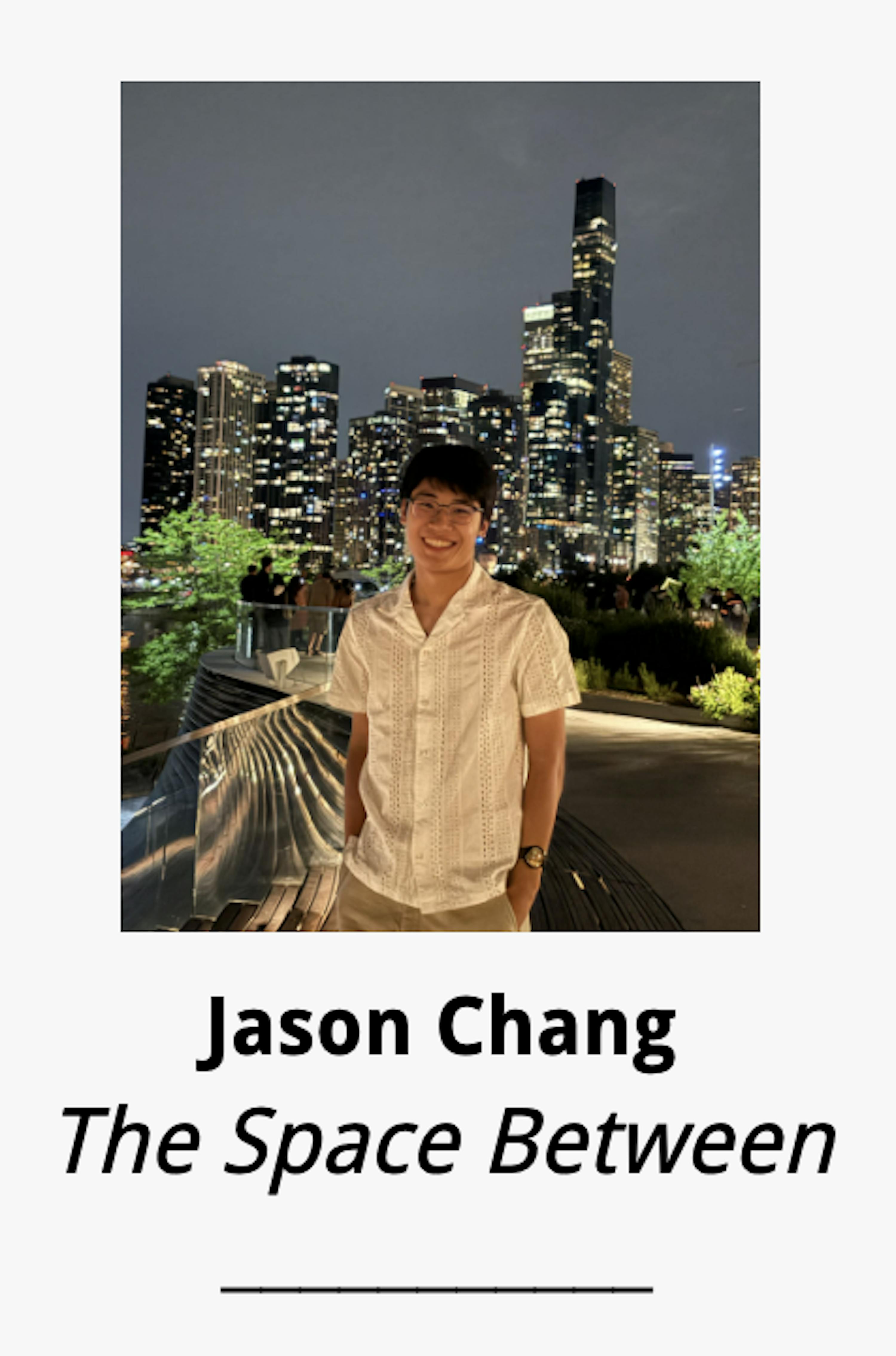
Jason Chang is a graduate student from Woodbury, Minn. studying Chemical and Biomolecular Engineering. His column is a celebration of the quiet moments that linger amid the jumble of our busy lives: moments of stillness, reflection and a space to just exist.