Take some time to catch up on the latest scientific news from around the world.
Induced pluripotent stem cell research hits its 20-year anniversary
Shinya Yamanaka, winner of the 2012 Nobel Prize in Physiology or Medicine, recently published a reflection on the two decades that have passed since his discovery of induced pluripotent stem cells (iPSCs). The piece started with a brief personal account of the discovery of the Yamanaka factors (Oct4, Sox2, Klf4 and c-Myc), transcription factors that have the ability to reprogram differentiated somatic cells into pluripotent stem cells. iPSCs have been used to study early human development and have removed the need to harvest pluripotent stem cells from embryos, a process with many ethical and technical considerations. Yamanaka also noted the development of iPSC-based regenerative therapies, especially one using iPSC-derived corneal epithelial cells to treat blindness. More broadly, Yamanaka predicted a gradual unity of the fields of stem cell, computational, synthetic and translational biology in the next two decades, which would expand the applications of iPSCs to the industrial scale.
President Trump announces new science and technology advisors
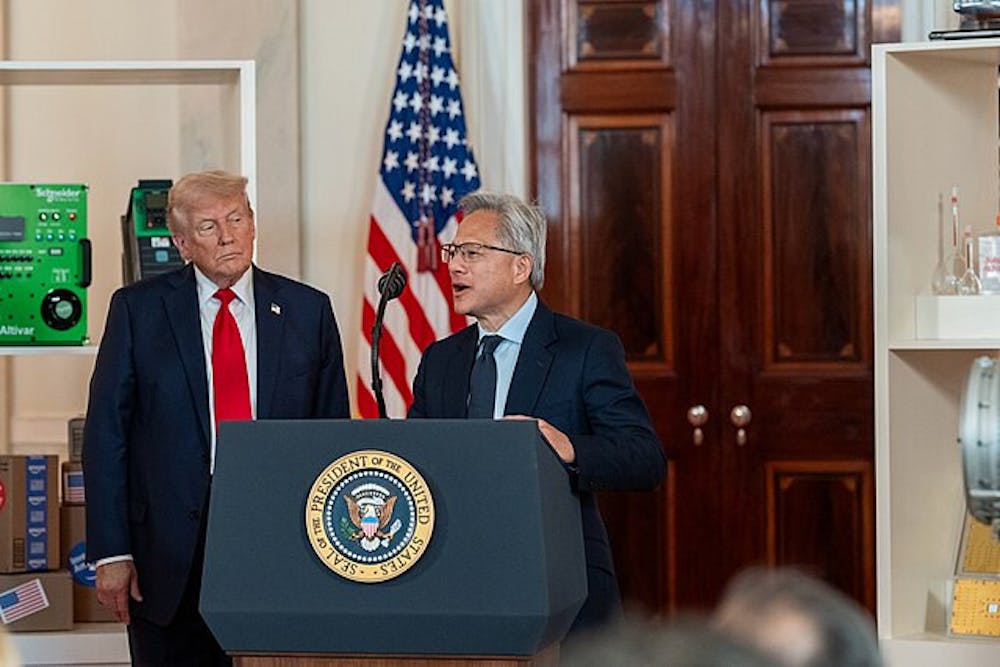
President Trump recently announced the President’s Council of Advisors on Science and Technology (PCAST), a council that has been appointed by the president since Franklin D. Roosevelt first formed it in 1933. The newly formed council, containing 13 members, is mostly made up of high-profile technology figures like Mark Zuckerberg (CEO of Meta), Jensen Huang (CEO of Nvidia) and Lisa Su (CEO of AMD). The members of the council have a combined net worth exceeding $900 billion. The only academic scientist on the list is John Martinis, a professor at the University of California, Santa Barbara who won the 2025 Nobel Prize in Physics for finding that quantum tunneling can be observed on a macroscopic scale. The makeup of the council differs significantly from that of Trump’s first term, which was made up of 7 academic scientists and 6 industry executives. This shift, with a notable absence of biologists, likely reflects the administration’s focus on AI and quantum information science.
Social media companies sued for addictive content
A Los Angeles jury recently awarded $6 million to a woman who sued Meta and YouTube (Google) over her childhood social media addiction. Jurors declared that the tech companies intentionally acted maliciously in order to create addictive platforms that target children with features like infinite scroll and autoplay. The decision came a day after a New Mexico court requested Meta to pay $375 million for endangering children. Along with these two high-profile cases, there are also thousands of related lawsuits moving through courts in the United States, signaling growing public discontent towards social media companies.