In early spring, advertisements for dating apps start appearing everywhere. They promise efficiency. Compatibility percentages. Personality models. They reassure you that somewhere inside a black-box algorithm, someone has already calculated who could love you best.
The language is strangely mathematical. People become variables, including preferences, hobbies, locations and physical appearance. The system processes these inputs and produces a result: a person who best statistically fits you.
Love, apparently, can now be optimized?
I don’t mean this cynically. In many ways, the idea could be comforting. The world has billions of people, and the possibilities can feel overwhelming. It makes sense that we turn to machines to narrow the search, the same way we ask navigation apps like Google Maps to guide us through unfamiliar cities.
Instead of relying on coincidence, we can rely on calculation. Most of us are busy with our own lives, worsening the current loneliness epidemic. Yet we crave connection. If an algorithm can help us find someone compatible, what could be the harm?
Yet something about this approach fascinates me because it reveals how much we want life to behave predictably.
Optimization can be a comforting concept. We optimize our routes to class, our morning habits and sometimes even our sleep schedules (which many of us still need to work on). We search for the most efficient ways to accomplish tasks. When a system promises to optimize love, which is probably one of the most complex parts of life, it suggests that the uncertainties surrounding relationships might finally be reduced.
That the messy, stressful parts can be organized into neat probabilities. But, when I think about the relationships that matter most to people, I wonder if they always follow that kind of logic. Many begin in situations that appear almost random: a conversation that lasts longer than expected, a shared moment grows into familiarity, a chance encounter slowly becomes something more meaningful. Even the strongest relationships don’t emerge fully formed. They need time, circumstance and countless small interactions.
I’m not sure an algorithm can fully anticipate that process.
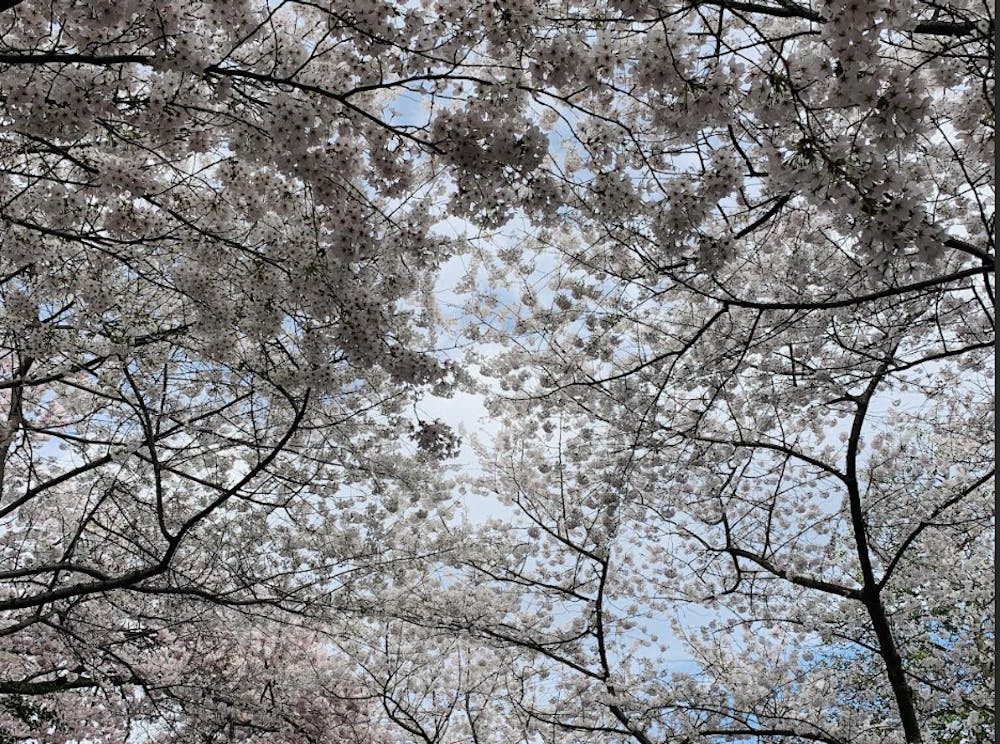
In the coming weeks, winter will loosen its grip. The trees will start to produce small buds that weren’t visible only days before. It happens quietly, not even noticeable at first, until suddenly entire branches seem alive with new growth. It’s a process that doesn’t follow a precise schedule. A few warm days can accelerate it. A later frost can delay it. The timing varies every year. And yet, trees and flowers bloom with the return of insects and croaking of frogs anyway. I even saw a cockroach roaming around Maryland Hall a few days ago in the first week of March.
Watching this unfold reminds me that meaningful processes don’t always follow optimized timelines. Instead, they respond to their environment. Conditions change, and living things adjust accordingly.
Relationships often seem to work the same way.
Two people might appear perfectly compatible according to a list of traits, but they might still struggle to connect. Others may share very little on paper and still build something long-lasting together. The success of a relationship depends on more than just initial alignment. I think it depends on how two people grow alongside one another over time.
I believe that kind of development cannot be calculated in advance. But that doesn’t mean technology has no place in modern relationships. Dating apps can introduce two people who might never have crossed paths otherwise.
Maybe the algorithm is only another beginning to this complex process, where two people meeting through an AI matchmaking app is the coincidence itself.
What happens after these two people meet still belongs to the unpredictable rhythms of human life: those conversations that drift late into the night, small disagreements, ordinary moments like running errands together. None of that can be optimized.
If anything, those moments exist precisely because life refuses to behave like a perfectly tuned system. Even physics reminds us of this: The second law of thermodynamics tells us, in simple terms, that the universe tends towards disorder. Chaos is not an error in the system but rather a part of how the system works.
As winter fades and the first signs of spring begin, it becomes clear that growth doesn’t need to follow the neat paths we design. It can develop in ways that are uneven and occasionally surprising.
Love and relationships may follow a similar pattern. An algorithm can help two people cross paths, but the meaning of that encounter emerges from everything that happens afterward, the shared time, the small choices and the ways the two lives begin to intertwine.
In the end, love probably isn’t something meant to be solved.
Kathryn Jung is a freshman from Silver Spring, MD, majoring in Biomedical Engineering. Her column reflects the process of creating and how the small things we make, notice and hold close bring meaning to everyday life.