
Yesterday I took the MBTI test again for the first time in eight months: ISTJ-T. I didn’t think much of the four letters themselves — I’ve seen them enough times by now. What caught my attention was the last letter, a subtle change from A (assertive) to T (turbulent). It made me stop and think about when I became more worried and prone to overthinking, not because I believe in a personality test like it’s my Roman Empire, but because some of the prompts in the test do reflect my current feelings toward my own stage of growth. For context, assertive people are usually calm and self-assured, while turbulent people tend to be more anxious and self-critical.
Lately, I’ve noticed that much of my mood is tied to external validation. What I look forward to most days isn’t necessarily rest after all my classes, hanging out with friends or even small forms of comfort. It’s the possibility of opening my Gmail or Outlook and seeing the word “congratulations.” An interview… An acceptance… Even just a results notification. Some sort of sign from the universe — or a selection committee — that I’m doing things right. It’s embarrassing to admit how much power a subject line can have over my day. A rejection can sting for an hour or two, and then I move on to the next thing to chase after. On the surface, this looks like resilience, but sometimes it feels more like I’m just hopping from one potential source of validation to another, trying not to sit still long enough to feel the emptiness in between.
I’ve been asking myself a lot of questions because of this. Am I not mature enough to be secure about my abilities? Am I not working hard enough or working in the wrong direction? None of these questions have clear answers. I know that facing these undesired results over and over isn’t a bad thing at all. In some ways, it has made me less fragile. But it also feels like I’m avoiding processing my emotions and feelings by jumping into a new resume edit or application page. It feels unhealthy — like I’m constantly trying to prove myself to a ghost, and I’m never fully satisfied with who I am without some validation on paper to back it up.
When I was in China this past summer for a summer camp, I thought I had become more confident in a place I spent 10 years of my life in. It was my first solo trip abroad. I was making decisions on my own and navigating the thousands of changes that had happened in the area over the last six years. I was eager to speak up about my experiences and excited to meet new people. I felt more independent and confident about myself. But after coming back, tripping into the cycle of classes, deadlines, applications, a lot of that confidence felt more shallow than I expected.
It was easy to feel strong when my life looked different and I had distance from the routine here at Hopkins. In the familiar setting of school, with everything running aside me in their own directions, I was quickly reminded that confidence built only on small achievements and “new experiences” is still pretty fragile if it isn’t rooted in something deeper. However, as I’m writing this article, I know that I am thinking about what I truly value and what these new experiences actually meant to me; it feels empowering to be able to let this out.
I don’t think ambition is the problem. I really want to see how far I can go in my twenties. These years are dramatic life transitions — from school to work, from being a student to being some undefined “adult in society,” from being guided to guiding others. Every step feels a bit uncomfortable. What worries me more is how narrow my definition of “doing well” has become. If I only recognize my own growth when it’s confirmed by someone else that I have never interacted with, I’m always going to be one email away from feeling like I’m not enough.
I’m still trying to find ways to show myself that a lot of important growth occurs every day: learning to communicate effectively, setting boundaries or even just being content with not doing anything “productive” for a day. However, I’m still the same person checking my emails a little too often, constantly switching between being proud of myself and feeling like I have so much left to improve on. But I like to imagine my future self, maybe at 25 or 27, stumbling across my current state through this article. I hope she can look back at these words and smile, not because I figured everything out at 19 years old, but because I was honest enough to reflect and write this down and keep trying.
I don’t know what my life will look like then. I’ve always had an idealized vision of my future, but the more I experience, the more I realize how unpredictable life is. Every month, every year, I change a little. I meet new people, own new things, have new jobs and identities on campus. Maybe the one thing I can be confident about is this: I will keep going, keep learning and keep reflecting. Even if the MBTI says I’m “turbulent” now, that could just be another way of saying I’m still in the middle of becoming who I want to be.
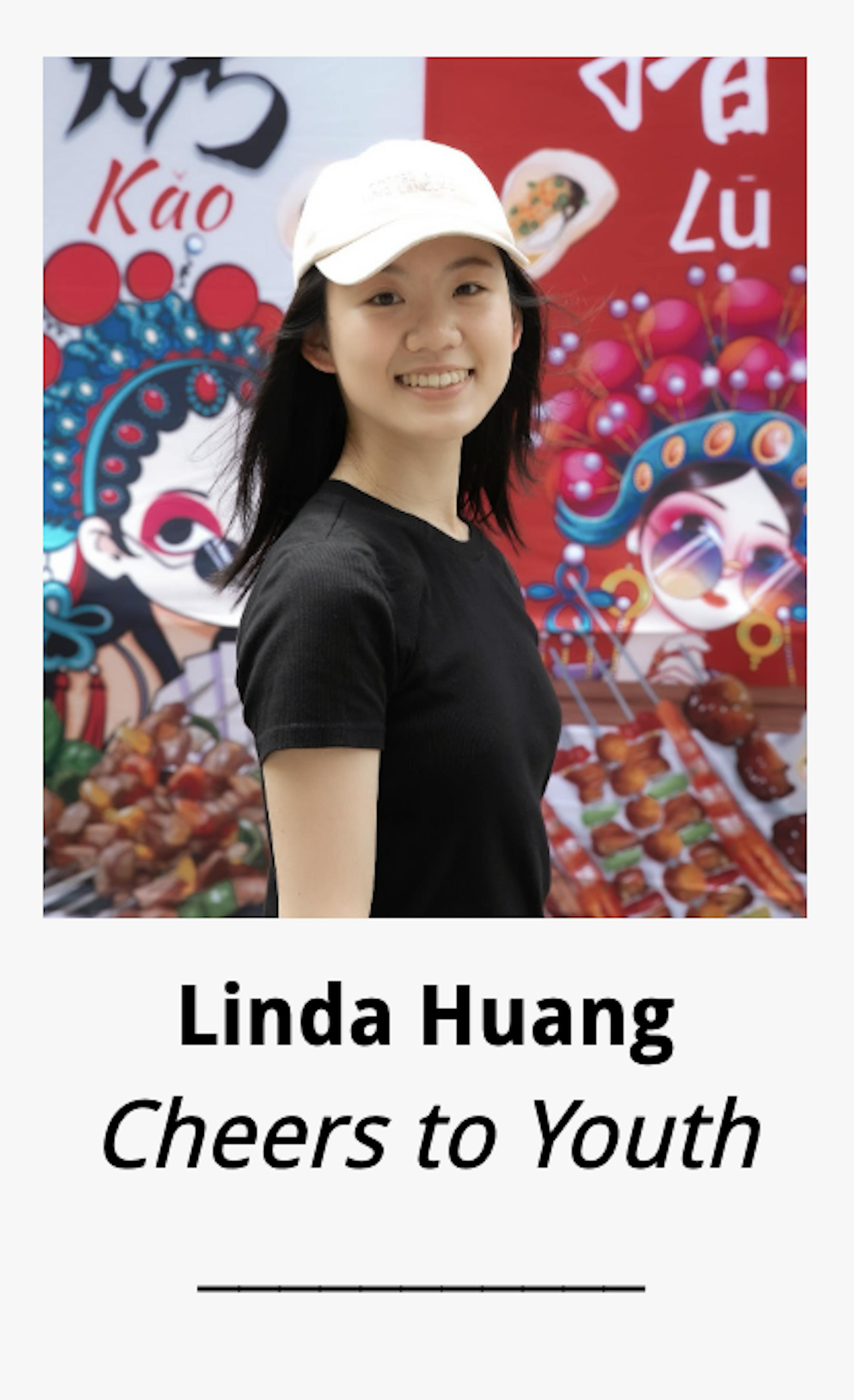
Linda Huang is a sophomore from Rockville, Md. majoring in Biomedical Engineering. Her column celebrates growth and emotions that define young adulthood, inviting readers to live authentically.