Iranian citizens have been living in a brutal regime of oppression for almost half a century. This regime has violently opposed all attempts at democratization and has consistently demonstrated a merciless attitude toward dissent. Any acts of protest or revolt against the authorities are met with extreme force used to suppress such activities. Ordinary citizens are forced to suffer from crippling poverty and widespread abuses of human rights. In light of the recent uprisings in Iran, The News-Letter argues that Hopkins students should stay informed on the nation’s unrest and support their peers who may be affected by the conflict.
The Iranian Revolution of 1979 came about as a result of the dissatisfaction that many people had with the governance of the Shah, Mohammad Reza Pahlavi. Although the Shah pushed for modernization and Westernization at an accelerated pace since the White Revolution of 1963, the effects of these policies were not distributed evenly throughout society and worsened income inequality.
Ruhollah Khomeini, the Shah's most vocal critic, came out against the Shah's policies in 1964 as a result of their subservience to American interests, and he was subsequently exiled. Khomeini built a reputation as a moral and philosophical leader, promoting ideas of justice, freedom and popular sovereignty. When he came to power after the Iranian Revolution, however, Khomeini voided his previous commitments and dismantled the foundation of democratic principles that he had established. Khomeini instated clerics as the dominant rulers of Iran, contradicting his own promise that the clerics would only have nominal authority. The hijab that was previously promoted as a personal choice became mandated, and women were prohibited from serving in parliament.
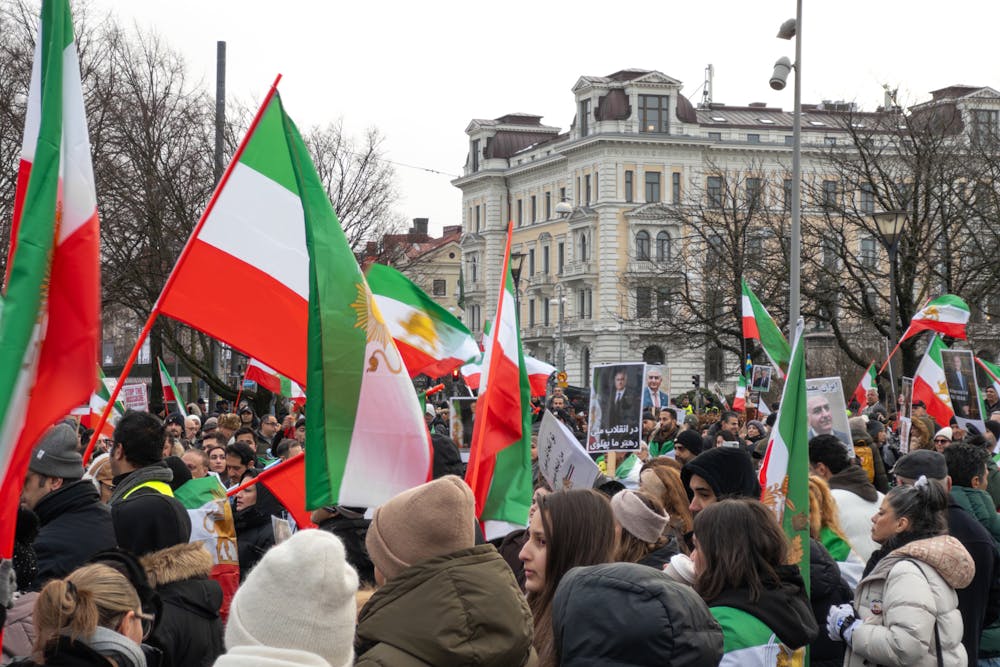
For many years the Iranian government has been systematically oppressing its population. However, many have risen in resistance to this oppression, as shown by the student protests of the late 1990s to early 2000s, the Green Movement of 2009, the Mahsa Amini uprising in 2022 and the ongoing demonstrations of today. Each of these movements has faced increasing hostility from the Iranian government, namely a rise in the use of violence against protesters.
The current uprising has spurred one of the most brutal reactions from the Iranian government in recent memory. Evidence is surfacing of mass arrests, extreme violence and an incredible number of fatalities as authorities attempt to silence in any way possible. This behavior on the part of the Iranian government represents not just the pursuit of political control but rather a determined effort to silence individuals who are demanding to be treated with dignity. Such actions demonstrate that brutality is not limited to the borders of Iran; it will affect, in serious ways, many members of the Iranian diaspora around the world.
At Hopkins, we all have a duty to stay up to date on events in Iran and to support those whose families and communities are especially vulnerable in today's Iran. Demonstrators in Iran risk their personal safety as well as their lives for freedoms that the majority of us have the benefit of enjoying as normal aspects of everyday life.
Due to the overwhelming volume of notifications, breaking news alerts and continuous access to 24-hour news cycles in today's environment, it is easy to become desensitized to tragedy. When our daily routines remain unaffected by such developments, it is all too easy to become disengaged from them.
Media overload has led numerous people to feel anxious, depressed and hopeless. The American Psychological Association has encouraged individuals to limit their media consumption and take breaks from news and information. However, this may lead to an uninformed society that does not understand the complexities of human suffering on a global scale. By removing ourselves from the critical thought process associated with becoming educated about the complexities surrounding global issues, we run the risk of viewing the suffering of others as irrelevant and interchangeable.
It may be unrealistic to expect everyone to feel passionately about every crisis occurring around them, but to allow ourselves to disengage from the responsibility of remaining connected is a disservice to all. Instead, we should stay up to date with current events and continue to be educated and engaged.
Westerners often stereotype Iran’s population and fail to separate the people from the actions of their rulers. Iran’s population is often seen without empathy, reduced to political liabilities instead of being seen as human beings. Iranians in the United States or American residents with any sort of tie to the nation are often viewed with suspicion on account of their lineage.
The protests in January occurred throughout the country, in tens of cities, across almost all of Iran's provinces. These protests were not merely happening in one small isolated region (as was often the case with previous protests), but rather the protests were being held together collectively against the oppressive and tyrannical government. However, the courage exhibited by these individuals has come at a cost through the violence and bloodshed that has taken place during and following the protests, which will only continue to deepen the ongoing humanitarian crisis Iran is facing. The Iranian citizens are in dire need of their voices being heard and amplified in spite of their current state of mass censorship and technology blackout due to the ongoing conflict between the government and its citizens.
The News-Letter encourages the Hopkins community to support their Iranian peers during these times. This support can be displayed in many ways, including staying updated on current events, engaging in conversation and checking in on classmates or acquaintances that might be affected in any way. On Jan. 8, 2026, an internet blackout in Iran was implemented and maintained by the Iranian government, preventing information and updates from reaching the outside world. As a result, communication and engagement from outside Iran are critical forms of support.
Resources aside from major newspapers and platforms include the Center for Human Rights in Iran and Iran International.