The Road to Milano Cortina may be winding to an end, but we’re cruising through a hectic section where you must constantly check your mirrors or you’ll miss the action. It has been snowy here in Baltimore recently, so as you skate in the new ice rink or sled down the beach, imagine the training and skill of these athletes who have qualified.
According to the Team USA map of athletes from each state who have qualified, two athletes have qualified so far from Maryland. Bryan Sosoo from Laurel, and Carsten Vissering from Bethesda both qualified for bobsled. This will be both men’s first Olympic Games. Also from Maryland, Noah Grove is a paralympian who competed at sled hockey in the 2018 and 2022 games and scored two gold metals. Growing up in Frederick and attending Towson University, Grove played for the US in amputee soccer until switching over to para ice hockey. Catch Team USA and their 17-man roster competing in this sport starting on March 7 against Italy.
While we’re on the topic of hockey, the Olympic rosters were also released earlier this month. This year marks the first time in over a decade that NHL players are allowed to compete on the world's biggest stage, with the NHL Players Association and the International Olympic Committee signing a collective bargaining agreement which in turn pauses the National Hockey League (NHL) season for a month. Previously, rosters were filled by European league and collegiate players, thus only two members of the current men’s team have competed before. On the women’s side, seven out of 23 players are collegiate, while the rest are members of Professional Women's Hockey League (PWHL) teams. The PWHL’s inaugural season was 2023-2024. The majority of the roster were members of the gold medal-winning 2025 World Championship team. Catch the men’s team on February 12 and the women’s team on February 5.
The US figure skating team is always under the spotlight, and the recent USA Figure Skating Championship was the pathway athletes used to chase their Olympic dreams. The four day competition in St. Louis was full of spectacle. In women’s singles, Amber Glenn scored first, a dream she never imagined could come to fruition. In 2024, she became the first queer woman to win a national title. Her quest for gold is also a quest to be the representation for all young kids in the sport who are forced to try and act more feminine or pose in a way that doesn’t feel true to themselves. She is joined by Alysa Liu and Isabeau Levito, who together hope to end the 20-year medal drought.
In men’s singles, the “quad god” and one of the most dominant skaters in the world, Ilia Malinin, displayed how he will be the one to beat. He cleared his two teammates, Andrew Torgashev and Maxim Naumov, by over fifty points. Malinin is known for his gravity defying backflip, a move which was illegal due to safety concerns until recent seasons. The flip does not add skill points to the routine no matter how impressive it is. However, Malinin can gain points for artistry if he sticks the landing.
The ice dance and pairs teams were also finalized, and this announcement made me curious, what’s the difference between the two disciplines? Pairs has been around for almost seventy years longer, and focuses more on acrobatics. In ice dance, no jumps or overhead lifts are allowed. Dancers must also stay within two arms length of each other, while pairs skaters can perform individual elements. Pairs has also seen an Olympic medal drought since 1988, and the winners in St. Louis, Alisa Efimova and Misha Mitrofanov, are hoping to rectify that. Madison Chock and Evan Bates have won five straight national titles in ice dance and plan on adding a new gold to their tally soon.
Now, on to the ski and snowboard teams. Household names like Mikaela Shiffrin and Lindsey Vonn headline alpine skiing, while Chloe Kim competes for her third snowboarding gold medal. Qualifying events were held throughout January at the Aspen World Cup and the Laax World Cup in Switzerland. Skiing in the Olympics is broken down into many distinct sports, including alpine, biathlon (which also involves rifle shooting), cross-country, freestyle, para alpine, para nordic and ski mountaineering (skimo). Each of these sports is then further divided into categories, for example slalom, giant slalom and moguls are all disciplines in alpine skiing. Competition starts early February.
Skimo, new for this Olympics, is a combination of uphill hiking on skis and downhill skiing. The race is a sprint format. During the uphill portion, athletes both climb stairs and ascend the mountain with skins on their skis. The skins allow for upward traction and are then removed so competitors can make a rapid descent. Currently, Anna Gibson and Cameron Smith are qualified, filling one of only twelve quota spots for the mixed relay. Skimo debuts on February 19 and team USA takes on the event on February 21.
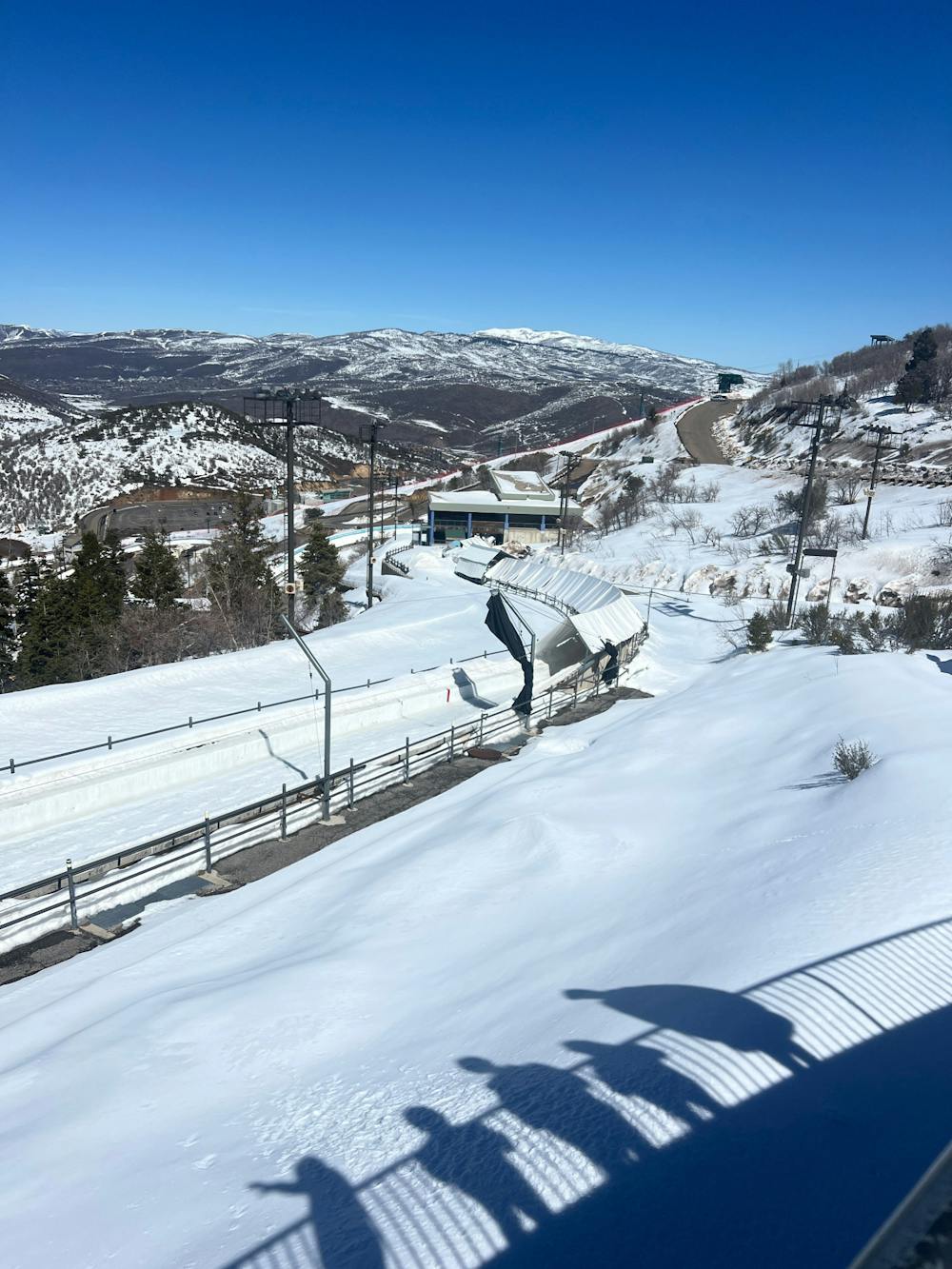
Another sport to watch out for, possibly along the lines of obscurity with Skimo, is bobsled and skeleton. Two men and two women were named to compete in skeleton, as this is a single person sled. At Milano Cortina, bobsled has four events: 2-man bobsleigh, 2-woman bobsleigh, 4-man bobsleigh and women’s monobob. I have toured the bobsled track at the Utah Olympic Park, and it’s massive. The speed athletes get to is thrilling and dangerous. Another interesting fact, explained by pilot for the team Kaysha Love, is that many sled athletes are actually recruited from other sports like track and field. Also coming from track was Md. athlete Bryan Sosoo, who spent five years as a professional. If you’re a quick sprinter and have ever had dreams of making the Olympics, maybe trying out a sled sport is the way to go.
Sixteen different sports will be showcased in this year’s Olympic games, making it the most widespread competition yet. In the paralympics, there will be 79 medal events across six sports. Even if you haven’t tried any of them, the next few months will be full of excitement and I highly recommend tuning in.