Epidemiologist explores global approaches to COVID-19
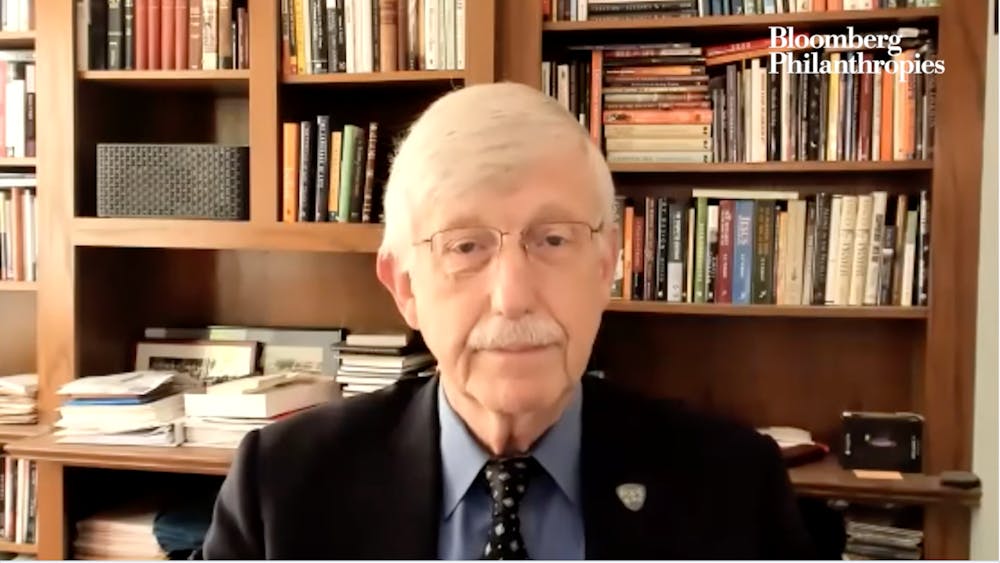
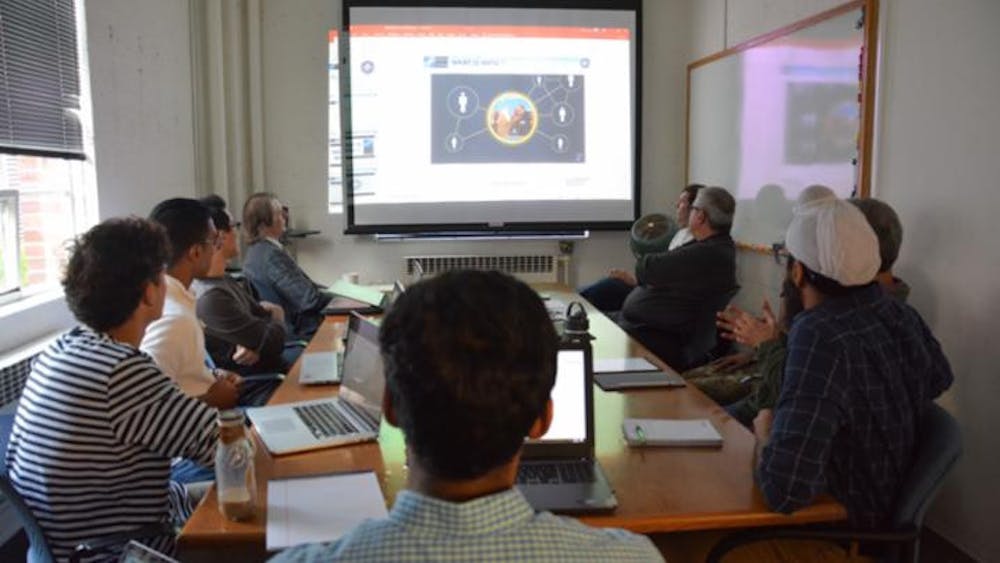
By JESSICA KASAMOTO | April 26, 2021The School of Advanced International Studies (SAIS) hosted a lecture about responses to the COVID-19 pandemic around the world on April 20.
The School of Advanced International Studies (SAIS) hosted a lecture about responses to the COVID-19 pandemic around the world on April 20.
A new study could provide relief for seasonal allergy sufferers. The paper, published in The Journal of Allergy and Clinical Immunology, suggests that wearing masks may relieve some symptoms of allergic rhinitis, also known as hay fever.
A 2020 survey published by the Hopkins Graduate Student Association (GSA) found that more than 25% of graduate students at the School of Medicine experience a disability, such as a mental health disorder or chronic illness.
Earlier this year, President Joe Biden announced the $1.9 trillion American Rescue Plan to create millions of jobs, address the climate crisis and foster racial equity in response to the pandemic.
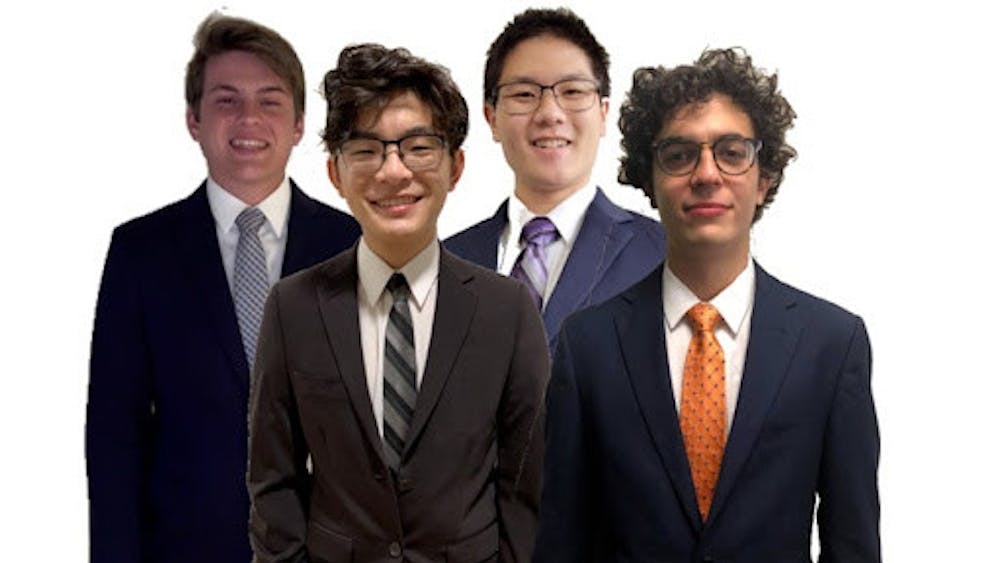
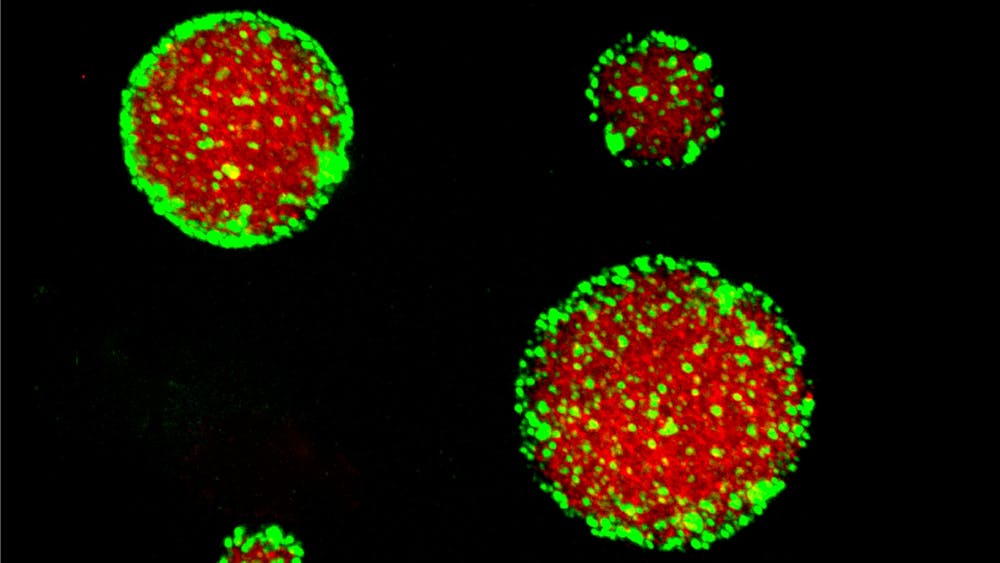
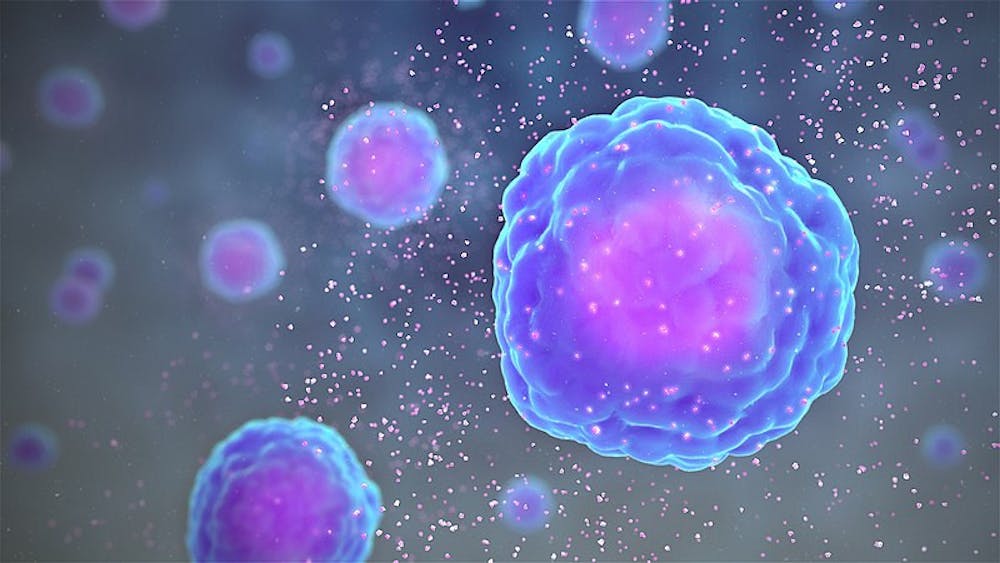
Whether it’s a lab technician staring at a petri dish from above or a Hopkins student taking notes from a PowerPoint, biology is often only studied from a two-dimensional perspective. A team of scientists at Hopkins and Virginia Tech has begun to shift this perspective with a recent paper exploring cell motility, published in Proceedings of the National Academy of Sciences (PNAS).
“The satisfaction of seeing something on paper and in my head become a reality, and especially when it does something — for example if it moves, or makes sounds... even if it’s something small... that is what I find most rewarding about mechanical engineering.”
With the second round of midterms in swing, I hope everyone on campus is officially somewhat oriented with the semi-in-person college experience and has made at least made one midnight trip to UniMini for chicken nuggets and mozzarella sticks.
The Johns Hopkins Capacity Command Center, which was originally launched in 2016, is the first of its kind within the health-care system. The command center’s visual dashboards allow for workers to analyze real-time information, such as occupancies, operating room schedules and emergency department capacitance across the entire hospital. Real-time analytics process data as soon as it comes into the database, helping users make decisions without delay.
The School of Nursing (SON) held an event titled “COVID Vaccine Equity: Reaching Underserved Communities Locally and Globally” on April 7. The discussion was co-moderated by Angie Chang, manager of the Center for Global Initiatives (CGI), and CGI Director Nancy Reynolds, also co-director of the Collaborating Centre for Nursing Information and Knowledge Management at the World Health Organization (WHO).
Tamar Rodney, an assistant professor at the School of Nursing, discussed post-traumatic stress disorder (PTSD) during the pandemic in her lecture “Trauma — The Wounds You Cannot See” on April 6.
According to a study published in Vaccine at the end of March, only half of adults in the U.S. claim they will accept the COVID-19 vaccine as soon as possible. Since the herd immunity threshold for COVID-19 requires that around 90% of adults be vaccinated or immunized through infection, public health experts still must convince a large segment of the population of the vaccines’ effectiveness.
If you look at a graphic that maps the geographic distribution of COVID-19 cases in the U.S. you will immediately see that the burden of the pandemic differs across state lines. A team of researchers from Hopkins and the Medical University of South Carolina recently investigated these interstate discrepancies and published their findings in the American Journal of Preventive Medicine.
The ice sheets in Greenland and Antarctica comprise more than 90% of Earth’s freshwater ice. When it comes to glaciology, global warming is often touted as the most important issue. But according to some scientists, there is another issue that is just as important: geothermal heat flux (GHF).
Experts at Hopkins and the University of California, San Francisco (UCSF) recently launched the Opioid Industry Documents Archive. The archive consists of a digital repository of publicly disclosed documents from recent judgments, settlements and ongoing lawsuits regarding the opioid crisis. Within the archive, there are 3,300 documents — about 131,000 pages — contained in six collections.
TikTok isn’t just for dance videos anymore. Hopkins Assistant Professor of Psychiatry Dr. Melissa Shepard is using the platform to fight mental health stigma one catchy meme at a time. Since creating her account in early 2020, her account has accrued nearly one million followers.
“The mathematical universe is an elegant and structured universe, and using a few axioms we can build up a rich foundation which can be applicable to many fields,” Director of Undergraduate Studies for Applied Mathematics and Statistics (AMS) Donniell Fishkind said.
The 2019 Novel Coronavirus Research Compendium (NCRC) is an organization at the Bloomberg School of Public Health that reviews and assesses recent publications and preprints on SARS-CoV-2 and COVID-19 research.
If you had a few million dollars to spare, you could have been the proud owner of Jack Dorsey’s first tweet, which recently sold for $2.9 million. You could also buy art by singer and visual artist Grimes, who recently sold pieces for over $6 million. If you’re interested in owning a LeBron James highlight video, NBA is selling them on their new marketplace at NBA Top Shot — they have recently sold over $230 million of digital collectibles.
In April 2020, Dr. Israel Zyskind spent his Passover in the car. Although driving during the holiday is typically not permitted, lives were at risk. A private-practice pediatrician affiliated with New York University and based out of New York, Zyskind spent the day visiting 10 to 20 COVID-19-positive households in his community, conducting wellness checks to see if individuals needed to be hospitalized. It certainly was a holiday like no other.
“All science is either physics or stamp collecting.” According to Jami Valentin Miller, this quote — attributed to Ernest Rutherford, the father of nuclear physics — encapsulates the elitist mindset of many physicists. In 2006, Miller became the first Black woman to receive her PhD in physics at Hopkins. The fact that it took so long for Hopkins to grant a PhD in physics to a Black woman, she said, reflects the elitism that permeates the field.