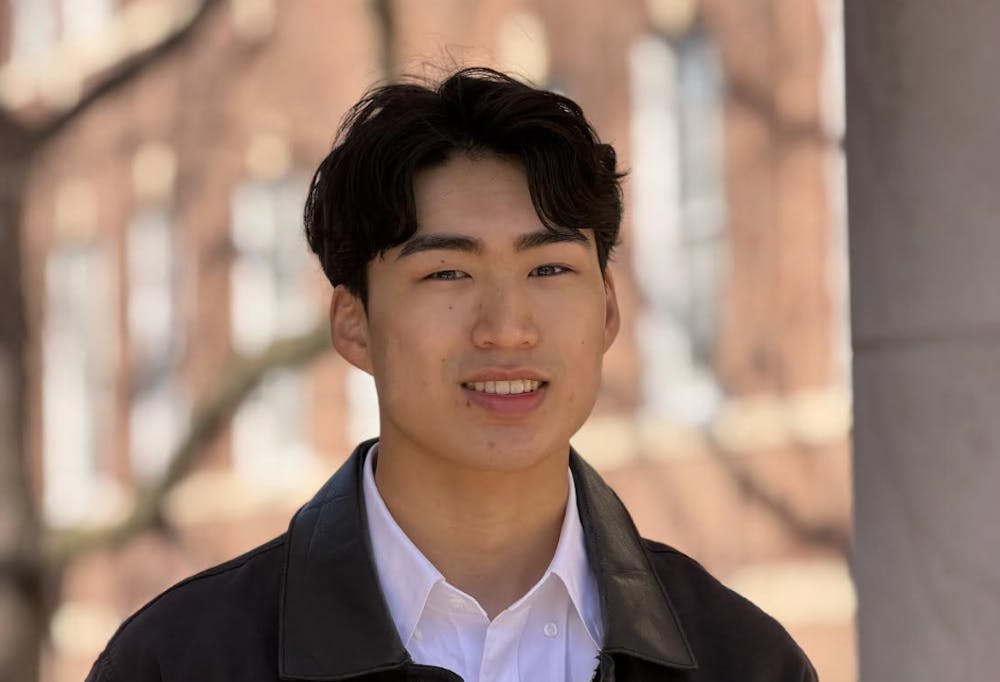
Henry Le Chang is a junior who was recently awarded the Barry Goldwater Scholarship for his research in neuroscience. In an interview with The News-Letter, Chang discussed his work investigating the biological mechanisms of pain and itch, his research journey at Hopkins and the lessons he learned, as well as his vision for advancing his work.
The News-Letter: Could you briefly describe your main research project or research interests?
Henry Le Chang: My research journey started in high school where I worked in the lab of Allan Basbaum with Sakeen Kashem at UCSF, where I studied a mouse model of neuropathic itch. That got me really interested in understanding the biological mechanisms behind pain and itch. When I came to Hopkins, I joined the Xinzhong Dong Lab, which has done a lot of work on itch, and I worked with a postdoc, Taylor Follansbee, to help understand pain-modulating neurons in the brainstem. My main project, which is what I wrote the Goldwater about, was understanding how neutrophils, specifically neutrophils expressing a receptor called MRGPRX2, cause itch and atopic dermatitis. Overall, I’ve done a lot of work in understanding how pain and itch occur, and that’s my main research interest: the biology behind pain and itch.
N-L: What drew you to this particular field?
HLC: I always thought neuroscience and biology were really cool. I ended up joining a lab that did that research, and I had a really great experience, so that’s what drew me to this specific field.
N-L: What skills have you used or learned throughout this process?
HLC: One really important skill is being able to deal with failure and expect failure, and still keep going. In research, pretty much 90% of the things you do just aren’t going to work out, and you just got to try other stuff. My project was funded by the [then named] Woodrow Wilson Research Fellowship. [For] the project I wrote for that proposal, I spent about a year, two semesters and a whole summer, and I ended up scrapping it because I got no results out of that. I had to use the skills I learned from that project and apply them to something else, which ended up being more successful and helped me win the Goldwater. So, I would say being able to deal with failure is really important.
N-L: How has the University supported your research exploration and independence?
HLC: The Wilson Fellowship was a big one because it funded me to stay here for two summers, which allowed me to really dive into my research and gain independence, so I think that’s a big one. Overall, Hopkins has a lot of funding opportunities for research, which is really good. Also, an important thing for having successful research experience is having good mentors. A lot of what I’ve done and the skills I’ve developed come from having great mentors. The postdoc I work with, Taylor Philansky, has helped me a lot with applications like Woodrow Wilson and Goldwater. He also put in a lot of work to help me develop my own independent research project and train me, so I could work more independently.
N-L: What inspired you to apply for the Goldwater Scholarship?
HLC: In terms of what attracted me to the Goldwater Scholarship, I was especially drawn to its emphasis on supporting students who are committed to long-term research careers. Beyond the recognition, I value being part of a community of students who are deeply engaged in scientific discovery, as well as the opportunity to continue developing my work with additional support.
N-L: What future plans do you have for your research?
HLC: Looking ahead, I plan to continue studying the biological mechanisms underlying chronic pain and chronic itch. My work focuses on neuroimmune interactions in the skin, particularly how immune cells and sensory neurons communicate to drive persistent itch in conditions like atopic dermatitis. Moving forward, I am interested in further dissecting these pathways at both the molecular and systems level, and exploring how these mechanisms might translate across different disease contexts. Ultimately, I hope to contribute to the development of more effective treatments for chronic sensory disorders.
N-L: What advice do you have for students who want to follow a similar path?
HLC: Start doing research early and try to choose a good lab, a lab that is supportive. Having a supportive lab environment can go a long way in your success.