Nowadays, it’s rare to walk into a restaurant just because you’re passing by. Whether it’s a relaxed hangout with friends or a carefully curated date night, many people decide on the restaurant beforehand. Restaurant reviews on platforms such as Google, Yelp, Beli, Resy and more are crucial in guiding one’s choice of dining. A lot of people also choose to write a review of the restaurant after an experience there, helping other potential diners decide whether it’s the right atmosphere, food, service and convenience they are looking for. Here’s a guide from an amateur restaurant reviewer on how to write a restaurant review, with personal pet peeves included.
Do:
1. Research. Before you dine at a restaurant, read about the type of food it serves, the formality of the dining and even the history of the restaurant and the neighborhood. Context is important when considering an authentic review.
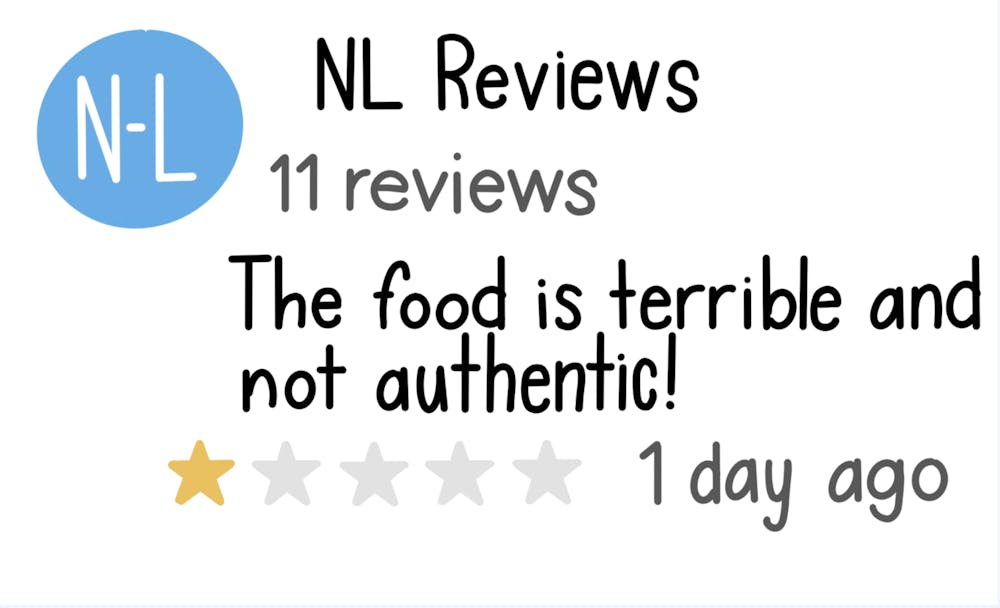
2. Be holistic. Yelp does a good job giving you a checklist of topics you should cover in a review, such as food, service and ambience. Just because the wait time is long in a restaurant doesn’t mean it deserves a one-star review. Likewise, one dish being out of stock doesn't mean the overall quality of the food is terrible. I see reviews with only one topic to comment on way too often. These reviews only show one side of the restaurant and are often quite hostile, steering readers in the direction the reviewer biases toward.
3. Pictures, pictures, pictures! People love pictures, especially when there is variety. In addition to food, take a picture of the seating area, the menu and other details people may overlook but find important in a review. Personally, I’d love to know how many seats there are and what the most recently updated menu is. It takes one second to help a lot of curious diners!
Don’t:
1. Let your bias lead the way. We all come from different cultures and backgrounds and may have a preference for certain cuisines, but don’t let that be a reason to shy away from unfamiliar cuisines. Even if it’s of a different culture, look at it with an objective lens instead of already being biased because it’s a Mediterranean restaurant instead of American, for example. And please know the ingredients before you criticize a dish. Saying, “The chicken in my stir-fry dish is full of tiny bone fragments, proving the chef was lazy,” when it’s actually a Chinese culinary tradition to keep the chicken bone in for better absorbance of flavor not only makes you look like a jerk, but also obscures the authenticity of the dish from you. Also, please avoid using the word “authentic” when you haven’t personally gone to the origin of the cuisine and tried the actual authentic food. I can’t say this Mexican food is authentic just because it tastes good. Many reviewers throw in that word recklessly, even though it’s a meaning-rich word that requires experiential backing.
2. Give up on a cuisine just because it tasted bad once in a single restaurant. This phenomenon is very human and where microaggressions can stem from. The other day I heard two comments about food adjacent to my culture from someone who’s not from Asia, and I was a little shocked.
“I hate boba. I tried boba once, and it was pink and tasted like Pepto Bismol. I’m never trying boba again.”
“I don’t like tofu. What even is tofu? Is it just a vegan substitution for meat?”
Variations of these statements are not uncommon to pop up in a restaurant review. I would say the golden rule is to try at least three bites of a dish before deeming it as distasteful, and to try a cuisine at least three times before never going back. Go to different restaurants of that cuisine. Go during lunch, dinner, the weekend or a weekday. Let that variety give you a better picture before you decide that it’s not for you!
3. Write a good review just because there’s a deal for a free dish or merch. I know it’s tempting to follow those little blackboard prompts for “a free tote bag if you write us a 5-star Google review!” (cough cough, Paris Baguette). This behavior encourages false advertising and skews the overall rating of the restaurant. Many clothing stores flag incentivized reviews so readers can interpret them with context. Restaurant reviews, however, rely on an honor system with no labeling to tell you the review was rewarded. At the very least, please disclose the incentivization before you submit that review.
Go ahead and submit your first restaurant review!
Linda Huang is a sophomore majoring in Biomedical Engineering from Rockville, Md. She is a Magazine Editor for The News-Letter.