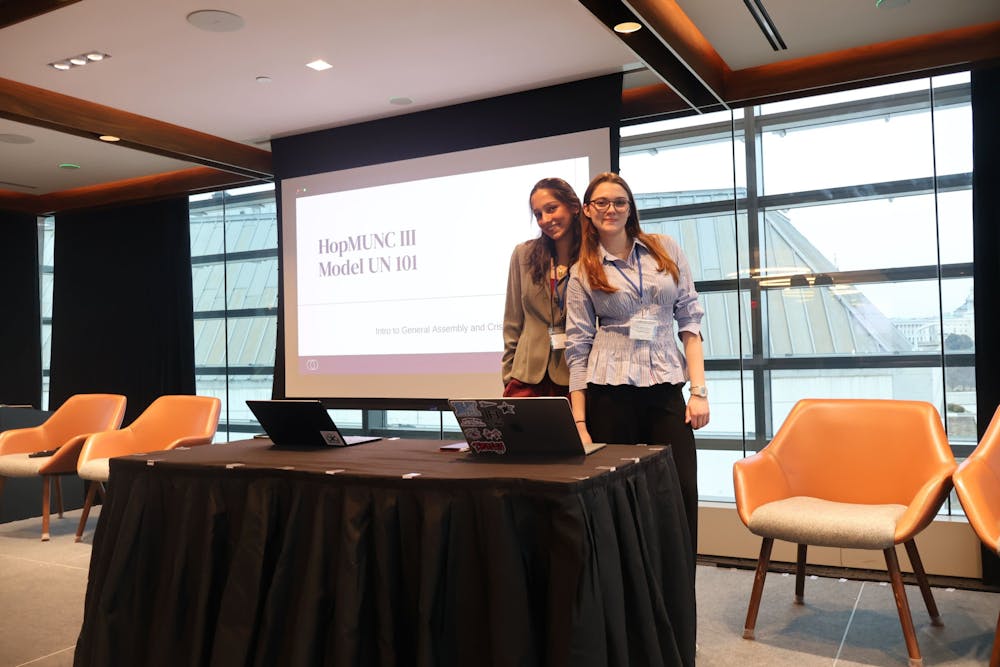
From Feb. 26 to March 1, the International Studies program hosted the annual Hopkins Model United Nations Conference (HOP MUNC). Model United Nations (MUN) is an educational simulation in which students compete as representatives from different countries in public speaking events. During these conferences, students debate and work to solve diverse transnational issues while practicing public speaking techniques and learning more about international diplomacy. Participants at the Hopkins MUN chapter engage with the organization by competing in different conferences and volunteering to staff HOP MUNC. At this conference, delegates from across the nation, hailing from other academic institutions, gathered at the Hopkins Bloomberg Center in Washington, D.C., to role-play a range of United Nations (UN) committees and debate pressing global matters.
COURTESY OF HOPKINS MUN
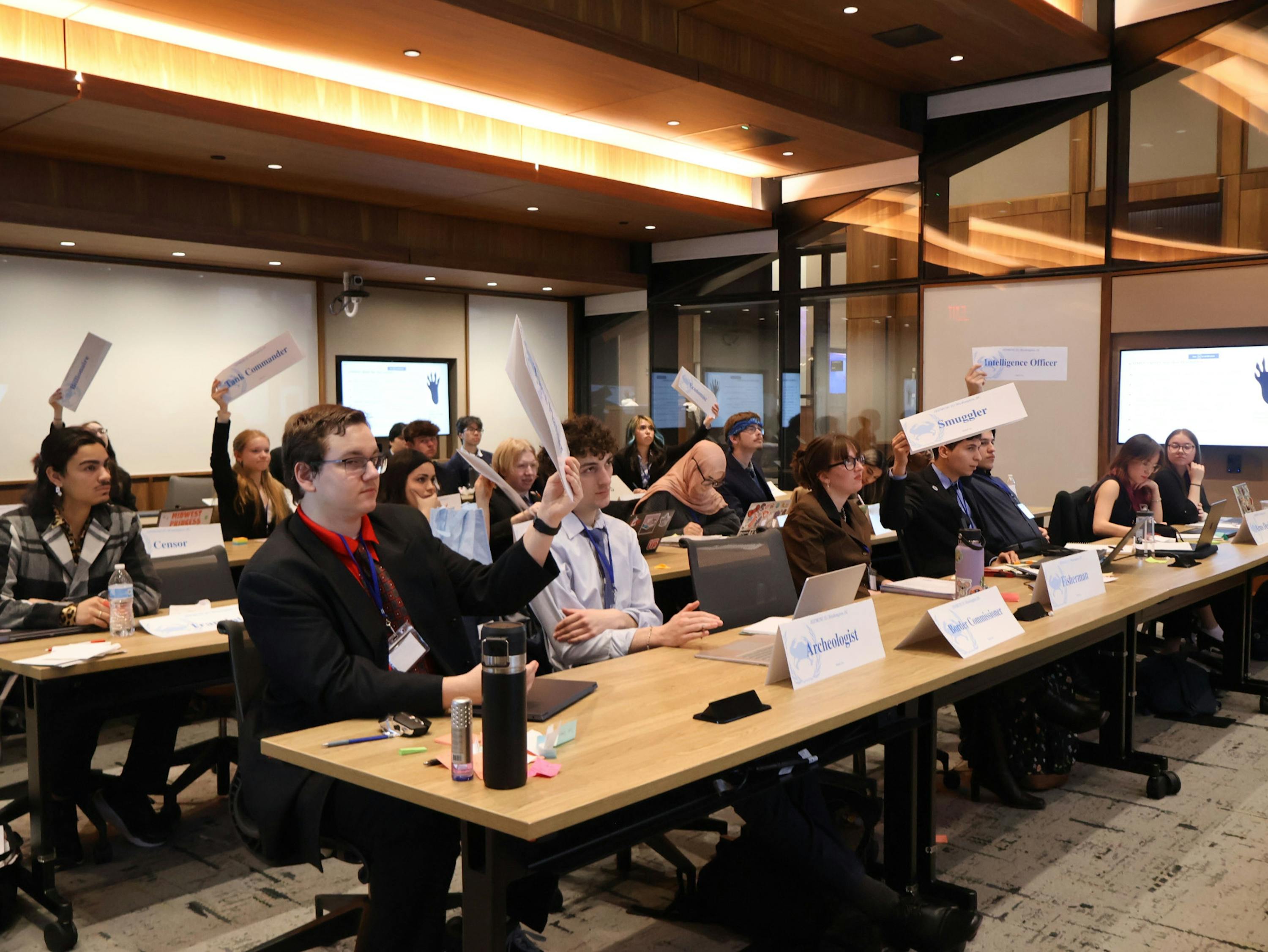
HOP MUNC competitors raise their plaques to respond to various inquiries.
Over the weekend, participants delivered speeches, drafted resolutions and negotiated with other delegates, proposing solutions to complex global challenges such as climate change and international security. Furthermore, the conference provided an opportunity for both experienced and first-time delegates to build leadership and diplomacy skills in a collaborative environment that opens real-life connections across the United States.
In an interview with The News-Letter, Chris Zhang, a Hopkins freshman, described his experience staffing the conference as exciting and challenging, explaining how competing allows students to test their ideas while also learning from the staffers and delegates around them. Zhang served as a staff member for HOP MUNC while also competing in other conferences throughout the academic year.
“There [are] a lot of things that people come [to HOP MUNC] for — mostly it’s just fun getting to interact with a lot of different people from a lot of other places, getting to [talk] and putting [down] your ideas,” Zhang said. “I just think there's a lot of learning to do — you learn how to interact with people, how to write well, how to communicate [and how to] public [speak].”
COURTESY OF HOPKINS MUN
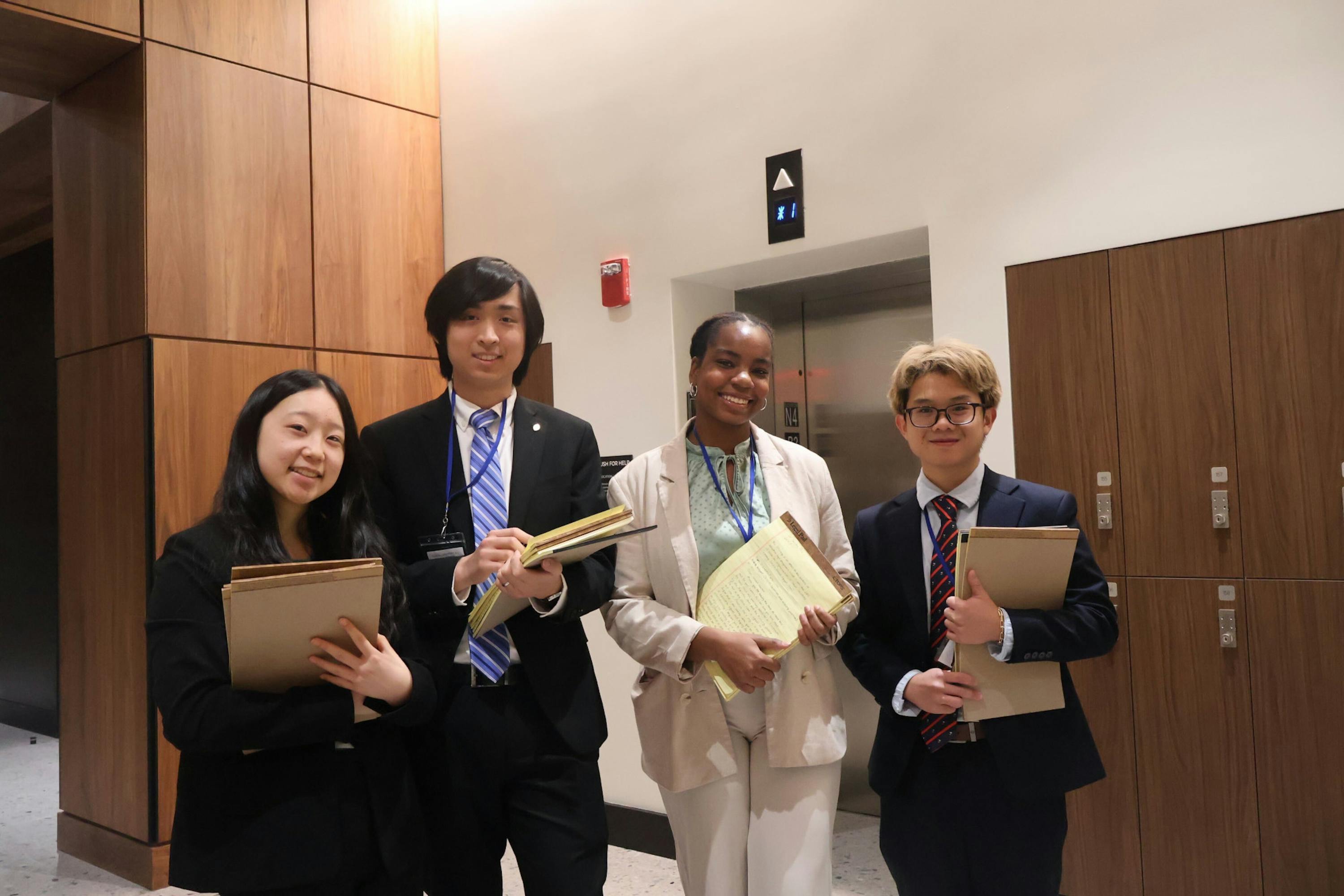
Conference staffers prepare for the next committee time block.
MUN consists of various committees that simulate real UN bodies and specialized crises to debate global policies. For example, Zhang is a part of the Supreme Court of the United States (SCOTUS) committee, which simulates major constitutional court cases and allows delegates to dispute legal arguments.
Various other boards also include crisis committees. These groups are decision-making bodies that have more “power” than traditional committees; they are fast-paced, emulate small organizations and have continuous updates shaped by the actions taken by the delegates. Crisis committees consist of a “Frontroom” and a “Backroom” — Frontrooms are the committee rooms themselves, while the Backrooms are the physical locations where the crisis director and assistant chairs (who are a part of the conference’s staff) respond to notes and craft the world outside the committee.
One student, Jennifer Ma, a Hopkins sophomore majoring in Public Health, served as the crisis director for one of HOP MUNC’s crisis committees. Ma described how she worked behind the scenes to craft the committee’s narrative and guide delegates through unfolding scenarios in an interview with The News-Letter.
“When I was a freshman, [that] was the first time I did a crisis committee when I was competing and I absolutely loved it,” Ma explained. “What I like the most about [the] Backroom is [that] you get to come up with creative crisis updates [...] and it was a lot of fun. So, after last year’s HOP MUNC, I decided that I [wanted] to be a crisis director this year.”
The Hopkins MUN student organization consists of two competing units: the home team and the travel team. As many institutions host conferences for delegates to compete in, the travel team is specially designated to travel to various locations to represent the university.
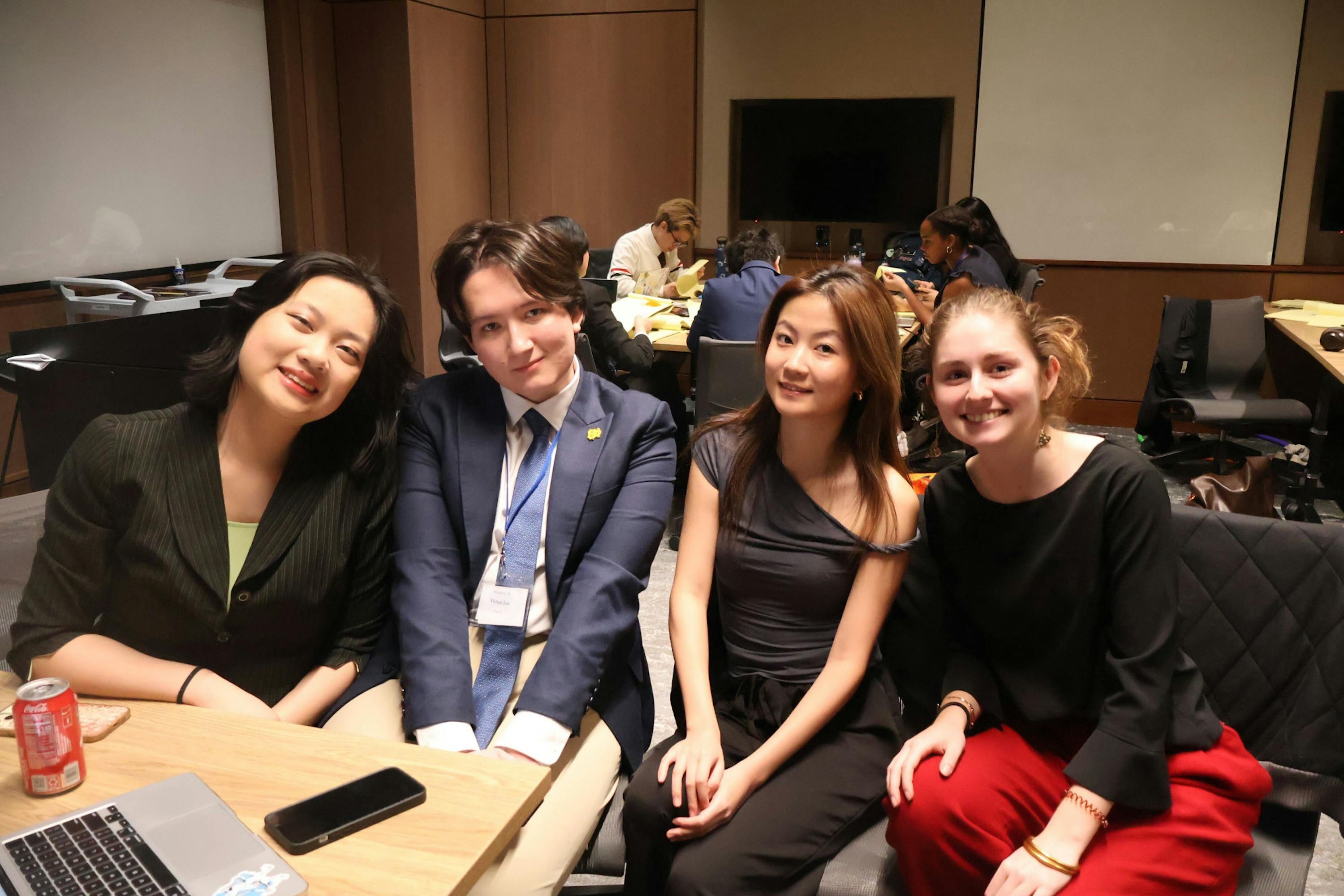
COURTESY OF HOPKINS MUN
Conference staffers await their next shifts in the staff room.
In an interview with The News-Letter, junior Sareen Muthyala discussed his role as the President of the Hopkins MUN travel team and the Secretary General of the General Assembly and Specialized Committees.
“I oversee the three committees at HOP MUNC and make sure that they’re running smoothly, getting feedback from the delegates and making sure it’s implemented throughout the conference,” he explained. “It’s great seeing [the chairs, co-chairs and crisis directors] grow because a lot of these people I know through the travel team, and it’s great seeing them not only develop as a delegate, but also taking [on] a leadership position and helping delegates from other schools who [may be competing for the first time].”
Through these roles, student leaders are able to mentor newer members and help shape the conference experience for visiting delegates. Simultaneously, they work to maintain an environment that balances healthy competition with social fun.
The conference was sponsored by various organizations and advocacy groups focused on international cooperation, which often partner with student conferences to support education initiatives, including the Hopkins Political Science Department, the Alexander Grass Humanities Institute (AGHI), the Hopkins School of Advanced International Studies (SAIS) and the Kissinger Center. Furthermore, Citizens for Global Solutions sent representatives to the conference to engage with students and discuss opportunities for youth involvement in international policy. Keshet Benschikovski attended the conference as a representative for Citizens for Global Solutions and spoke with delegates about opportunities in global governance. She described the organization’s mission to support students interested in global affairs and encourage participants to pursue their passions in foreign careers in an interview with The News-Letter.
“We have many youth programs dedicated towards UN reform and taking students to [...] conferences to learn about how these multilateral institutions are run,” Benschikovski said. “These [students] are bright young minds who are already interested in global affairs — and we want to support them in their path forward towards their professional career.”
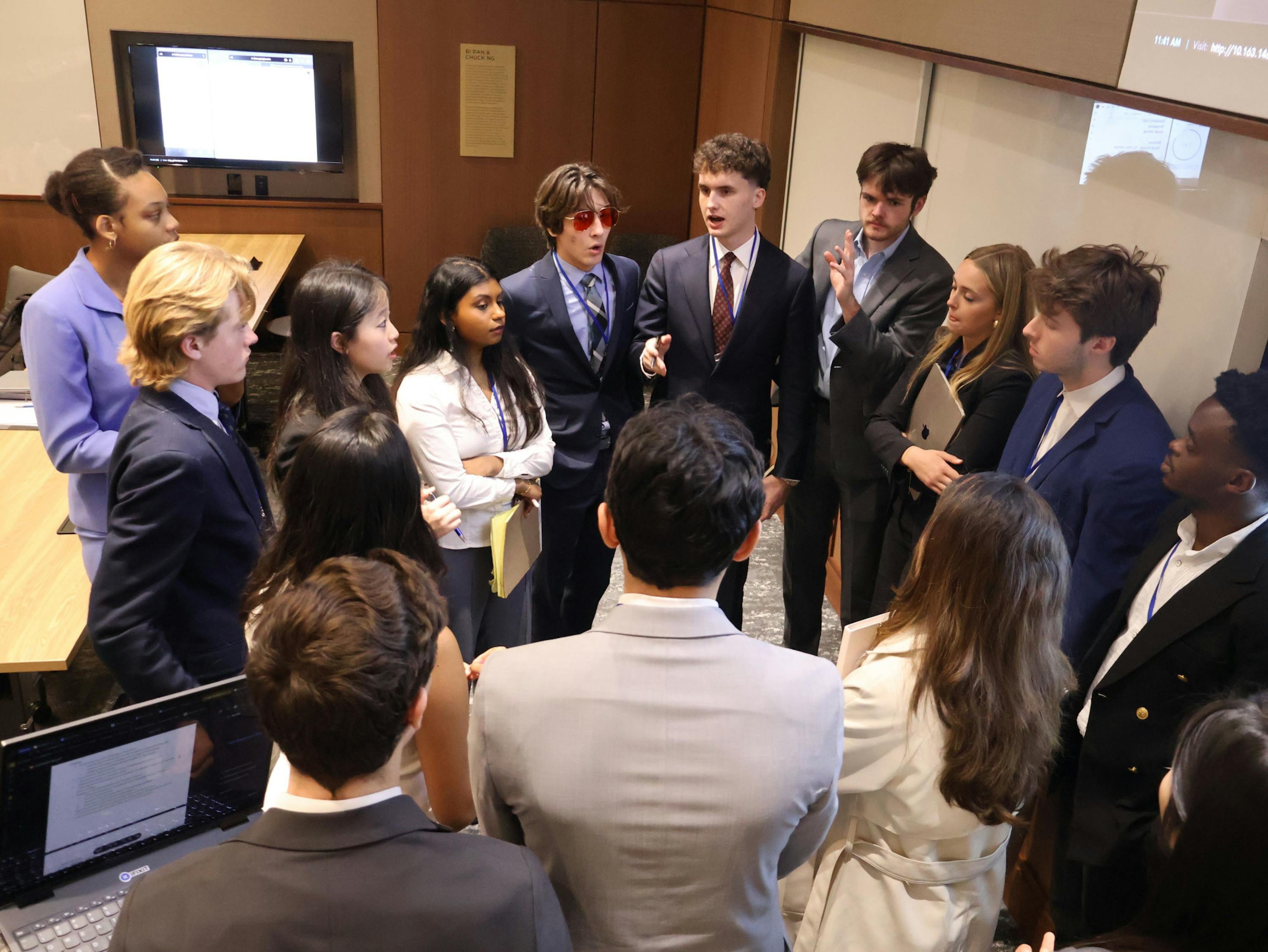
COURTESY OF HOPKINS MUN
Competing students assemble to discuss their next steps in delegations.
Over 150 delegates from across the country gathered to participate and compete in HOP MUNC. Among these, many represented universities with Model UN traditions and brought experienced delegations to the conference. A political science major and senior at St. Louis University, Madelyn Keibl, outlined how the conference environment encouraged collaboration and friendly competition in an interview with The News-Letter.
Keibl first joined Model UN during her freshman year of college and has continued participating in conferences across the country ever since. From beginning as a starry-eyed rookie to becoming president of her chapter, Keibl explained that MUN has helped her build unwavering confidence and leadership skills.
“It’s honestly been my favorite conference that we go to. [...] The people are probably my favorite part. [...] it’s just super exciting to come here and have such good debate — and it be, y’know, not too intense but also creative and still super fun,” she explained. “Last year, I met Slonae — she was my chair. [...] My first time doing this, I didn’t really know what [was] going on. It was so fast-paced, and she made me feel like I was doing a good job [while] still giving me things to improve on.”
Similarly, even beginner delegates find the conference environment to be welcoming and encouraging. Many students attend HOP MUNC early in their Model UN careers to gain experience speaking and negotiating in committees.
Freshman Owen Fugit from the University of San Diego described his experience as both exciting and supportive, sharing how the conference has helped him grow more confident in an interview with The News-Letter. Fugit is a part of the United Nations Environmental Program (UNEP), a committee that discusses nuclear energy and its effectiveness alongside artificial intelligence as an emerging sector. He participated in drafting policy proposals and worked with other delegates to discuss possible environmental regulations.
“This is my third Model UN conference ever. [...] So just being here, I was very nervous that everybody was going to be like, the pressure was going to be on. But going through it, everyone has been so kind,” Fugit said. “The chairs are amazing, the other delegates are fantastic [and] there [are] some real leaders that have started to emerge — and so it's really good seeing other students who are able to lift other people up and really, bring good ideas to the forefront.”
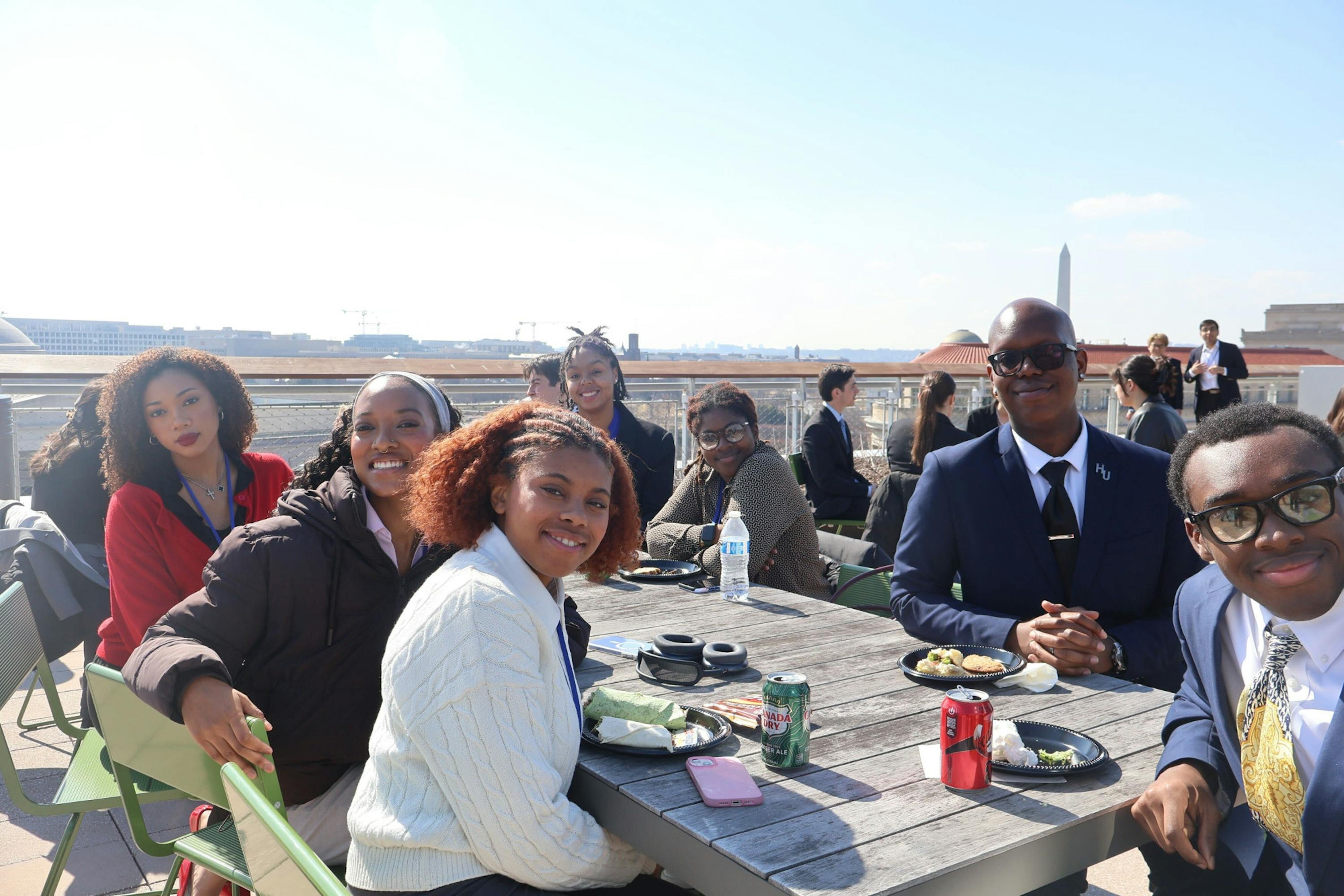
COURTESY OF HOPKINS MUN
Delegates pause delegations to enjoy lunch.
For many students, conferences like HOP MUNC provide a chance to apply classroom knowledge to real-world policy discussions. MUN is an academic exercise that doubles as a social activity to bring students together through their passion for international affairs.
Aaradhya Diwan, senior and secretary-general, helped coordinate the overall planning and logistics of the conference, working together with other student leaders to ensure that the event ran smoothly. In an interview with The News-Letter, he reflected on the challenges of organizing a conference on such a large scale. Moreover, he emphasized the importance of collaboration between staff members and delegates in making the conference successful.
“On the front-end, you feel a lot more professional. You [have to] have nice language that you use. [You have to] be very personable on the back end, it’s about managing people — you [have to] be a little more strict [...] making sure people do their work, but also [making] sure they have a good time too,” he said. “We have about 150 [to] 160 people showing up from the delegation side from schools like Georgetown University [and] George Washington, but we have about 50 people from our end (Johns Hopkins) helping out. It takes a lot of effort and [contributions from] people from both ends of the conference.”
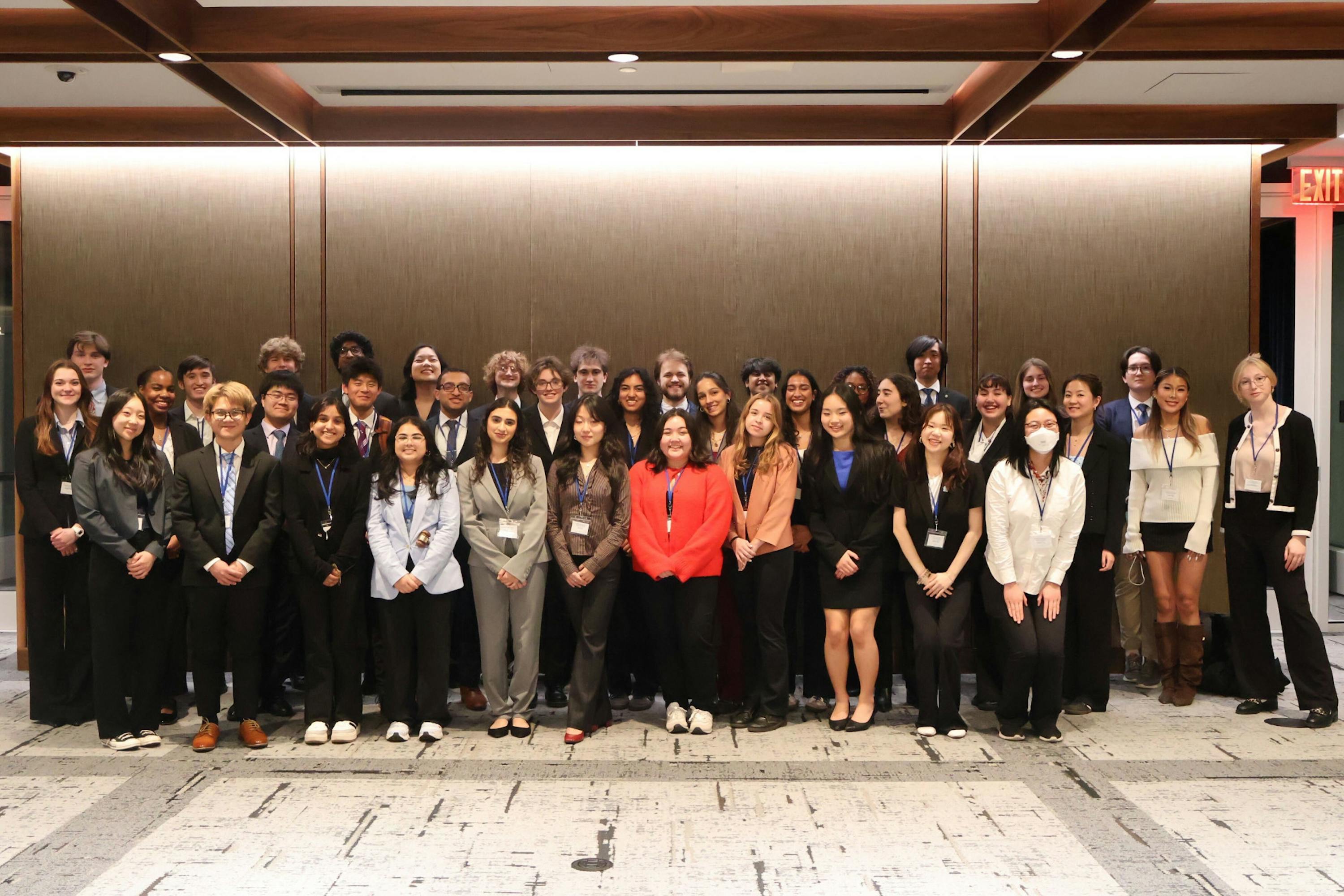
COURTESY OF HOPKINS MUN
Hopkins MUN staffers assemble for a final group photo.
This article was updated to correct that the conference is hosted by the International Studies Program, the spelling of Aaradhya Diwan’s name and to include additional conference sponsors. The News-Letter regrets these errors.