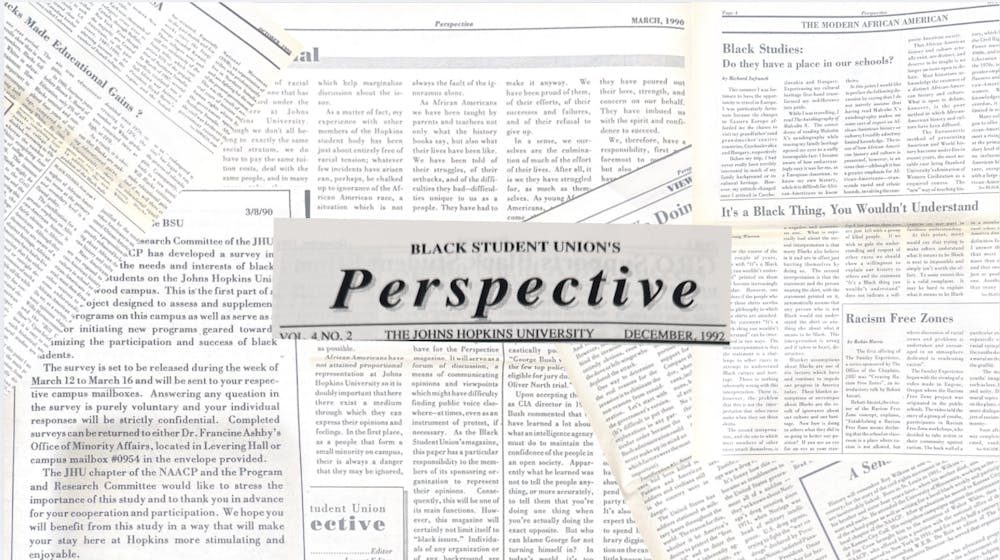
Perspective is an annual online publication produced by the Hopkins Black Student Union (BSU). In a magazine format, Perspective seeks to commemorate the year’s Black students – their achievements, celebrations and contributions. For example, recent publications have highlighted organization events, member spotlights and creative works. However, the origins of Perspective lie in the latter half of the 20th century, where past BSU members published Perspective in a printed newspaper format, not unlike The News-Letter.
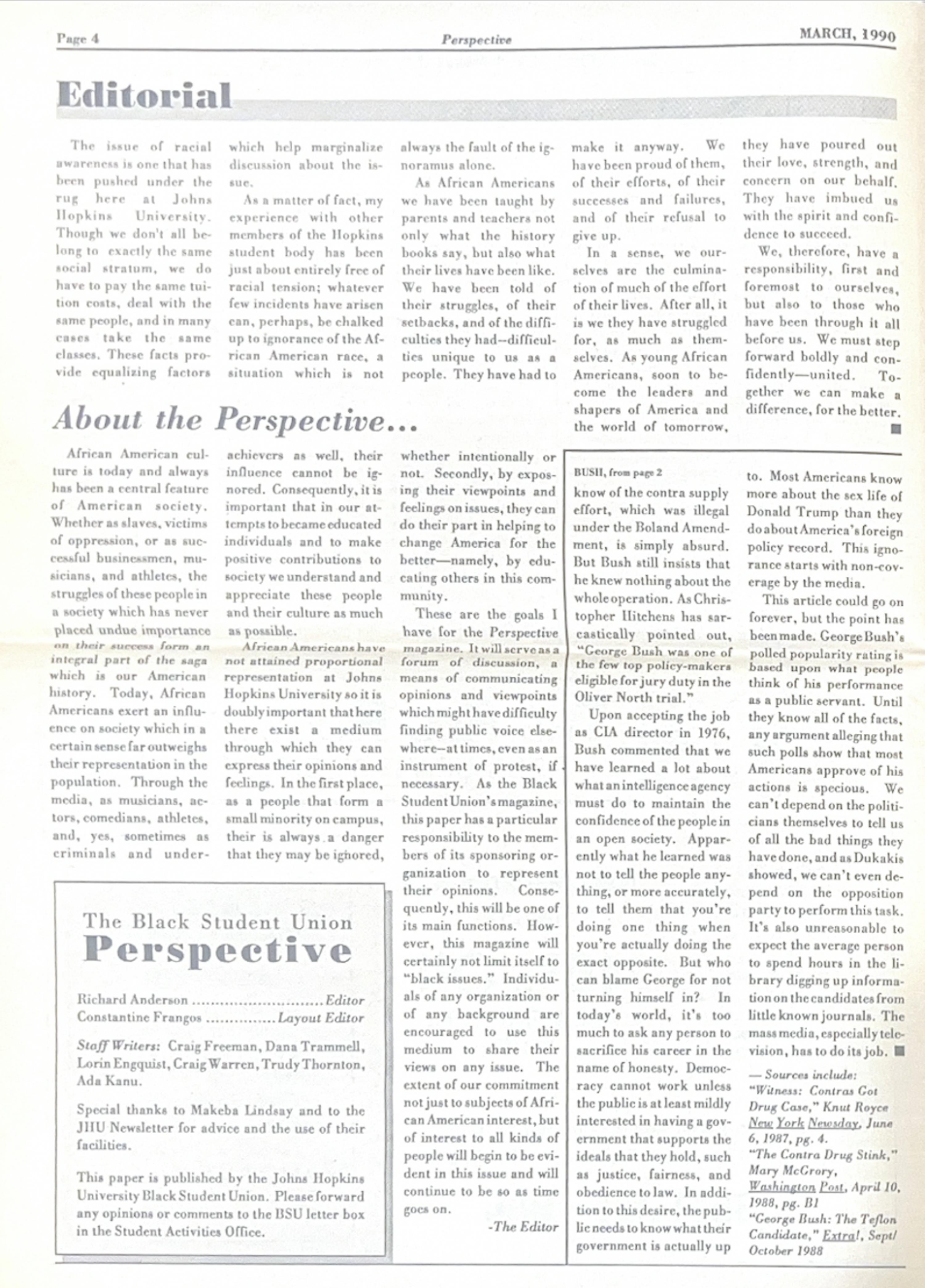
Lying in the University’s Special Collections is a series of print editions of Perspective from the 1990s. The paper uplifted Black student voices; in each addition, BSU members shared their Hopkins experience, news writers covered domestic and international events, editors addressed the University’s progress in promoting an inclusive on-campus community and poets expressed themselves through advocacy-driven creative writing. The University recognized the BSU as a student organization in 1969, originally in tandem with the 1960s Civil Rights Movement. Perspective, as such, grew as an extension of BSU’s mission to improve diversity and, as the name suggests, amplify Black student perspectives. In the March 1990 editorial, Richard Anderson, Perspective editor, shared how published opinions are intended to come from the minority, sometimes even serving as an “instrument of protest.”
COURTESY OF MYRA SAEED
The News-Letter studied available Perspective archives to share the extent of their coverage. While the paper featured BSU updates, future events and publicized notable events and talks throughout the University, most of Perspective’s content featured critiques about the University and commentary about national affairs. A description of the paper and its scope is explained in the 1997 BSU records.
“The Perspective is a news and editorial journal that covers campus, local, national, and international issues. This subcommittee edits, distributes, writes and solicits articles and advertisements for the Perspective. The Perspective will be published in late October, early December, early February, mid March, and late April. Budget: $3000 (Perspective production costs, 5 issues at $600),” the record reads.
Hopkins Critiques
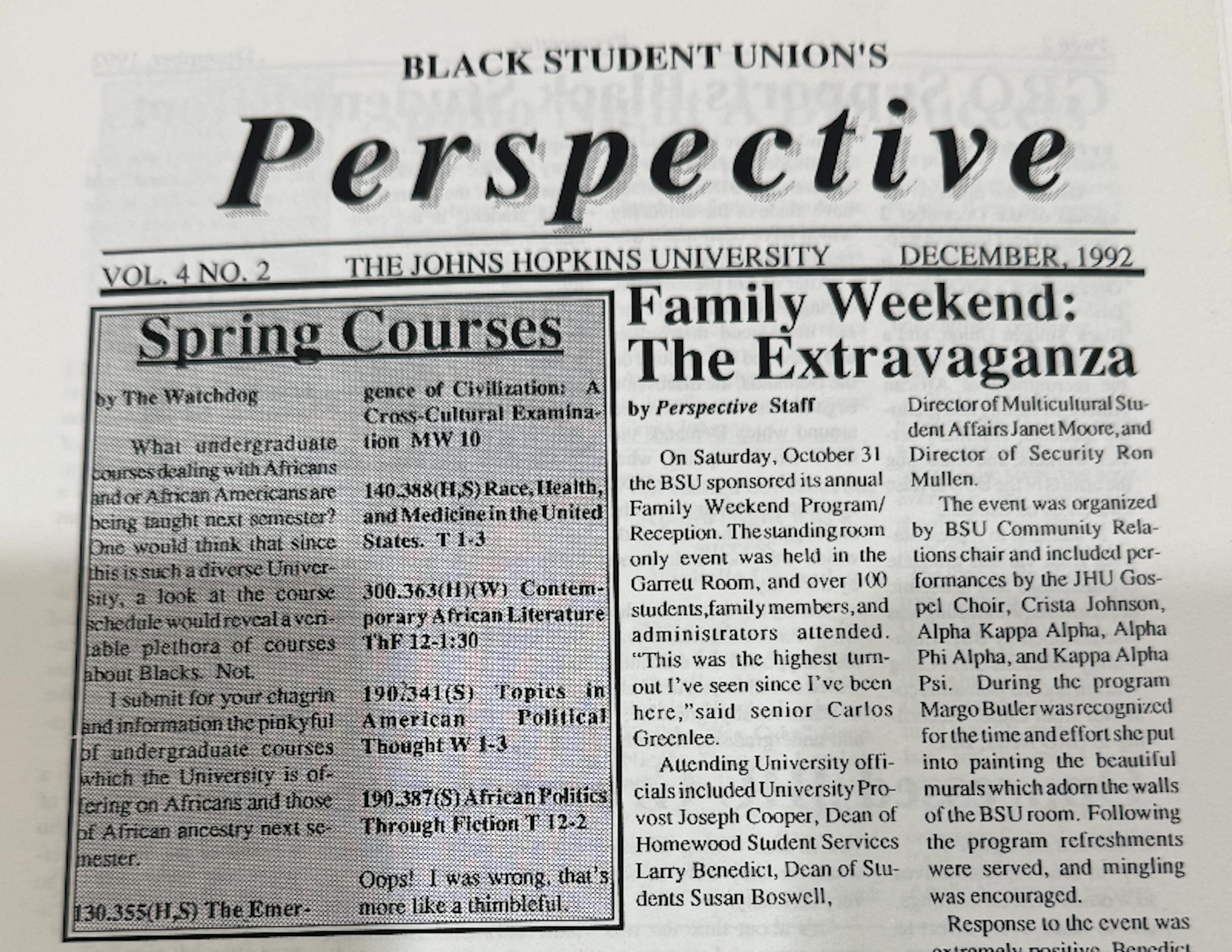
On the front page of the December 1992 edition (Vol. 4, No. 2) is a list of 5 Spring Courses being offered that relate to African-Americans, written by an anonymous student under the pseudonym “the Watchdog.” These include courses such as “Contemporary African Literature” and “African Politics through Fiction.” This critique of the lacking diversity in the University’s course offerings is one of many issues regarding Hopkins’ racial policies raised by Black students in Perspective.
COURTESY OF JULIA SCHAGER
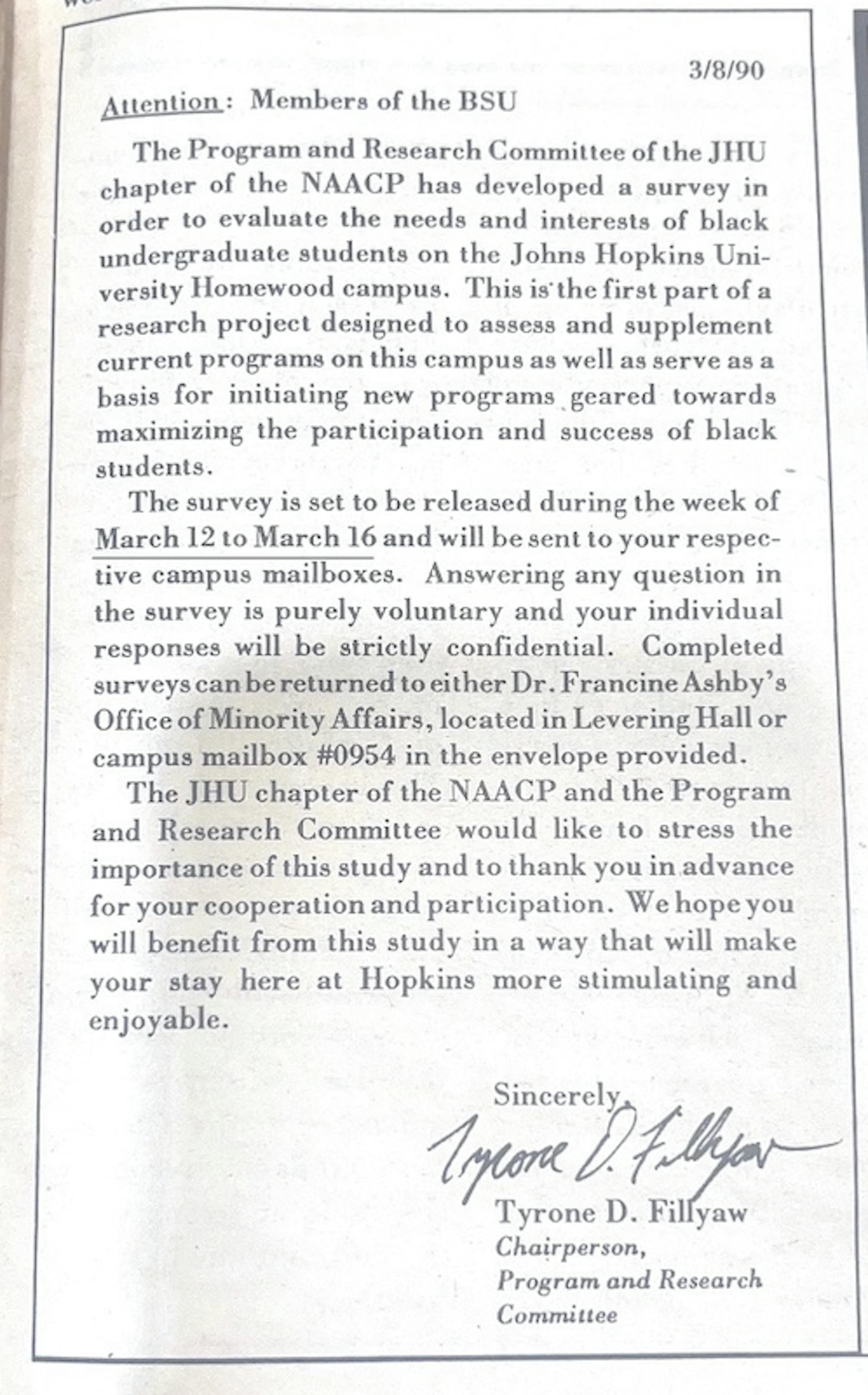
The March 1990 edition publicized a survey to assess programs intending to support Black students, hoping to initiate new programs to increase their success and participation.
COURTESY OF MYRA SAEED
National Commentary
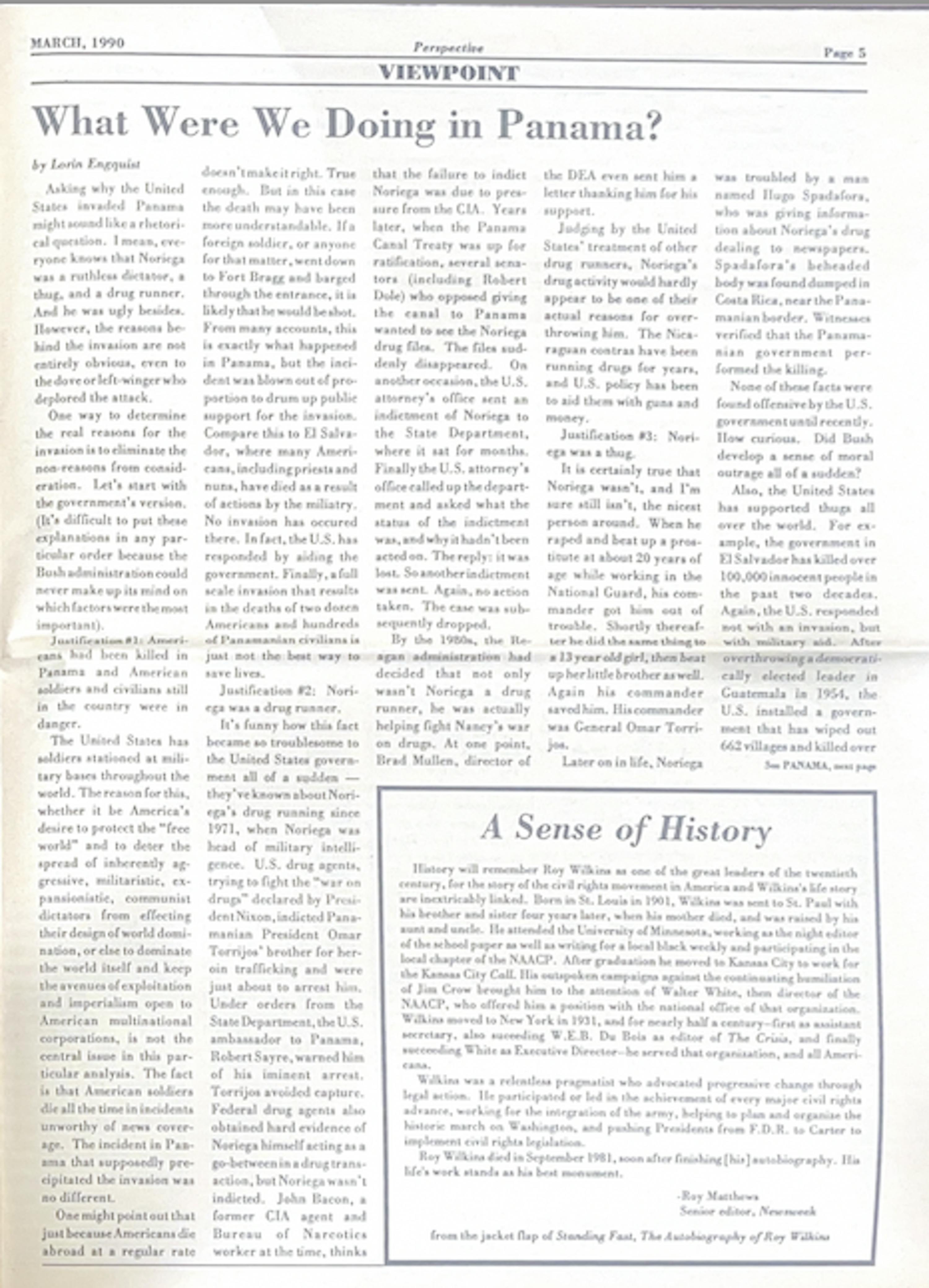
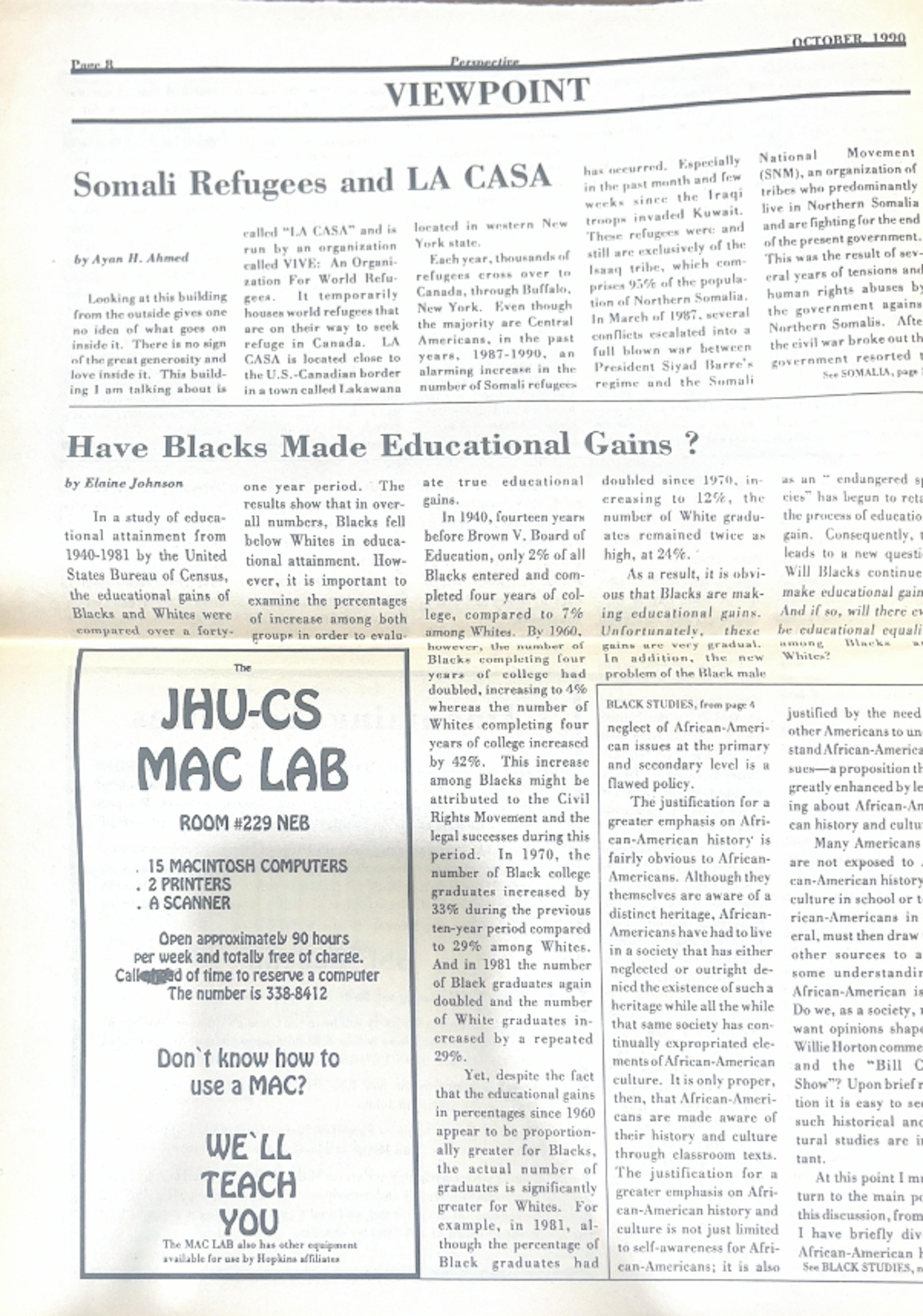
The March 1990 edition of Perspective reports on global conflicts, primarily focusing on newly independent nations and post-colonial adjustments. For example, articles explained the history behind “LA CASA,” a Somali refugee shelter in Canada, analyzed statistics of Black students following the ruling in Brown v. Board of Education and questioned US involvement in Panama, highlighting local atrocities. This edition also highlights notable leaders of the Civil Rights Movement, including Roy Wilkins, who became the Executive Director of the NAACP amidst his advocacy to implement civil rights legislation and integrate the US Army.
COURTESY OF MYRA SAEED
COURTESY OF MYRA SAEED
Notably, Perspective continued its coverage alongside The News-Letter. The formation of a second newspaper can be attributed to the overflow of creativity, passion and desire for change within the BSU at the time.
The Current Perspective
Since the 1990s, the paper publication has developed into an online magazine published annually by the BSU. In an interview with The News-Letter, BSU President Oluwatoyosi Fowowe discussed the transformation of the publication over time.
“It was very activism focused,” Fowowe said. “Very much fighting injustice focused, and over the years, it's kind of evolved more into a celebration.”
This year, development and distribution are under the direction of sophomore Kemka Okoroafor, BSU’s Research, History & Education Chair. In an interview with The News-Letter, Okoroafor outlined his plans for this year’s edition, which will be available online on April 25.
“Our theme is going to be our roots, because it is the 150th anniversary of Hopkins, and it is the 80th anniversary of the first Black student graduating [from] Hopkins,” he said. “We are going to take a historical look, a look back at the organizations on campus, and a look back at how we've developed since 80 years ago.”
Fowowe also described the importance of inclusion to the BSU’s mission on campus and how important it has been for the executive board to encourage student participation from non-Black students outside of BSU.
“We do a big event to launch the magazine every year. All of our events are open to everyone, but I think when people see that it's the Black Student Union it's mainly black students who attend the event, which is something we struggle with,” she said. “People think it's exclusive to black students at Hopkins, which is not the case at all. Everyone is invited – everyone. We love to share all our events and initiatives with everyone.”