Take a few minutes to catch up on some intriguing recent scientific developments.
Unbiased long-term transcriptome storage using vault organelles
Researchers from the Broad Institute recently developed TimeVault, a unique way to record and store cellular transcriptional activity over time. The team utilized a ribonucleoprotein complex known as the vault particle, a non-membrane-bound organelle found in most eukaryotic cells whose function is still largely unknown. Engineering these vaults to bind to the poly(A) tails of nascent mRNAs allowed the complexes to capture and store newly transcribed genes for more than a week with no detectable changes in cellular behavior.
Previously developed CRISPR-based memory systems were constrained by the limited numbers of target sequences, and RNA labeling systems were prone to rapid degradation. By storing nascent RNAs in these vault particles, TimeVault solves both these problems by providing an unbiased, long-term storage system in a single construct. Though the system still has notable limitations, TimeVault has the potential to aid future studies in drug development and developmental biology.
Cognitive speed training linked to lower dementia incidence 20 years later
A study led by Hopkins researchers recently published the results of a 20-year study on Alzheimer’s disease risk. The study consisted of 2,802 adults enrolled into the study from 1998-1999, where participants received different types of cognitive training for five to six weeks. Half of those participants also received booster training sessions one and three years after the initial training.
After 20 years, researchers found that the participants who underwent speed-training tasks with booster training sessions had a significantly decreased rate of dementia (40%) compared to the non-trained control group (49%). This finding supports the idea that cognitive training, even from a distant past, can help prevent or delay the onset of dementia. However, it is important to note this significant result could arise from different factors and variables, and further studies in cognitive speed training should be conducted to find the mechanisms that could prevent age-related cognitive decline.
Artemis II mission set to launch later this spring
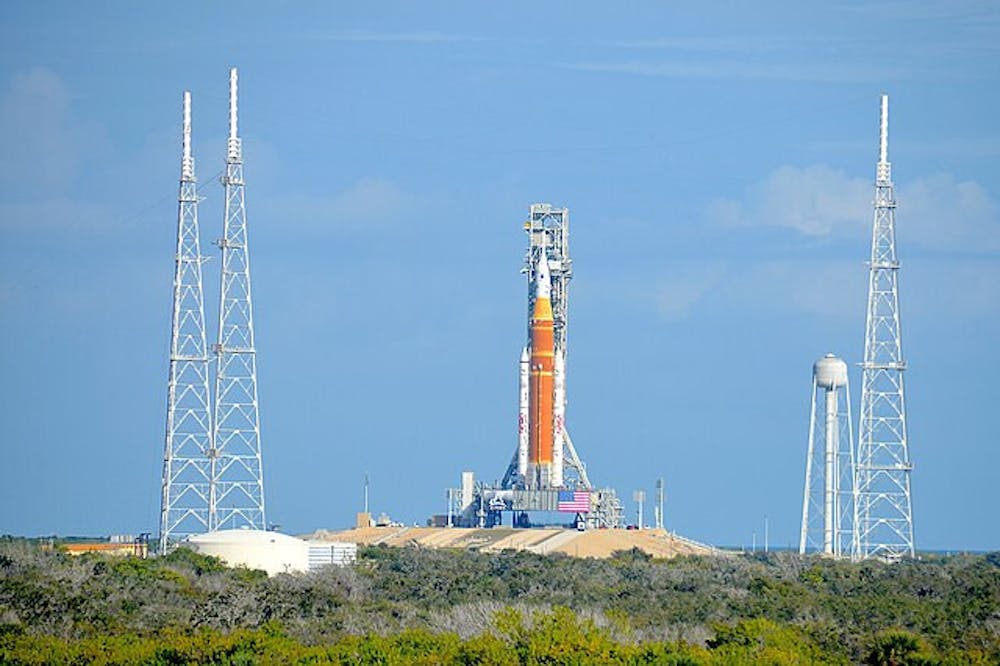
On Feb. 20, NASA successfully conducted a countdown test for the Artemis II mission. It aims to send humans beyond low Earth orbit and around the Moon for the first time in over 50 years. The mission is part of the larger Artemis program, which aims to establish a long-term human presence and a permanent base on the Moon.
The two-day test run required filling up the Space Launch System rocket with liquid oxygen and liquid hydrogen and testing the pre-launch countdown system. Initially, there was significant hydrogen leakage from the rocket, but engineers have since sealed the gaps and successfully completed the countdown test. However, on Feb. 21, NASA announced an upper stage issue in the Artemis II rocket, which may cause a rollback and subsequent delay to an April launch, which was originally March.