Here’s this week’s science news in review:
Fungicidal activity and common skin infections
In a study published in the Journal of Ethnopharmacology, researchers found that an extract from Cistus salviifolius, a Mediterranean rockrose used traditionally for skin conditions, can kill several types of dermatophytes (the fungi responsible for ringworm and other skin, hair and nail infections). The extract was particularly effective against Trichophyton rubrum, one of the most common causes of fungal skin infections, and Microsporum canis, which spreads from animals to humans. Chemical analysis showed that the extract contains large amounts of polyphenols, including tannins and flavonoids. Interestingly, the effect was not universal: the extract did not show significant activity against the yeast Candida albicans at the concentrations tested, suggesting that its antifungal action may only be effective against certain groups of fungi.
The researchers also examined how the extract damages fungal cells. Electron microscopy showed major structural changes, including disruption of cellular organization, membrane separation and formation of large vacuoles. Even more promising, the extract was tested in a laboratory-grown model of human epidermis. Treatment reduced the amount of fungus invading the tissue, helped preserve the skin barrier and lowered the inflammatory response without significantly harming the skin cells themselves. These findings provide a foundation for developing standardized creams or gels and eventually testing their efficacy in clinical trials.
Cosmic flashes and dead stars
In a recent study, astronomers may have identified a new way to recognize collisions between neutron stars. Traditionally, neutron star mergers are associated with extremely short bursts of gamma rays, often lasting less than two seconds. However, researchers investigated an unusual event called EP250704a/GRB 250704B, detected in July 2025, that produced a roughly half-second gamma-ray burst but continued emitting bright X-rays for almost 10 minutes. This was the longest lasting prompt X-ray emission yet observed from a suspected neutron-star merger.
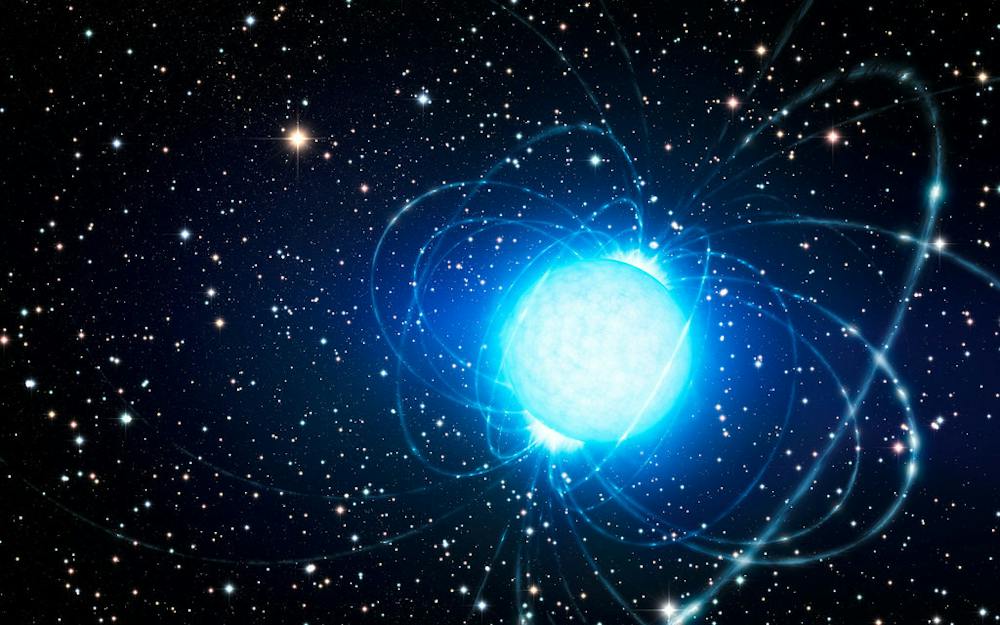
The researchers believe the collision may have produced a magentar, a rapidly spinning neutron star with an extraordinarily strong magnetic field. A magnetar could continue releasing huge amounts of energy after the original collision, explaining why the X-ray signal lasted much longer than a normal short gamma-ray burst. Importantly, astronomers found no evidence of the bright supernova that would usually accompany the collapse of a massive star, strengthening the argument that two neutron stars merged instead. The discovery suggests that some mysterious, fast X-ray transients previously detected throughout the universe could actually be hidden neutron-star mergers.
Tsunami warnings and Pacific ringing
Researchers studying the magnitude 8.8 Kamchatka earthquake of July 29, 2025 found that the resulting tsunami continued producing measurable oscillations throughout the Pacific Ocean for more than 10 hours. To study the event, scientists compared a computer simulation based only on the earthquake’s rupture with measurements from six deep-ocean DART tsunami-monitoring stations. Their model performed remarkably well: predicted arrival times were within about a minute of the actual measurements, while maximum wave heights differed by only about 6 centimeters on average. The results indicate that the earthquake itself was sufficient to explain the observed tsunami without needing to invoke another fault rupture or an underwater landslide. Near the source, the event was still extremely powerful, with water reaching approximately 19 meters above sea level on parts of the Kuril Islands.
The key discovery came after the initial waves passed. The researchers found that tsunami energy remained concentrated in waves with periods of roughly 30–80 minutes for more than 10 hours, meaning the Pacific behaved somewhat like a giant bell that continued vibrating long after being struck. This rhythm could be important for improving tsunami warnings because bays and harbors also have their own natural oscillation periods. If the period of an incoming tsunami matches a harbor's natural period, resonance can cause water levels inside that harbor to become much larger than the waves in the open ocean. Researchers suggest that future warnings could consider not only how high a tsunami is and when it will arrive but also its dominant wave periods to better predict which coastlines and harbors are most vulnerable to dangerous amplification.