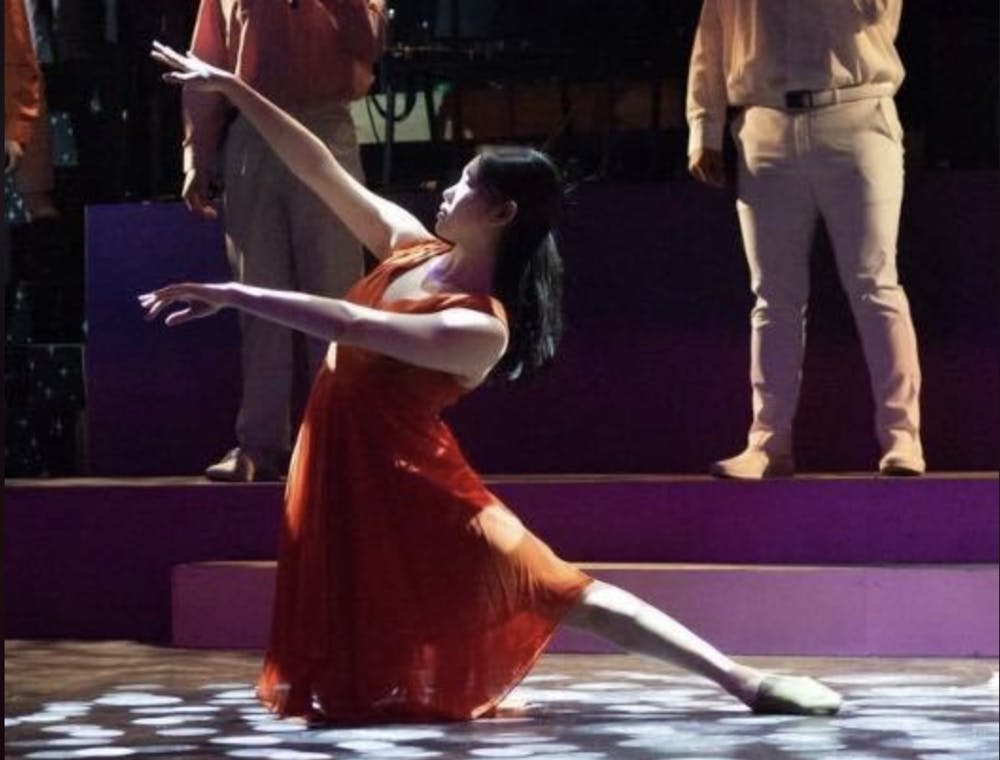

Chapter 1: Feet, meet floor
A little after I learned how to walk, my parents began helping me search for a particular passion that I could occupy my time with, so, like many other young girls, they decided to first sign me up for ballet classes. Every Saturday morning, I would excitedly put on my pink leotard and ballet shoes, and my mom would tie my hair back into a bun, securing it with a million bobby pins to make sure no strand of hair was left out. On every ride to the studio, my anticipation for what would be in store in class never died down, as no class was ever the same. The studio was a room full of possibilities; there was no limit to the dance movements that could be produced in it.
For the next few years, I spent countless hours learning the fundamentals of ballet, such as pliés, pointing my feet (which I often rebelled against doing), chassés, the list goes on. Reflecting back, I think I definitely underestimated the importance of the technical side of ballet when I was little, as I was naturally more enthralled with the ability to move and stretch my body in various ways. I simply enjoyed dancing and was confident that it would be an integral part of my life.
Chapter 2: Embracing movement
At a local arts festival in my hometown, I was captivated by ribbons, flowers and vibrant colors. This was no arts and crafts activity. Adorned with bejeweled floral headpieces and intricately embroidered gowns, the dancers gracefully leaped and twirled on the stage while waving their ribbons, painting the air with vivid hues. In awe of their movements and costumes, which were much different from the pink tutus and leotards I was accustomed to, I wanted to be just like them. So, my mom signed me up for their cultural dance program. Since I was already taking ballet classes, dance was no foreign concept to me — or so I thought.
Perfect posture, pointed toes and elongated lines — this was the mantra instilled in me from ballet for each pose or movement I made. However, when I attended my first class, I was shocked that the corrections I had been drilling myself with had to be erased. The choreography for a fan dance required me to swiftly open and close silky fans while gracefully positioning and twirling them in midair to create the illusion of flower petals flowing along a breeze. In contrast, the choreography for a dance to high-beat music was the opposite, requiring me to create sharp and dynamic shapes with my body and execute each movement with power while wearing a large, rounded and embellished silver headpiece.
Since we learned dances from ethnic groups all throughout East Asia, there was no one set of rules to follow. Instead, each dance entailed its own set of rules, so I was constantly learning and changing techniques. This regular adjustment was challenging, but also surprisingly the most rewarding. Together, as a dance group, our movements illustrated the meaningful stories passed down from generation to generation. This is where I realized that I didn’t just merely enjoy dancing because it “felt good,” but because of the power it had to tell a story without having to say a single word.
Chapter 3: Reclaiming the floor
Considering how much my younger self enjoyed dancing, I bet she would never have imagined that there was a period of time when I didn’t dance at all. Rather, I became more invested in the sport of competitive swimming, which I picked up a little later after dance. I quickly became obsessed with getting faster, so I decided to quit dance as a whole to focus all my energy on swimming. To this day, I don’t regret this decision, as it ultimately led me to the realization that movement through water was not enough to fulfill me.
My high school had an annual dance production, so instinctively, I auditioned, not thinking much of it, as I hadn’t seriously danced in a while. In a shocking turn of events, I made it all the way to the last round of callbacks and was cast in various dances ranging from hip-hop to lyrical pieces. Luckily, most of the rehearsals were during my lunch break, so it didn’t interfere with my swimming schedule, and I was, instead, finally able to pursue both of these passions to the extent I have been yearning for.
When it came time to perform, in what seemed like the first time in forever, I felt like a missing piece of me had come back. From being in full makeup and costume to the lighting effects and music, I forgot and was depleted of the exhilarating feeling of being able to just live in the moment and dance; everything else happening in the world seemed to fade away once I set foot on stage.
Chapter 4: Next Moves
Now that I am in college, I no longer do competitive swimming with a club team or participate in high school productions. It's as if I have to start out fresh and rediscover a way to balance my two hobbies/passions/interests amid the already busy schedule of being a Hopkins student. I don’t know exactly what the future has in store for me, but I think it has been evident through my experiences that, although I may encounter it in different forms, dance will never leave my side.
Catherine Chan is a freshman from Potomac, Md., studying Molecular and Cellular Biology. She is a Social Media Manager for The News-Letter.