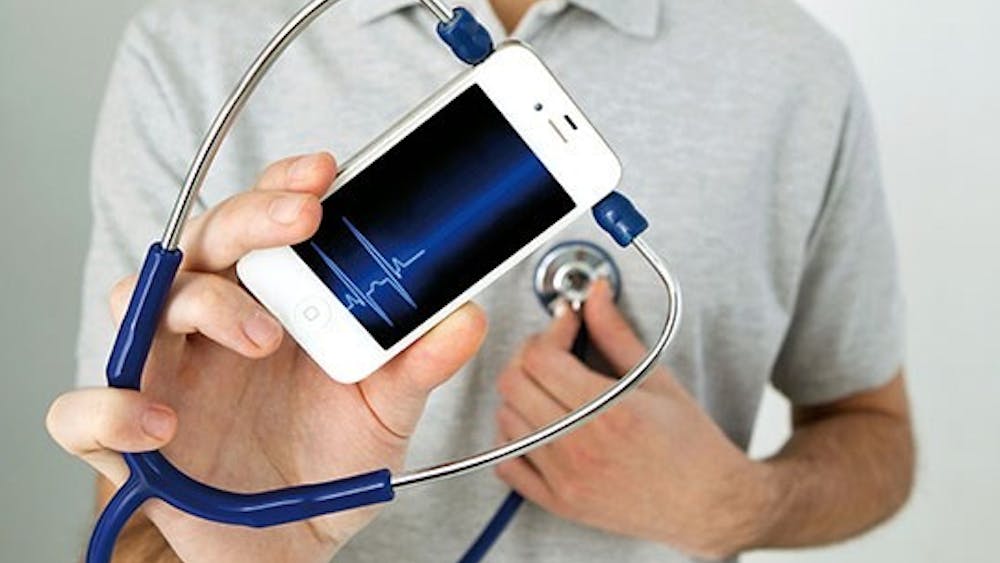
In a recent study conducted by the Media Effects Research Laboratory at Pennsylvania State University, people who were subject to back-and-forth interaction with an online health risk assessment website were more inclined to participate in healthier activities the website suggested.
There are up to five pounds of bacteria living inside of every person right now, and according to scientists at the University of Alabama, that’s actually a good thing. In fact, microbes outnumber our human cells ten to one. Until recently, this system was largely overlooked. Now we know that the gut microbiome widely affects us, causing health issues like inflammatory bowel disease, obesity, food allergies, diabetes or asthma.
Principal investigator Professor Brenda Rapp of the Cognitive Neuroscience Lab on Homewood Campus discussed, her lab’s research, which focuses on word production and comprehension. She described her personal background and her visions for the future of her work.
A group of researchers at the Queen Mary University of London (QMUL) showed through a meta-analysis that Vitamin D protects against acute respiratory tract infections (ARIs). Those who are lacking Vitamin D and those not receiving bolus doses, a quantity of fluid or medication given intravenously at a controlled, rapid rate, benefit the most.
Magnetic Resonance Imaging (MRI) has long been hailed as a noninvasive medical technique that produces intricately detailed images of one’s brain and brainstem areas. In fact, the MRI is more effective at detecting abnormalities in the brainstem than many other scans, such as CT scans or X-rays. A study published in Nature reveals that MRIs can even be used to predict whether or not infants are likely to contract autism at an early age.
A recent study published in the journal Nature reported that there are at least seven Earth-sized planets orbiting a star about 40 light years away. NASA and European astronomers found that these planets are all similar to Earth in that they are similarly sized and their climate is relatively temperate.
A team of researchers at the University of Oxford recently discovered the Loxosceles genus, commonly known as the recluse spider. The species has unusually tough silk produced by a unique spinning mechanism. In the journal Materials Horizons, the research team, also consisting of members from the Applied Math Department from the College of William & Mary in Virginia, published their observations of the recluse spider and its silk’s properties.
The documented increase in the number of people worldwide suffering from obesity and Type 2 diabetes is often linked with an unhealthy overconsumption of saturated fats. Researchers from the German Diabetes Center (Deutsches Diabetes-Zentrum, DDZ) and the Helmholtz Center in Munich (HMGU) have discovered that even a one-time consumption of increased amounts of palm oil can have long-lasting effects on human bodies.
Biologists at the Longevity Institute of the University of Southern California (USC) Leonard Davis School of Gerontology recently discovered a new diet that reduces the risk of age-related diseases.
This past Friday, 300 entrepreneurs, coders and engineers marched into Hodson Hall to begin a weekend-long event called HopHacks. HopHacks is a semesterly event at which students work on a team to create, or hack, a new app, device or idea. Attendees came not only from within the Hopkins community, but also from other universities.
Some Hopkins students might have grown up with long afternoons spent doing homework in their rooms instead of playing outside. Sure, that hard work has played an important role in bringing students here today, but those who must wear glasses or contacts to see the blackboard at the front of the lecture hall might be interested to hear that nearsightedness has recently been linked to the amount of time spend indoors as children.
After barreling through a detailed explanation of her neuroscience research — throwing a “remyelination” here and an “endogenous oligodendrocyte” there — senior Hayley Strasburger casually mentions, “Oh, I came in as a history major.”
Professor Jonathan Aitchison, head of the University of Queensland’s School of Earth and Environmental Sciences, recently proposed a theory that, if proven true, would revolutionize established archaeological models and deductions.
Formerly dismissed as mere by-products from cellular metabolic activities, extracellular vesicles are now regarded as potential biomarkers in diseases such as pancreatic cancer. These vesicles transfer nucleic acids, proteins and lipids, resulting in modifications of both parent and target cells. In the case of tumor-derived extracellular vesicles, target cells are changed so that they comprise an environment favorable for tumor invasion and growth.
Toshiba’s Chairman to Resign after $6.3 Billion Loss
It is an old wives’ tale that being pregnant with a boy is different than being pregnant with a girl. If a woman is pregnant with a girl, it is rumored she will have a wider stomach, more nausea and overall worse pregnancy symptoms due to a higher level of hormones.