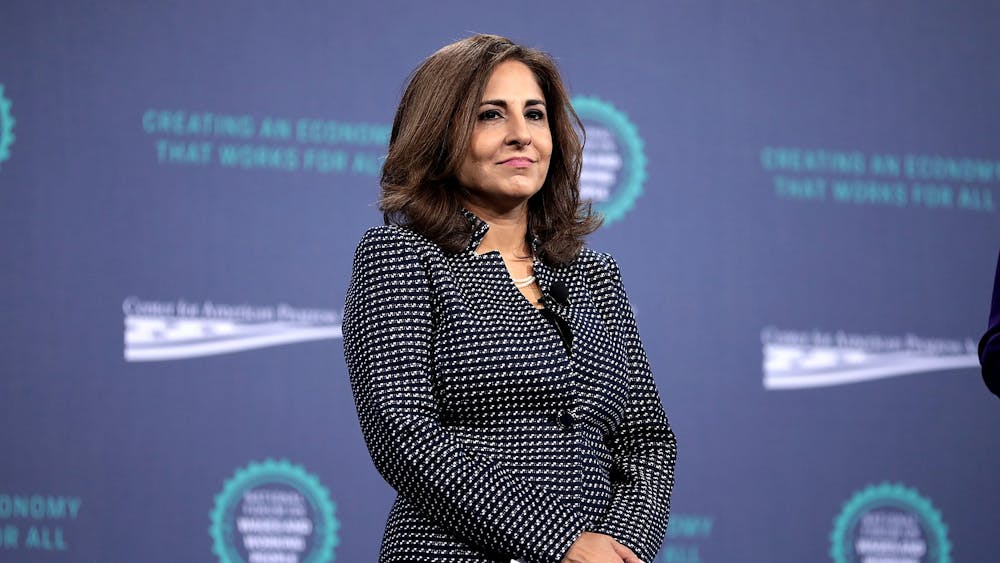
The fight against Neera Tanden's nomination was fueled by hypocrisy
By ANJU FELIX | March 8, 2021Neera Tanden has been caught up in a storm of Twitter receipts, with deleted tweets returning to haunt her in the present.
The opinions presented below are solely the views of the author and do not represent the views of The News-Letter. If you are a member of the Hopkins community looking to submit a piece or a letter to the editor, please email opinions@jhunewsletter.com.
Neera Tanden has been caught up in a storm of Twitter receipts, with deleted tweets returning to haunt her in the present.
There is not universal easy access to the vote. There are too many hoops and hurdles to jump through. Government websites and bureaucracy are a pain to navigate with confusing language and endless rabbit holes. Casting a ballot on Election Day is a burden, with busy schedules and long waiting times.
Hopkins experimenter Shreesh Mysore seems to have difficulty deciding if his grotesque experiments on owls are actually worthwhile, and he may have committed a crime by having birds to experiment on at all.
It has now been over a month since Hopkins students received an email from the administration regarding a sudden spike in confirmed COVID-19 cases on campus. In the following days, several dozen students fell ill with COVID-19, and all in-person activities were banned. That ban was lifted, but ever since the events of early February, all Hopkins students have been subject to harsher restrictions on their in-person activities, including a five-person cap on indoor gatherings of any kind. Only this week has Hopkins allowed outdoor gatherings of more than five people to resume.
In recent months, anti-Asian hate crimes have skyrocketed. Throughout the pandemic, Asian American Pacific Islander (AAPI) communities have faced verbal and physical assaults fueled by fear of the virus and former President Donald Trump’s xenophobic rhetoric. Trump repeatedly called COVID-19 the “kung flu” and the “China virus.” Although he may be out of office, his presidency and the pandemic in particular have unmasked America’s racism and sinophobia.
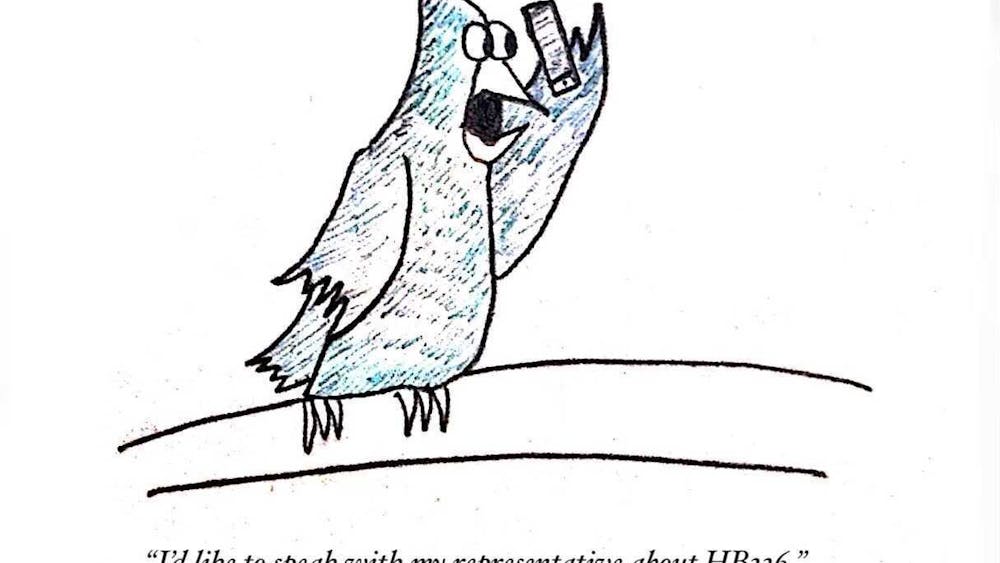
The Maryland General Assembly held a hearing this week on House Bill 336, which aims to prohibit private universities from establishing police departments. Titled “Private Institutions of Higher Education - Police Departments - Repeal and Prohibition,” the bill would repeal several previously-approved articles permitting Hopkins to implement a police force and would more generally amend articles concerning forces at other private universities in Maryland.
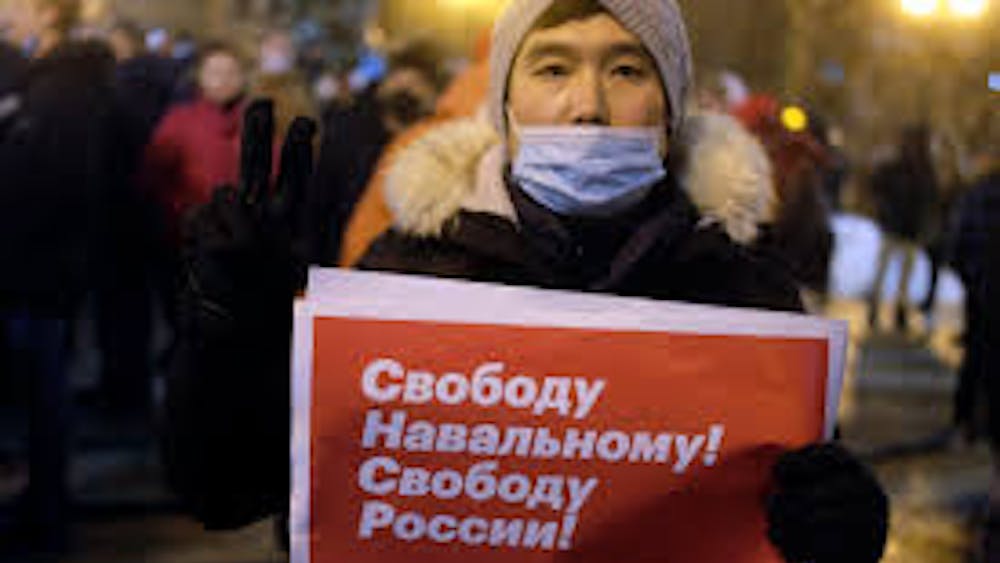
Alexei Navalny, an anti-corruption politician who is the most prominent domestic critic of Russian President Vladimir Putin, was poisoned with a Novichok nerve agent in August. Navalny and countless Western officials consider the incident an assassination attempt carried out with Putin’s explicit approval.
The pandemic has led to a global reckoning, testing not only the strength of government institutions and leaders but also the very definition of human worth. In a race against mutations and transmission, world leaders are attempting to accomplish mass vaccinations, hoping that the scale of distribution will encompass the entire planet.
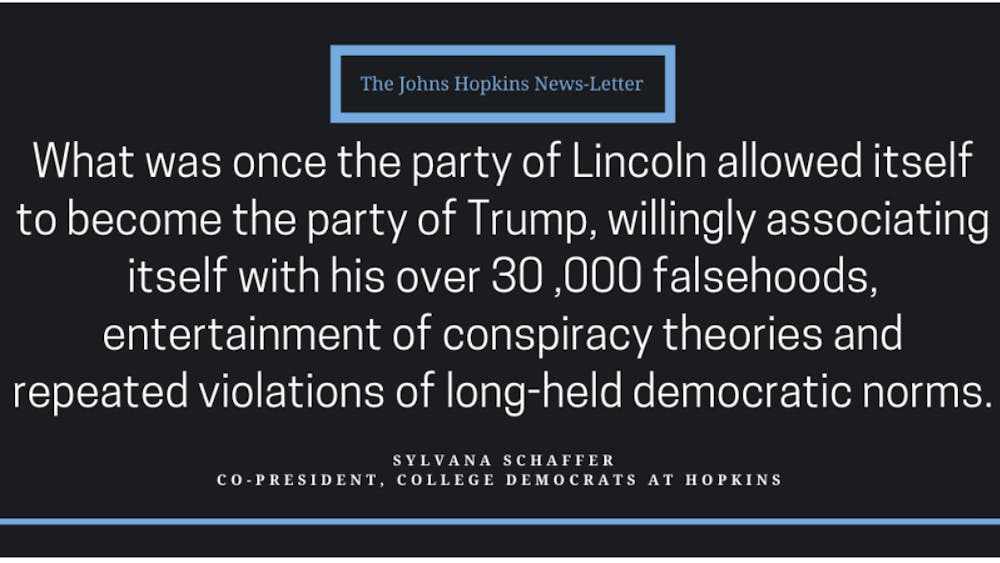
It goes without saying that Donald Trump caused the Capitol Hill riot that took place on Jan. 6, 2021. It doesn’t take a law degree to recognize (unlike Trump’s defense team) that an impeachment trial is not a criminal trial, and the standard for conviction is much lower.
Last July, the University launched several initiatives following the nationwide protests that took place after the deaths of George Floyd, Tony McDade, Breonna Taylor, Ahmaud Arbery and countless others. To address the University’s own role in structural racism, Hopkins created the Committee to Establish Principles on Naming, given the lives and legacies of many of our buildings’ namesakes.
Commencement is now officially confirmed to be online. Although there is a possibility that the modality will change, it seems unlikely given the current severity of COVID-19. The virus has taken away many of our college experiences, but the one I’ll miss the most is being able to walk on stage at graduation in front of my friends, parents and professors.
Barely a week after the semester began, the University detected a spike in COVID-19 cases on Homewood Campus. The cluster was connected to a large party hosted off campus by the North Charles Social Club (WAWA), as well as other smaller events.
For years, members of the Teachers and Researchers United (TRU), a graduate student organization, have called on the University to recognize them as an official union. Since the start of the pandemic, the need for this has become increasingly clear. Over the past 11 months, the University has failed to adequately support its graduate students, despite their crucial role in our institution’s functioning.
Yesterday the University announced that a cluster of students tested positive for COVID-19 in relation to off-campus social gatherings. Until this point, there were relatively few cases among undergraduates. The day after some students had their first day of in-person classes in nearly a year, they were forced back online.
“Where were the genetics PhD students? Or the molecular biology PhD students? And the clinical residents and fellows? They all should have been there.”
Welcome back to another semester and, for many, welcome to Homewood. Though a hybrid semester isn’t the experience we would normally hope for, we are cautiously optimistic to be on campus for the first time since March.
On Tuesday, University President Ronald J. Daniels and Provost Sunil Kumar emailed the Hopkins community that swastika graffiti had been found in a dormitory elevator at the Peabody Institute. The University condemned this act of antisemitism, which has been officially labeled as a hate crime. It is being investigated by the Office of Institutional Equity (OIE) and the federal government.
As faculty affiliated with the Jewish Studies Program at Hopkins, we are deeply troubled by reports that a Hopkins teaching assistant spoke of penalizing students in her class on the basis of their identity and background — even for displaying an image of a street sign in Tel Aviv.
With final exams, holidays and celebration right around the corner, something that unavoidably looms over all of us is COVID-19. Is it safe to travel and share meals? What will spring semester look like? Fortunately, recent news has been dominated by breakthroughs related to a vaccine for the virus.
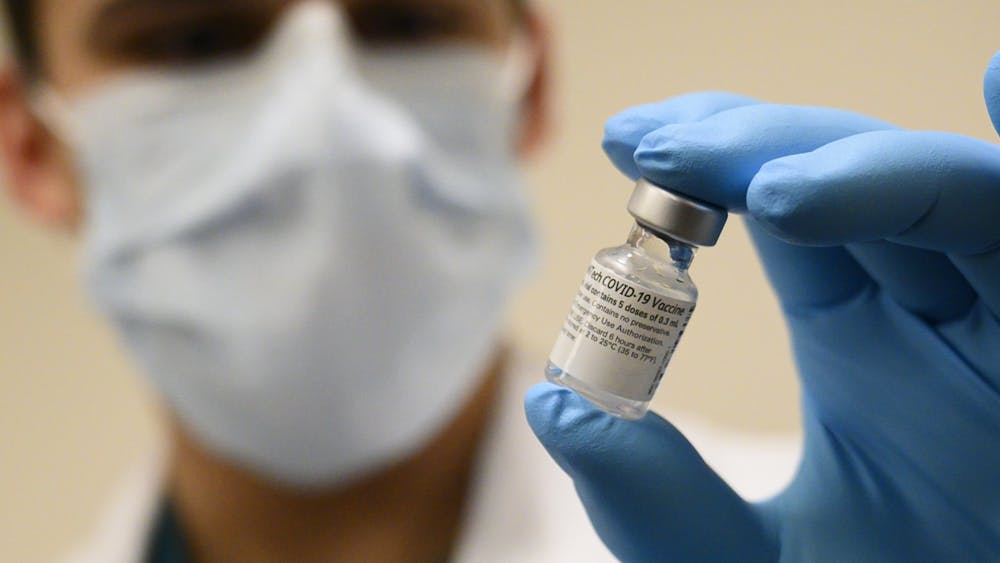
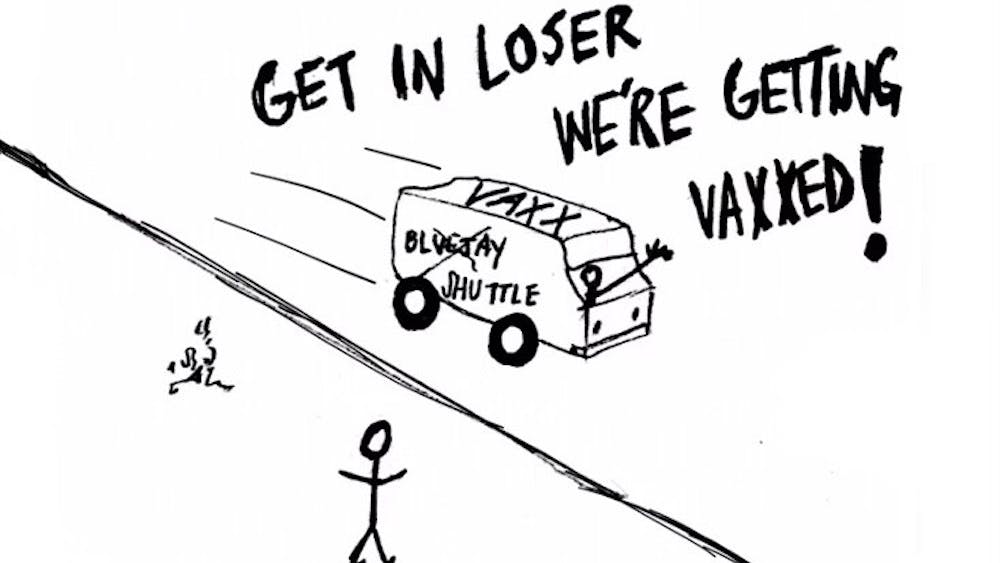
This year has been life-changing for every one of us. From lost loved ones to financial hardships to missed opportunities, we can all agree that this was not what we imagined when Hopkins sent us home last March. However, with the authorization of the Pfizer-BioNTech COVID-19 vaccine and Moderna and many others on the horizon, normal life seems to be within reach — if and only if we as a society decide to take this vaccine. For this and for many other reasons, Hopkins should mandate the COVID-19 vaccine when it is available for us to take it.