If you are both an avid reader and a consistent social media user like me, it’s been hard to avoid the book Yesteryear by Caro Claire Burke. It was published last April and already received major accolades. It was selected as the Good Morning America Book Club Pick for April and has earned a place on The New York Times’ “Best Books of the Year (So Far)” list. Before it was even published, Amazon MGM had already laid claim to the manuscript for a movie adaptation starring Anne Hathaway.
Upon looking into the book further, I was shocked to see that this was Burke’s debut novel. For an author’s first book to receive this much praise and attention, it must either be truly exceptional or exceptionally lucky. I picked up the book to decide for myself which one it was.
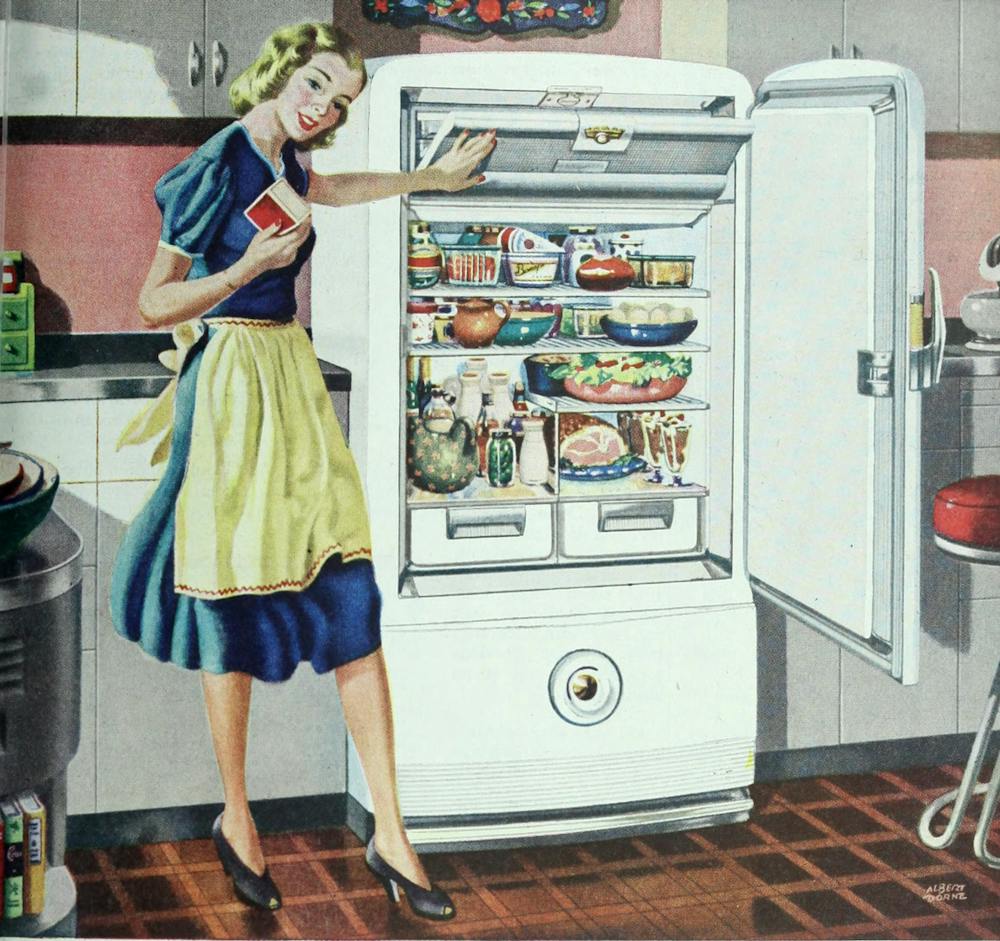
Yesteryear follows Natalie Heller Mills, a “tradwife” influencer living on an isolated farm in Idaho with her loving husband and five (soon to be six) children. She presents a perfect, highly produced life on her social media, preaching Christian values, a return to tradition and classical gender roles. However, we get only a brief glimpse into her modern life before Natalie is transported to 1855. She wakes up in her house — except it isn’t her house — and with her family — except it isn’t her family.
The rest of the story is spent shifting between the past and the present. There are snippets of Natalie’s whole life interspersed with the 1855 timeline she suddenly woke up in. We see her grow from early childhood to Harvard student to full-fledged tradwife influencer. As the story progresses, pieces of the puzzle start falling into place.
I recommend reading Yesteryear for yourself, but if you’re interested in a full review including spoilers, continue reading.
There are a lot of really interesting aspects of this book. If nothing else, it can keep you engaged through storytelling alone. The way the story flips between past and present creates a truly fascinating path through the plot where you feel like you’re putting together pieces of a puzzle. You are given the ending, and through the rest of the novel it’s up to you to try and figure out how Natalie ended up in her situation.
Admittedly, I found some sections of the novel quite predictable. However, this is not necessarily an entirely negative feature of the book. Burke was trying to tell a story about tradwife influencers, and because I’m familiar with a lot of the online discourse surrounding that topic, I was able to more or less predict various tradwife-related story beats. Some plot points, such as her disdain for her children, the constant lies to her audience and her presentation of a perfect life while she has a producer, two nannies and almost 30 employees on her farm aren’t as outrageous. I imagine someone who spends less time engaging with discussions of online tradwife personas might find them more unbelievable. Either way, the storytelling forces you to engage deeply with the story, and it makes it a very fun read.
Beyond the storytelling, I have to praise the depth of emotion that Yesteryear made me feel. First, the story getting me to care and even empathize with our increasingly morally reprehensible protagonist is brilliant. While Yesteryear is ultimately a critique of Natalie and everything she stands for, it takes its main character seriously. You get to understand Natalie, and honestly, I found myself feeling quite bad for her at multiple points.
Although she is in a prison of her own making, it’s almost impossible not to at least slightly empathize with her. This makes the book so much better; it’s not just a mindless bashing of a woman who is a product of a misogynist system, but rather a confrontation of that system. Additionally, there are some disgusting moments in this novel. There were multiple moments where my heart dropped to my stomach reading. One scene where Natalie forgets her infant in her car and is confronted by a fan was so horrific I almost had to stop reading.
However, I don’t think this scene, or any of the other difficult scenes, is horror for the sake of horror. The point of this novel is to feel Natalie’s psychological stress and confront the complicated morality of the story. The book is trying to ask you difficult questions, and the horror is meant to make you confront your own morals.
Finally, I would be remiss to exclude at least a brief discussion of the big reveal twist ending. While it was not exactly the world’s most unpredictable ending, I think it was quite good. Obviously, Natalie had never actually been transported into the past; that would make this book settle into an entirely different genre. Natalie’s pure, built-up psychological stress leading to a mental break is a fitting end to a story that’s ultimately a discussion about the harms of continued performance to fit the mold society puts forward.
While Yesteryear is far from a perfect novel, it is certainly worth a read; especially if you appreciate books that challenge your moral compass and urge you to think more deeply about the systems that affect each and every one of us. It’s a unique book that I can confidently say deserves the praise and accolades it has received thus far.