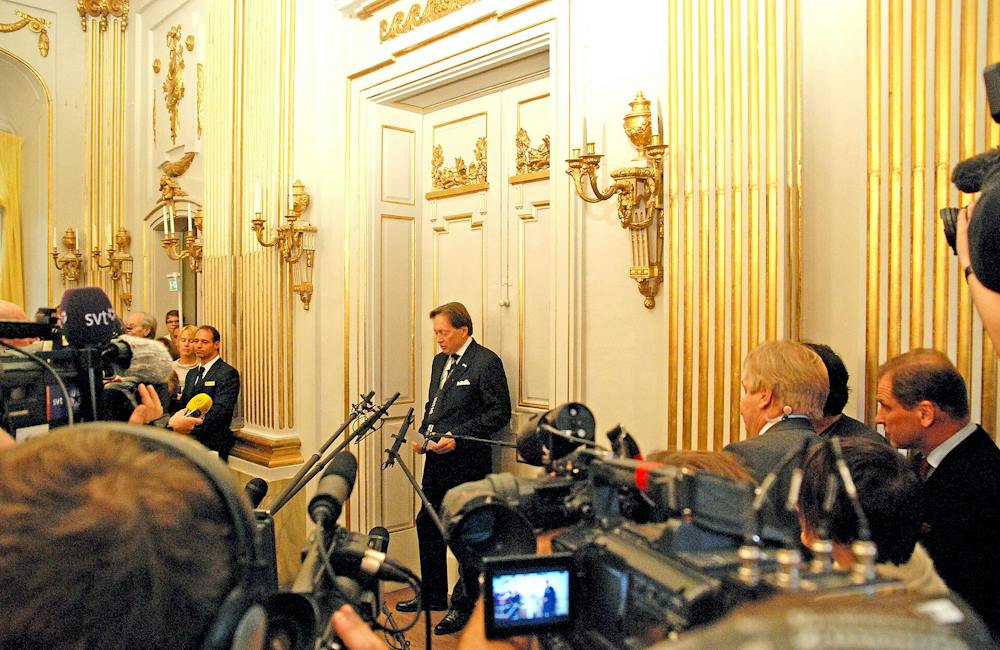
Every year, the Nobel Prize in Literature drives contentious literary discourse about our most prestigious living writers. This year’s prize will be announced on Oct. 8th, and we at The News-Letter are covering and giving background for 10 names which frequently appear on prediction lists: Can Xue, Gerald Murnane, Anne Carson, Thomas Pynchon, Garielle Lutz, Rachel Cusk, Isabel Allende, Haruki Murakami, Elena Ferrante and Hopkins’ own Louise Erdrich. Not interested in betting on some lofty award? Take this list to be a reading guide for your own literary enrichment.
Can Xue, covered by Aditya Sankar
A routine contender, Can Xue is a pillar of the Chinese avant-garde. Her work spans short fiction, novels like The Last Lover, and even contributions toward opera. Xue’s oeuvre carries her hallmarks: pithy, impressionistic and simply written stories haunted by unknowable characters, tinged with magical realism and concluding without resolution.
Several of her translated short stories have been compiled in her collection Vertical Motion. As illustrated in the eponymous tale, where some manner of critter crawls upwards through the dirt, motion — though scarcely in known directions — is key to these pieces. Characters flicker between loosely tied stories, while narratives tumble and fascinating settings are snatched into mystery. Xue gently unsettles, swirling into fragrance like in the twisted childhood wonder of “Cotton Candy.” For your consideration, I present some words from “Crow Mountain”.
“We were on the same mountain, but I was also in a vacant building. How bizarre. Ah, I saw the giant's feet cross the pillar of light. He made no noise as he passed by.”
Gerald Murnane, covered by Aditya Sankar
Touted as the most and least Australian writer, Gerald Murnane straddles the line between abstraction and autobiography. His distinctive lifestyle permeates his work: He famously uses typewriters and has never boarded a plane. Murnane’s approach is that of a landscape artist, describing in one interview, “Represented by about 25 colored lines is a diagram of my life.”
His writings are nebulously personal, excavating his interiority for obsessive motifs of horse-racing, colored glass and vast plains. His is a recursive world; he returns to the opening of his masterpiece The Plains for Border Districts: “20 years ago, when I first arrived on the plains, I kept my eyes open,” becomes “Two months ago, when I first arrived in this township just short of the border, I resolved to guard my eyes.” Eschewing narrative and names, Murnane meditates on the construction and breakdown of image and invites the curious explorer on bizarre voyages.
Anne Carson, covered by River Phan
In September, Anne Carson wrote a great but unexpected essay about Rosalía for the London Review of Books, but she’s a renowned literary talent aside from the surprise pop-star coverage. The award-winning Canadian classicist writes an array of work ranging from poetry to essays to literary criticism.
Although she hesitates to call herself a poet, Carson has written outstanding poetry as she captures the breadth of human emotion and experience through a blending of genre and style. Her verse novel Autobiography of Red simultaneously delights and disturbs through its poetry, combining myth and modernity to convey a heartwrenching story of love and identity. Her poetry translations are similarly quite moving. Her translations of Ancient Greek poet Sappho’s poems in If Not, Winter render Sappho’s reflections on desire with masterful contemporary syntax and verse.
Carson’s prose and poetry have been awarded extensively, but her ability to discuss and dissect human experiences with precise, sensual detail and feeling should make her a strong contender.
Thomas Pynchon, covered by River Phan
Last year could have been deemed the year of Thomas Pynchon. In 2025, the reclusive American novelist released his first novel in 12 years, Shadow Ticket, which is set to be released in a new paperback format on Oct. 6th. The initial release of Shadow Ticket put Pynchon back in discussion within literary circles, but his 1990 novel Vineland also suddenly regained eyes from the wider public last year. Director Paul Thomas Anderson took loose inspiration from Vineland for One Battle After Another. The film swept awards including the Academy Award for Best Picture at the 2026 Oscars, and in doing so, gave new readership to Pynchon from moviegoers who wanted to experience the original story.
Pynchon’s work has always been a reflection of our weird and lawless world, but recent times have seemed to more closely imitate his fiction than ever before. The American news cycle is filled with “Pynchonesque” occurrences: intricate government conspiracy theories, seemingly ridiculous naming conventions and cases of increasingly intense surveillance. Although the novelist prefers to remain away from any media coverage, his body of work is an undeniably relevant lens of the culture surrounding us.
Garielle Lutz, covered by Estelle Chen
American short story and flash fiction author Garielle Lutz isn’t particularly well known. As Daniel Kolitz wrote for The Nation, “when Garielle Lutz’s name first began circulating on prediction lists for the Nobel Prize in Literature [in 2022] almost no one was surprised, for the simple reason that almost no one knew who Garielle Lutz was.” Nevertheless, she sustains a devoted fanbase who adore her careful attention to the minute yet lively drama of word-sounds.
Drawing from editor Gordon Lish’s theory of “consecution,” Lutz argues for detail at the atomic level of the word in her most famous essay, “The Sentence is a Lonely Place.” Generating a sense of inevitability, each word must respond to and be born from what precedes it. Take as an example this sentence from Lutz’s short fiction collection Partial List of People to Bleach:
“This library had a back-corner department of cassettes thick-cased into sets, series.”
Listen to how “cassettes” is reversed by “thick-cased” but is set right by “sets,” which itself finds echoes in “series.” Lutz’s precision places her at a forefront of innovative anglophone fiction writers, and the 2026 Nobel might find a winner in this eccentric underdog.
Rachel Cusk, covered by Estelle Chen
British-Canadian novelist Rachel Cusk wants to interrogate life. Her most famous work, an autofiction trilogy composed of Outline, Transit and Kudos follows a woman writer, like her, repeatedly attempting to strike at transcendental truths.
The truths of Rachel Cusk often pertain to the tension between writing and traditional womanhood. Is a woman’s creativity in art or in childbirth? The narrator of Cusk’s novel Second Place grapples with this when she invites a male painter “L” to her coastal guesthome for a creative retreat. His presence disrupts her quiet family life and unleashes in her a rebellion against the confinements of the feminine body:
“The image of this running man, I said to L, with his arms raised in surrender, had remained with me as the representation of everything I had failed to reconcile myself to. For me, there was no escaping my physical body. But he could simply run away!”
Cusk’s work reflects on deeply personal decisions that construct her identity. Her remarkable reflections on life might strike at not only the truth, but also the 2026 Nobel Prize.
Haruki Murakami, covered by Sinecio Morales
Perennial Nobel candidate Haruki Murakami’s career began with a “satisfying crack” of inspiration from a baseball game, leading to his debut novel Hear the Wind Sing. His work is steeped in musical landscapes pulling from the classical, popular and jazz music he has interacted with throughout his long life and career, including ownership of a jazz bar. His international breakthrough novel, Norwegian Wood, takes its title from a Beatles song that figures affectingly in the novel. His well-renowned nonfiction includes an insightful series of conversations with conductor Seiji Ozawa transcribed as Absolutely on Music. His short stories are just as characteristically Murakami as his other work, pairing startling absurdity with seemingly mundane everyday lives and having complex discussions about the human experience with spare language.
Murakami is variably lambasted and praised for his trademark of explicit vignettes and throughlines in the lives of apathetic, loner male protagonists as they encounter women that often “exist solely to fulfill a sexual function” according to a provocative and significant interview with Mieko Kawakami. Yet through this unwavering and consistent style, Murakami has cemented his status as a literary giant and a household name.
Isabel Allende, covered by Sinecio Morales
Isabel Allende is constantly concerned with the writer’s duty to make readers go on a journey with them, and to make them want to do it. As a relative of Salvador Allende, readers often go in expecting historical and political commentary in her novels, of which there is plenty; yet, Allende’s work still firmly places itself in the world of fiction. The magical realist influence in her sprawling debut novel, The House of the Spirits, often leads her name to come up in the same breath as Gabriel García Márquez’s One Hundred Years of Solitude.
Allende places a lot of stock into beginnings, starting every new novel on Jan. 8th of the year following her last finished work. Her works present the reader with their groundwork from the very first line, such as the line “My name is Eva, which means 'life,' according to a book of names my mother consulted,” that opens her novel Eva Luna. Her consideration of life in its entirety is perhaps best expressed in this quote from her powerful memoir Paula, with which I will leave you:
“Silence before being born, silence after death: Life is nothing but noise between two unfathomable silences.”
Elena Ferrante, covered by Riley Strait
You may not have heard the name Elena Ferrante before, and that might be just what she wants. Ferrante is not even the real name of the pseudonymous Italian writer, who is believed to have been born in Naples, but — because she agrees to few interviews, and only via email — we cannot be certain.
The first time I remember hearing her name and committing it to memory was when The New York Times released their 100 Best Books of the 21st Century. My Brilliant Friend, written by Ferrante and translated by Ann Goldstein, topped the list. The first in her quartet of Neapolitan Novels, My Brilliant Friend may be redundantly described by that midmost word: “brilliant.”
Britannica puts it well: “[Ferrante’s] books explore the complexities and contradictions of being a contemporary, educated woman.” Especially true of the Neapolitan Novels, “female narrators describe, sometimes with unsettling candour, their ambivalence toward motherhood, the tedium of sex, and the effort to preserve an identity within a traditional marriage.”
As soon as I finished my journey through the quartet, when asked my favorite book, I began adding to my mix of ever-rotating answers: “the Neapolitan Novels” — unable, even, to pick one.
Louise Erdrich, by Riley Strait
This is not the first time I have written about Louise Erdrich for The News-Letter. In 2024, after the release of her most recent novel (but not most recent book), The Mighty Red, I wrote an effusive review. Her acclaim is far from recent, however — her 2012 novel, The Round House, won the National Book Award, and her 2020 novel, The Night Watchman, won the Pulitzer. The Writing Seminars at Hopkins, I’m certain, is proud to boast Erdrich as one of its alumni.
In her writing, Erdrich honors her community by giving keen focus to the Ojibwe people of the northern Midwest. She doesn’t shy away from reality, as the Native characters in her novels see the adverse effects of contact with white culture, including elements such as “alcoholism, Roman Catholicism, and government policies to tear down the Native community.”
Reviewing my own review, I recall how reading Erdrich “tugged at my heartstrings, keeping them taut like a thread tied between a loose tooth and a doorknob.” Yes, disaster imminent, but the kind of catastrophe that will only bring you closer to growing and healing.