A fierce nationwide redistricting battle has unfolded ahead of the midterm elections this year, sparked by the Texas state legislature’s adoption of an aggressively gerrymandered congressional map aimed at flipping Democratic-held seats. Across the country, around a dozen state legislatures have initiated efforts to redraw districts to favor their parties. Thus far, California, Texas, Missouri and North Carolina have successfully enacted new maps aimed at partisan advantage, while Maryland, Virginia and Florida continue to push new maps through their legislatures.
In the U.S., all elections are regulated, organized and conducted by individual states. States draw their own districts, a process that normally takes place every 10 years after the national census. In the past decade, redistricting has become increasingly partisan, resulting in more lopsided majorities in state legislatures and congressional delegations than ever before. While gerrymandering has been an issue in the United States since its earliest days, mid-decade redistricting in multiple states is unprecedented.
Gerrymandering undermines democracy. State legislatures with entrenched majorities are less accountable and more out of touch with their electorate than those who are forced to compete in every election cycle. Gerrymandering silences the voices of political minorities, who deserve representation just as much as the majority in their states.
In our two-party political system, redistricting is a zero-sum game. When one party draws districts to favor itself in states it controls, the other party must counter-gerrymander to avoid losing ground in the battle for the House of Representatives. Fair play is only possible when both sides agree on and respect the rules of the game and when majorities in state legislatures are naturally reluctant to implement reforms that could put their own positions in jeopardy.
It’s in moments like these that it is imperative for the federal government to intervene. While our Constitution has placed primary responsibility for conducting elections in the hands of the states, Congress can and should take an active role in safeguarding our democracy by responding to the threat of unchecked partisan gerrymandering.
One often proposed solution to end partisan gerrymandering is to shift redistricting power away from politicians in state legislatures and into the hands of independent redistricting commissions (IRCs), which are nonpartisan committees tasked with redrawing districts every 10 years. In 2021, congressional Democrats unsuccessfully tried to enact the For the People Act, which would require IRCs in all 50 states.
While an attractive and straightforward solution, IRCs are ultimately imperfect. In practice, many states’ commissions are not as “independent” as they are publicized to be. The California Citizens Redistricting Commission’s maps tend to still have bias towards incumbents, for instance.
It may perhaps be time to start questioning the entire electoral system, instead of just the process.
Among the world’s most advanced democracies, the U.S. is one of a small handful of countries (including Canada, the UK and India) that still relies on plurality voting in single-member districts, also known as first-past-the-post voting.
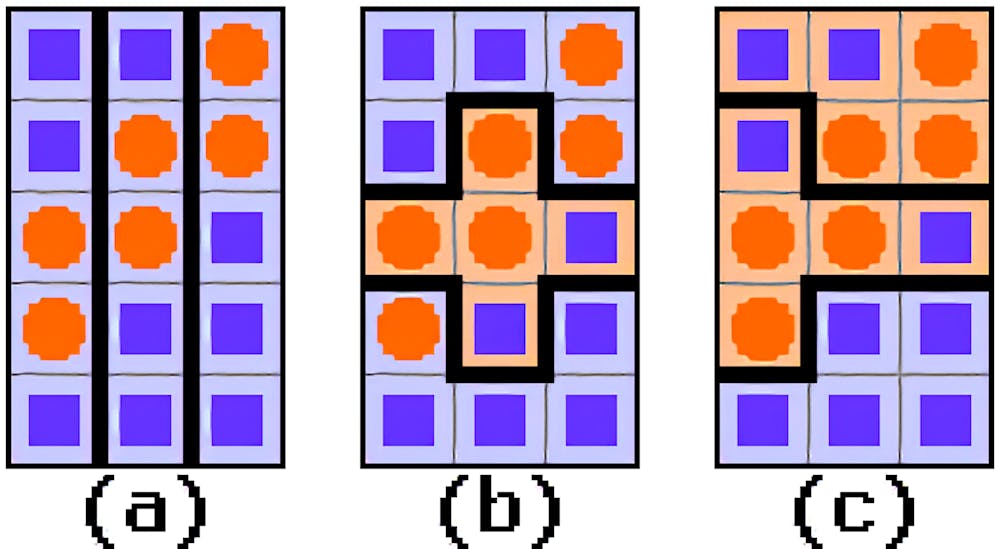
The flaws with single-member plurality voting are numerous. A party's seats in a legislature has little to do with what percent of the votes it receives in an election, only in how those votes were geographically distributed. In last year’s general elections in the U.K., the Labour Party won nearly two-thirds of seats in Parliament, despite only winning around a third of the popular vote. Because in each district, only one candidate can win, the total number of “wasted votes” is enormous. Perhaps most importantly, single-member districts allow the shapes of the districts themselves to impact the results of the election, diluting voting power.
There are many viable alternatives to plurality voting used around the world that can easily be adapted to our federal republic. Proportional voting, for example, apportions seats based on the total percentage of votes a party receives. Each state’s congressional delegation could be divided based on the state-level vote total of a given party. The elections reform think tank FairVote has a proposal to implement a system that combines multi-member constituencies with ranked-choice voting, which preserves the ability of voters to choose their preferred candidates. For those that favor preserving the representation of individual districts to ensure local interests are still accounted for, the mixed-member proportional system used by Germany and New Zealand may be another option. In this system, single-member districts still exist, but overall, results are rebalanced based on the actual vote totals of each party.
Until there is enough political appetite in this country for serious electoral reform, we might have to settle for incremental steps to neutralize the worst excesses of partisan gerrymandering. These include things like passing a federal ban on state legislatures doing mid-decade redistricting unless existing maps have been struck down by courts.
The path toward electoral reform is difficult. Both parties stand to benefit from gerrymandering and have no reason to change a system that can entrench their power. Nonetheless, democratic legitimacy relies on voters choosing their representatives, not the other way around. The health of our democracy relies on competitive, fair elections. Until meaningful reforms are implemented, the endless cycle of tit-for-tat redistricting for partisan advantage will continue.
Conner Feng is a sophomore from San Diego, Calif. majoring in Public Health and Moral and Political Economy.