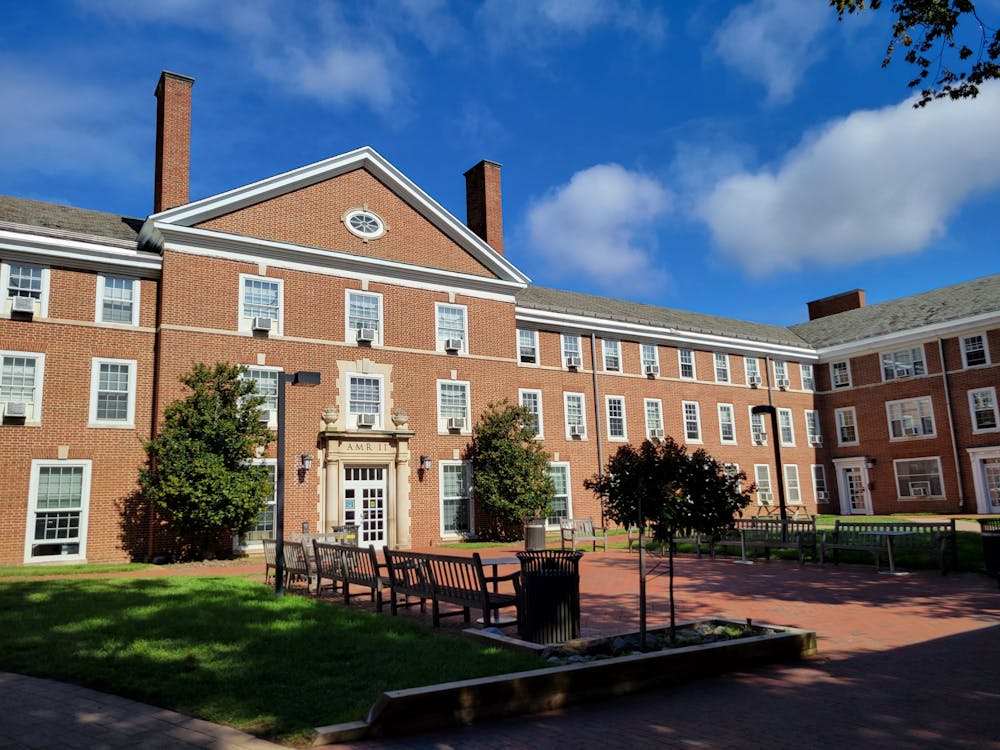
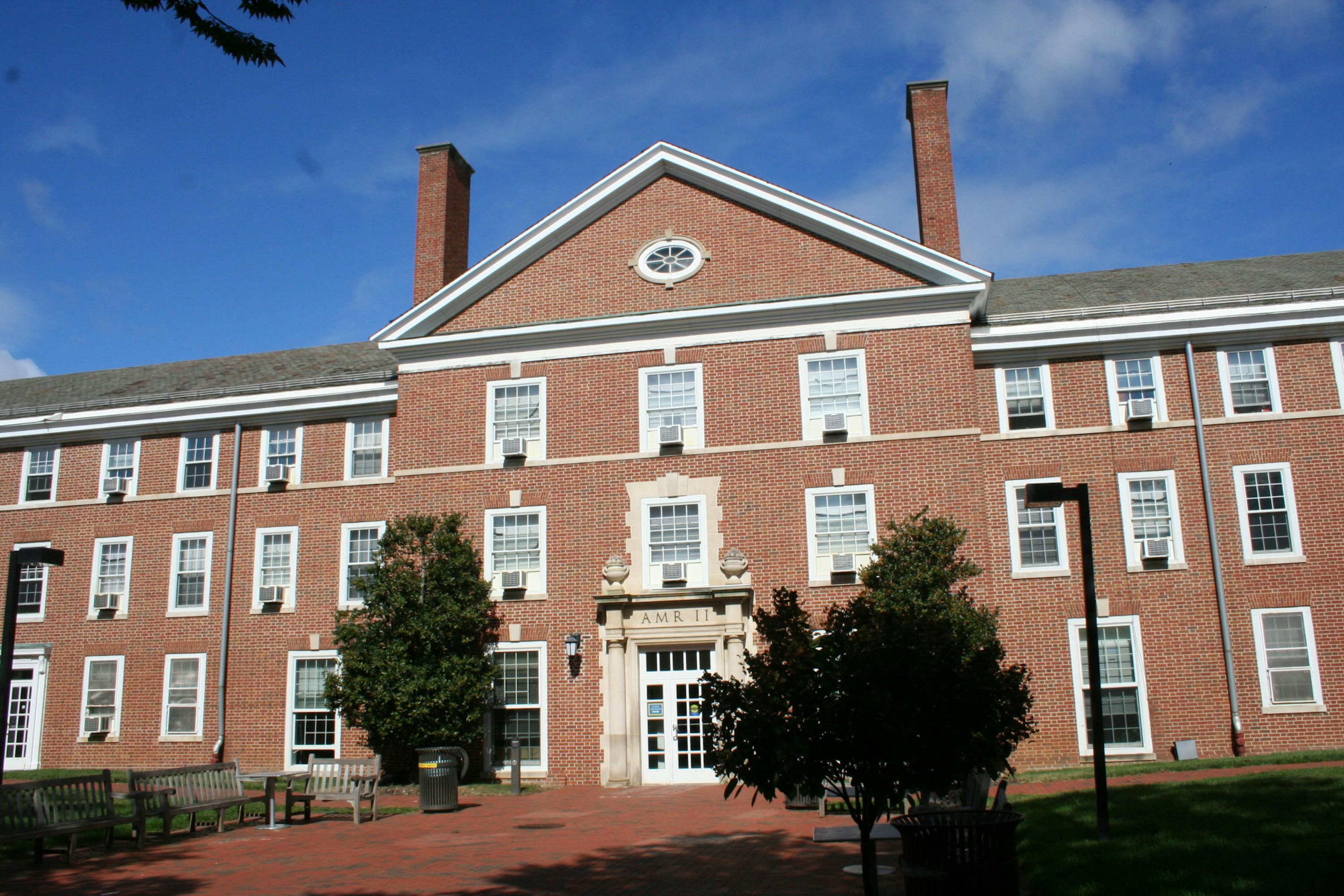
On Oct. 9, The News-Letter received an anonymous tip that there had been a break-in at the AMR II dorms. According to various sources, Hopkins staff found a homeless woman residing in the AMR II basement and was seen escorting her out.
On the anonymous student discussion platform Sidechat, students discussed the incident, with many sharing their thoughts on the situation.
“Why is no one talking about how there was a homeless lady in the basement of AMR II last week?” one user wrote. “It’s genuinely so alarming how they never even sent an email about this.”
However, upon further investigation, The News-Letter found that the claim was false. No police report or residential life notice had been filed regarding the alleged event. In an email to The News-Letter, University representatives confirmed that the situation was false.
“The matter has been fully investigated and there was no break-in,” they wrote.
Conversations surrounding residential safety have grown increasingly common in student spaces, with many expressing mixed feelings about the balance between accessibility and security. While the incident was established by the University to be unfounded, it raised broader questions about campus safety and how students actually feel about security in residence halls, especially given that a confirmed incident of a “break-in” sparked discussion. Additionally, according to an anonymous source, a second situation involving a suspicious person in AMR II occurred on Oct. 11.
Freshman Lyla Urban explained that she feels uneasy about the accessibility of the dorms in an interview with The News-Letter, describing a particular incident she witnessed.
“I think that, for the dorm itself, it feels relatively safe,” she said. “But there has been an incident where someone has gotten into [AMR II] that hasn’t had a key card before and that wasn’t a Hopkins student, and that was a little bit concerning.”
ERIC WANG / STAFF PHOTOGRAPHER
Urban then suggested that the University could take additional steps to monitor who enters the buildings. She shared that simple visual checks by security staff could make a noticeable difference in preventing potential safety issues and reassuring residents.
“I think [that] the people stationed outside [should be] checking to see, like ‘Hey, does this look like a freshman? Does this look like someone who would go here and who seems to be going in and out smoothly?” she said.
Similarly, freshman David Maier echoed this response. In an email to The News-Letter, Maier acknowledged that while the University has implemented extensive safety precautions, their effectiveness depends largely on consistent enforcement and vigilance.
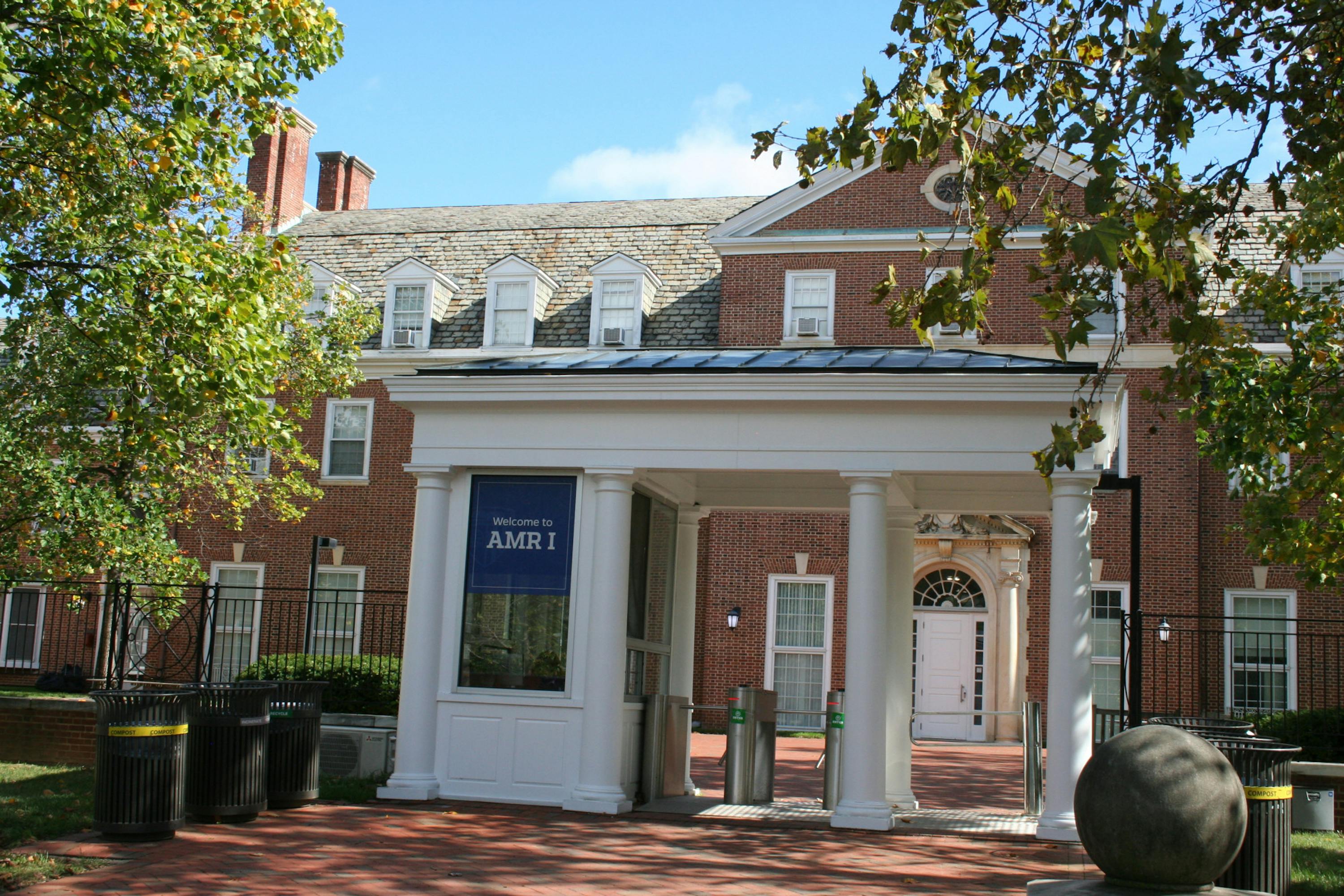
“I feel that Hopkins has many safety measures in place for dorm safety that other schools don't have, such as the security guards and turnstiles. However, hearing about the recent incidents on campus certainly has made me concerned about overall safety. I think that the measures in place should be [enough, but] aren't fully working to the best of their ability,” he wrote. “The security staff could be more attentive, considering the AMR II incident.”
To gauge student sentiment, The News-Letter conducted a survey measuring student perceptions of safety. The survey allowed for both freshmen and sophomore students to respond, with 47.8% of students reporting from freshmen dorms (the AMRs and Wolman) and 39% of respondents from sophomore housing (Scott-Bates Commons, Bradford and Homewood). The form also includes McCoy — which houses both freshman and sophomores — which accounted for 13% of responders.
On a scale of one to 10, students rated the dorms an average of 8.35, indicating a generally strong sense of security among residents despite isolated concerns. The distribution was positively skewed, with 91.2% of students rating dorm safety between eight and 10, while 8.7% rated it between one and six.
Some student responses echoed this sentiment, such as freshman Charlie Langendorf. Langendorf shared that while he has seen discussions online about potential safety issues, his personal experience has been largely positive in an interview with The News-Letter.
“I’ve heard lots of rumors on Sidechat and stuff about things happening, but for me personally, I haven’t seen anything bad happen,” he said. “I think that it would be nice to have two swipes to get in all the time, so you really have to have a J-Card. But for me, I haven’t really noticed anything wrong.”
Langendorf also shared his opinion on the communication of dorm safety policies, noting that while the University has been responsive to student concerns, some logistical details could have been made clearer from the start of the semester.
“I think that it would have been nice in O-Week to have a little bit more about signing people in and how that works at the front, because it took some trial and error to figure that out, but I think generally it’s pretty well done,” he said. “[The University] had to change my locks at one point, and they sent me an email... and they were very communicative, especially when there were changes from the normal, so I think they’ve been good at that.”
In the survey, students rated their exposure to resources that allow them to report a safety concern on a scale of one to 10. On average, students rated this a 6.57. The responses were more evenly distributed, with 43.3% of students rating their exposure from one to six, while 56.4% rated it from seven to 10.
Some students suggested that the University’s safety systems are comprehensive, their effectiveness can vary depending on how consistently they are implemented and monitored.
In several anonymous responses to the survey, students raised concerns about the behavior and reliability of some security personnel.
“I feel [dorm safety] to be very thorough,” one shared. “It might be a tad bit unsafe that I've witnessed Alliance Officers high on the job, but with a job like that I don't blame them.”
“I feel like safety protocols are relatively strict, [but] I find the placement of security guards around campus that can't intervene properly in threatening situations to be a waste of money,” another wrote. “However, considering we have a strong public safety presence and the blue light system, I feel relatively safe.”
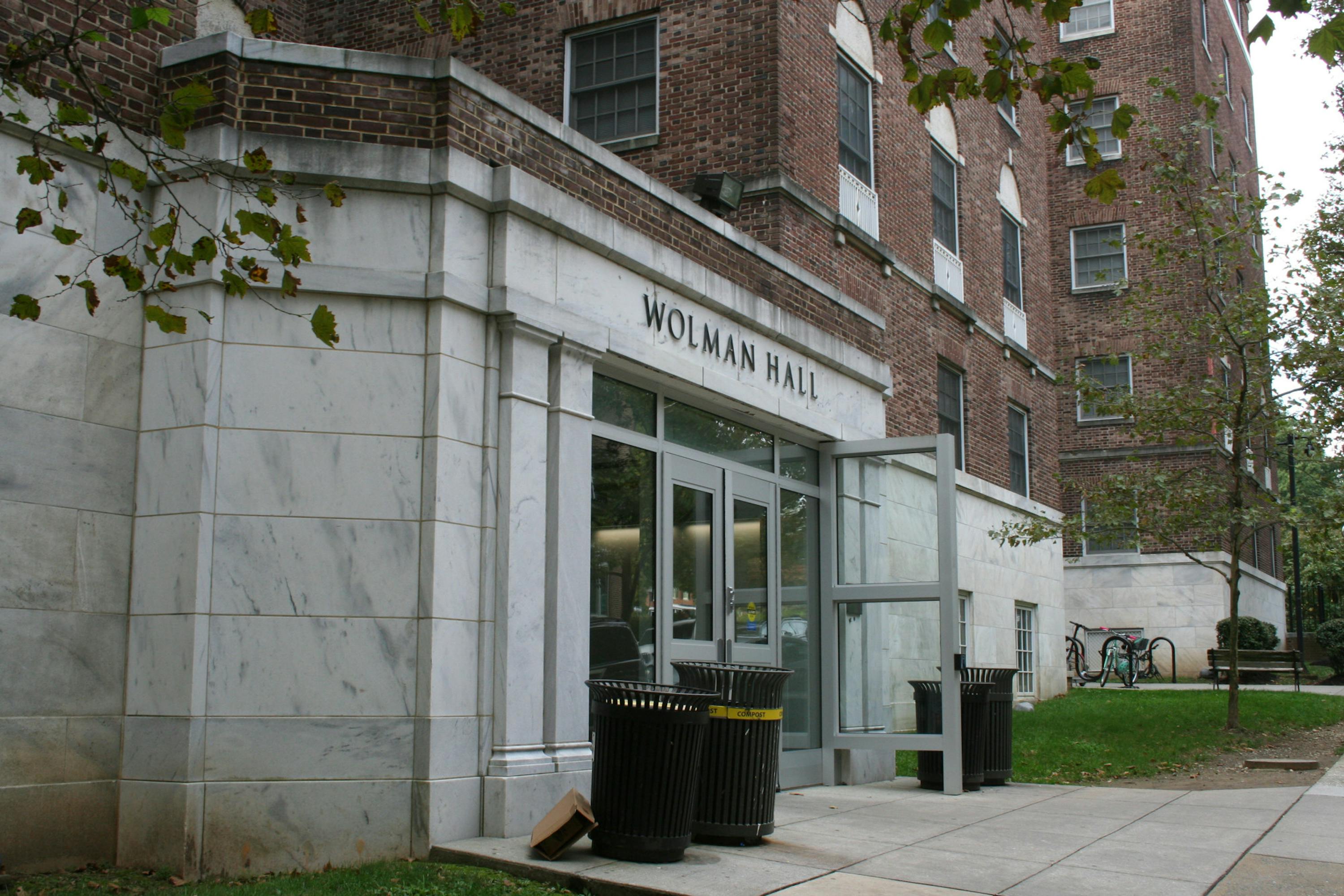
Aside from the freshman dorms directly on Freshman Quad, students living in other housing also expressed mixed feelings about safety, particularly in buildings located closer to the edges of campus, such as Wolman. Several students mentioned that while card access systems provide an important layer of security, surrounding street activity can sometimes feel unpredictable or unsettling.
In another anonymous survey response, one student described encountering disturbances near their residence that, while not directly threatening, still contributed to unease.
ERIC WANG / STAFF PHOTOGRAPHER
“At Wolman, there’s a guy outside who yells at the top of his lungs during the day,” they wrote. “He never enters the building, though.”
The controversy of dorm safety has also expanded beyond the physical security of buildings to include broader concerns about lighting, patrol visibility and the clarity of communication from University security officials.
In an email to The News-Letter, freshman Taisiya Kukva shared that while she feels generally secure on campus, there are areas where small improvements could make a significant difference.
“More lighting and patrol presence on common walking routes, especially at night, would help a lot,” she wrote. “Having more visible security near places like Nolan’s and popular study spots (like Student Center, Gilman and Brody) would make me feel safer.”
In response to growing student concerns, the University emphasized its ongoing commitment to improving residential safety.
“We take all student-reported concerns seriously, and we are continually seeking feedback and input on measures to ensure that all students feel safe in their residence halls,” the University wrote. “In response to recent feedback and ongoing evaluations, the university is installing an additional card reader in AMR II to enhance access control beyond existing layers. This is part of our commitment to continuously improving safety measures.”
Many students have shared that growing safety initiatives by the University have been noticeable and in some cases, effective — even though some feel like there is still room for improvement.
One anonymous survey responder commended the University’s current security practices but noted that certain policies could be strengthened to prevent potential loopholes in enforcement.
“I think it is fair to ask for doors not to be propped, illegal substances not to be stored, etc. The security also does a fine job ensuring anyone not in Wolman is checked in after a certain time,” they wrote. “One interesting loophole, however, is bringing someone not from Wolman in before the necessary check-in time, then allowing them to stay past the check-in time without actually having to check them in.”
ERIC WANG / STAFF PHOTOGRAPHER
AMR I resident Faith Odungide expressed appreciation for the University’s attention to residential safety while also pointing out areas where communication could be clearer and more detailed in an email to The News-Letter.
“At least in my residence house the ‘Stop the Prop’ Policy is heavily enforced, and we are constantly reminded of the consequences of leaving your residence open ([e.g.] someone could steal an item and you would be held accountable because you left your door open),” she wrote. “The main improvement I’d like to see is in regard to the way incidents/attacks are reported. The university should try to provide more detailed descriptions of the suspects. Reports of ‘Male, 5’6,’ are too vague to be helpful for student awareness and safety.”
Further, she highlighted concerns regarding the visibility of safety measures in response to recent incidents around campus and the surrounding area.
“I am somewhat concerned about the safety regarding freshman dorms. I heard that there was an unidentified (non-university-affiliated) woman found in the basement of AMR II, as well as the reported sexual assault by Decker Quad,” she wrote. “Even with these issues, I do believe our campus is safe as we are literally situated in a way that we are cut off from the real community of Baltimore.”
Buse Koldas and Julia Schager contributed reporting to this article.