Published by the Students of Johns Hopkins since 1896
September 28, 2026
September 28, 2026 | Published by the Students of Johns Hopkins since 1896

Science & Technology


PUBLIC DOMAIN
Supernovas are formed from the abrupt collapse of stars in the universe.

Ultra-stripped stars lead to binary neutron stars

Over the past few decades, there has been an explosion of interest in what lies beyond our planet, our solar system and even our galaxy. What we know is that there is a plethora of phenomena that occur outside our limits of exploration for which we have no explanations.


PUBLIC DOMAIN
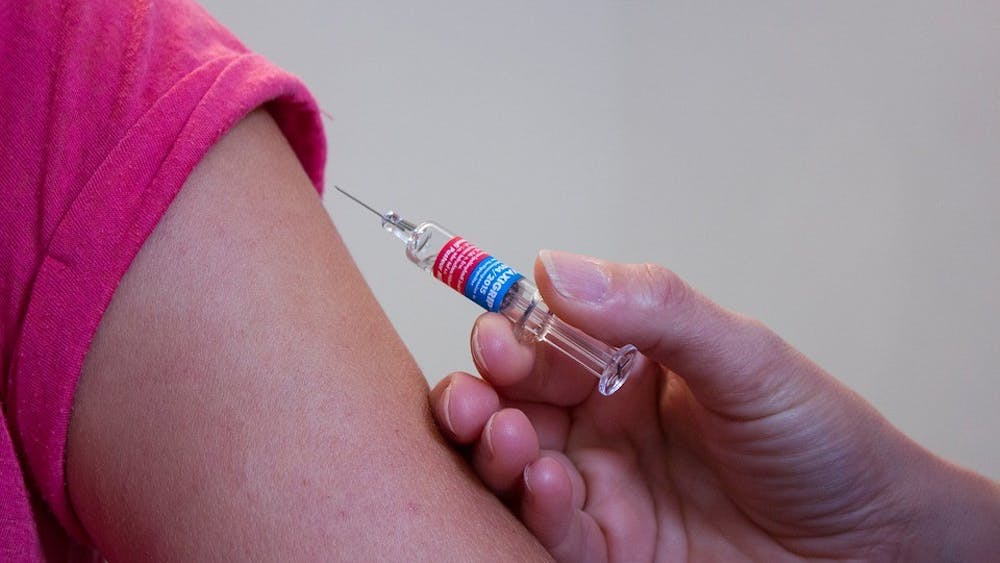
Once only available for children and young adults, Gardasil 9 is now approved for older ages.

HPV vaccine is approved for a greater age range

According to the Centers for Disease Control and Prevention (CDC), the prevalence of genital HPV for adults aged 18-59 is 45.2 percent, making it the most common sexually transmitted infection in the United States. Certain high-risk strains of these viruses are responsible for almost all cases of cervical cancer and 95 percent of anal cancers. 


 PUBLIC DOMAIN
Therapeutic cancer vaccine is a commonly used treatment at BKI.

Scientists develop new immunotherapy

The Nobel Prize in Physiology or Medicine was awarded to James P. Allison from the University of Texas MD Anderson Cancer Center and Tasuku Honjo from Kyoto University for their discovery of the inhibition of negative immune regulation to aid in cancer therapy. 


PUBLIC DOMAIN 
The soil composition on Mars is different from what is found on Earth.

The experimentation of growing plants on Mars

It feels like this horse has long since been beaten to death — when are we going to finally land humans on Mars? It’s been a lifetime since the idea was first entertained, but so far the closest we’ve gotten is Matt Damon celebrating potatoes in The Martian. 


Three women who battled environmental issues

Throughout history, women have played a critical role in confronting environmental crises. Many had to fight tirelessly to highlight the environmental problems they studied, often enduring gender-based critiques of both their personal and professional lives.


PUBLIC DOMAIN 
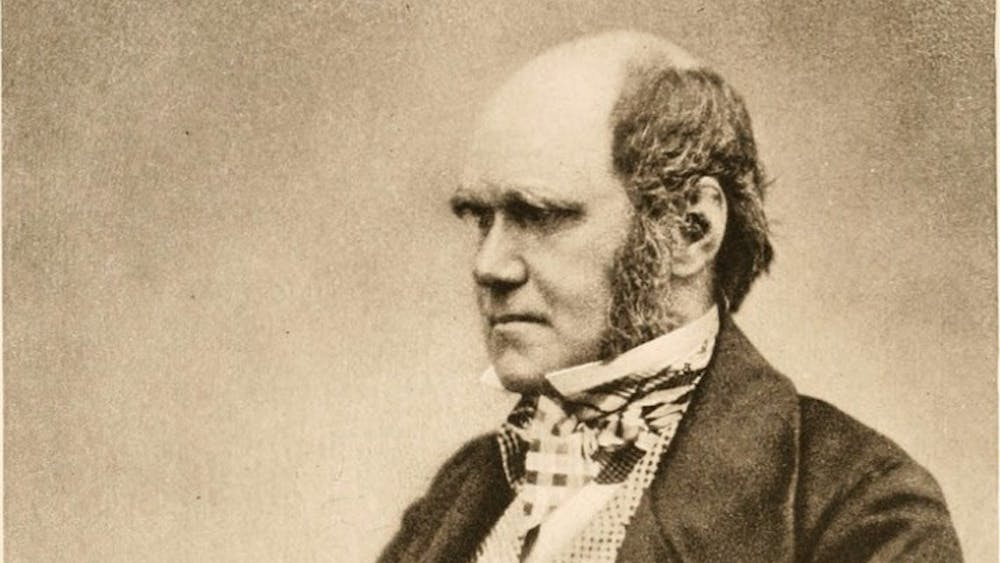
Darwin’s theory of natural selection inspires novel chemical research.

Evolutionary chemists win Nobel Prize

Darwin’s theory of evolution has been around for nearly 200 years, but its influence does not appear to subside with time. Not only is the topic of evolution a required biology curriculum in schools across the world, but it has also been cited in numerous research studies and papers. Today, it is still driving the forefront of molecular research. In fact, research conducted on the basis of Darwin’s theory of natural selection has recently led scientists to claim the 2018 Nobel Chemistry Prize.


Students present projects at Research Symposium

The annual Undergraduate Research Symposium (URS), sponsored by both the Hopkins Undergraduate Society for Neuroscience (Nu Rho Psi) and the Hopkins Office for Undergraduate Research (HOUR), took place last week on Oct. 8. 


How the germ theory of disease developed

In the 19th century, polished white rice was increasingly sought after in Japan. Advances in technology allowed grains to be mechanically milled rather than processed by hand, with the outer and inner husks removed and the remainder polished to a glossy white. This rice was easy to store, lasted longer than its predecessors and, to some, probably tasted better. 


Antibody therapy can suppress HIV infections

Human immunodeficiency virus (HIV) is a retrovirus capable of infecting vital organs and CD4 cells, a type of lymphocyte, that comprise the human immune system. Once transmitted, the virus grows and progresses in the absence of antiretroviral therapy (ART), which is a drug therapy that either prevents HIV infection or slows down the spread of the virus. These antiretrovirals include several types of inhibitors. 


An ancient virus infection linked with addiction

Many regions in the human genome are composed of “junk DNA” that do not code for proteins in the cell.  While these DNA codes are generally viewed as redundant and seemingly serve no particular function in the human body, some codes could be evidence of evolutionary scars left behind from ancient viral infections from the time of our primate ancestors.


CCOURTESY OF JAEMIE BENNETT
Four undergraduates presented their research on the brain at the seminar.

HOUR hosts third Student Seminar Series

The Hopkins Office for Undergraduate Research (HOUR) hosted the third lecture in the Student Seminar Series on Oct. 1.  The series provides a venue for undergraduates to present their research.


ADAM BAKER / CC BY 2.0
Science Nobel prizes have been awarded to 18 women in it’s history.

Two women awarded Nobel Prizes in scientific fields

This year, two women won Nobel Prizes in scientific disciplines. Donna Strickland, an optical physicist, invented chirped pulse amplification with her co-awardee Gérard Mourou. Strickland is only the third female physicist to receive the award and the first in 55 years.


Ancient virus infection is linked with addiction

Many regions in the human genome are composed of “junk DNA” that do not code for proteins in the cell.  While these DNA codes are generally viewed as redundant and seemingly serve no particular function in the human body, some codes could be evidence of evolutionary scars left behind from ancient viral infections from the time of our primate ancestors.


Katemil94 / CC-BY-SA-4.0 
Researchers designed a 3D-printed plate that successfully replaced a portion of a dachshund’s skull.

Dachshund receives 3D-printed skull replacement

Patches, a nine-year-old dachshund, is now cancer-free thanks to a group of researchers.  Veterinary surgical oncologist Michelle Oblak from the University of Guelph’s Ontario Veterinary College and Cornell University’s small-animal surgeon Galina Hayes were the researchers who accomplished this veterinary first. 


The rate of babies born with syphilis is rising

Syphilis was nearly wiped out in the United States under the leadership of Gail Bolan, the director of the Division for Sexually Transmitted Disease (STD) Prevention at the Centers for Disease Control and Prevention (CDC). However, in the last four years, syphilis has made a comeback and it has particularly been affecting newborns at high rates.


News-Letter Magazine