Every spring semester, the Student Government Association (SGA) organizes campuswide elections to select the next group of student representatives. These elections are administered by the Committee on Student Elections (CSE), an independent body authorized by the SGA Constitution to regulate and oversee all elections.
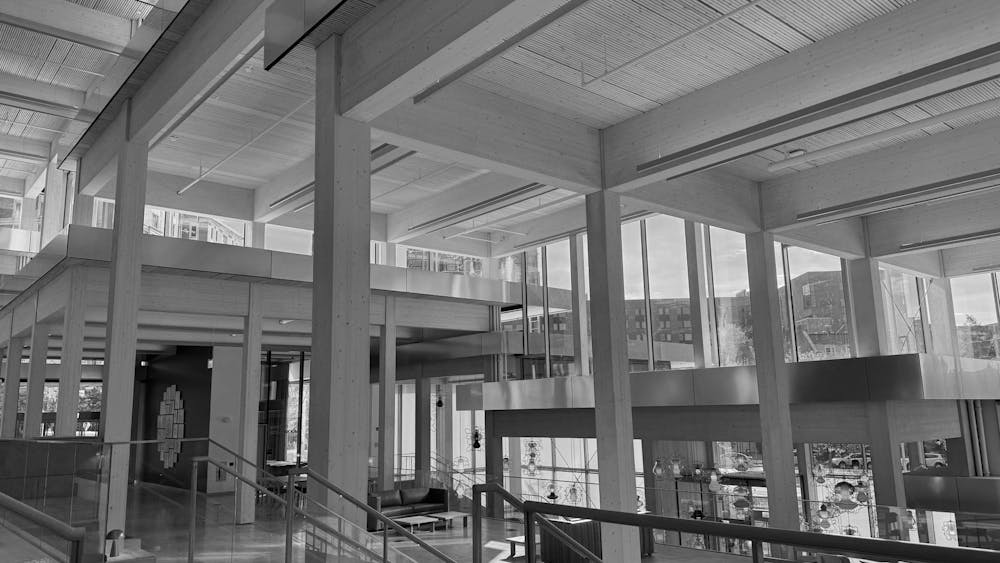
However, BSC’s role as a social hub has been overshadowed by a lack of available study spaces on campus, causing students to use the building for their academic needs. The University should not push against these preferences and let students use the space as they wish.
Johnnie Moore’s appointment as a Visiting Fellow and the SNF Agora’s refusal to engage with student concerns are antithetical to the democratic values that the institution purports to uphold.
In light of the recent uprisings in Iran, The News-Letter argues that Hopkins students should stay informed on the nation’s unrest and support their peers who may be affected by the conflict.
Even if Hopkins has new — albeit unclear — plans to improve upon the shortcomings observed in how it has conducted past construction projects, its current efforts are not enough to recover the trust between the Baltimore community and the University. DSAI presents an opportunity to rebuild this relationship.
Dining halls are a problem. Workers are understaffed and overworked, and students and staff have recently commented on the poor quality of food and reduced portion sizes. Dining is a crucial component of student life and well-being, and Hopkins staff are critical to its success. The administration, however, has neglected to provide an adequate working environment for its dining employees.
AI is efficient, but journalism, as time-sensitive as it may be, requires more than just efficiency. When tackling sensitive topics, nuanced interviews and care for our subject matter are required to produce a sincere publication. The News-Letter will not sacrifice ethical reporting for efficiency, no matter how alluring the prospect may be.
Hopkins researchers are facing critical cuts to their funding, impeding life-saving work. International students are getting their F-1 visas revoked “without reason or warning.” The U.S. government is handing out increasingly unreasonable demands to universities that target the core academic mission of higher education.
On March 26, 2024, Rümeysa Öztürk, a PhD student at Tufts University, co-authored an opinion editorial in The Tufts Daily. Almost exactly one year later, she was arrested near campus by plainclothes immigration officers, detained and sent nearly 1,500 miles away to a facility in Louisiana, where she is still being held. There are no charges filed against her.
The Student Government Association (SGA) elections are set for April 8, with the entire executive board, class senators, class programming councils and the Hopkins Organization for Programming President up for election.
Ultimately, the Board of Trustees is out of touch with Hopkins students and operates with little to no transparency of how it is using its power. As the Board transitions to new leadership, it must take steps to increase its transparency and restore confidence. It is unacceptable for any group, much less one as influential as the Board of Trustees, to wield their power shrouded in secrecy.
On Feb. 10, President Ronald J. Daniels announced that Hopkins joined several universities and higher education groups in a federal lawsuit against the National Institutes of Health (NIH), in response to the NIH limiting indirect research costs to 15% of grant funding. Indirect costs are a percentage of grant money that is paid by the NIH to the institution conducting research (ie. Hopkins) for facilities, equipment, administrative support and IT infrastructure costs. As of 2023, Hopkins had negotiated an indirect cost rate of over 60% and such a dramatic reduction would have undoubtedly stalled the clinical trials and research at the University.
More than any other university in the country, Hopkins will be significantly affected by the pause on federal grants and the disruption to the NIH. Hopkins receives the most funding from the NIH of all universities in the nation, exceeding $800 million in 2023, causing research efforts to be acutely affected by the pause in grant funding.
Donald Trump is going to be president again. In our endorsement a couple weeks ago, we endorsed Vice President Kamala Harris, but now we must all come to terms with the looming Trump administration.
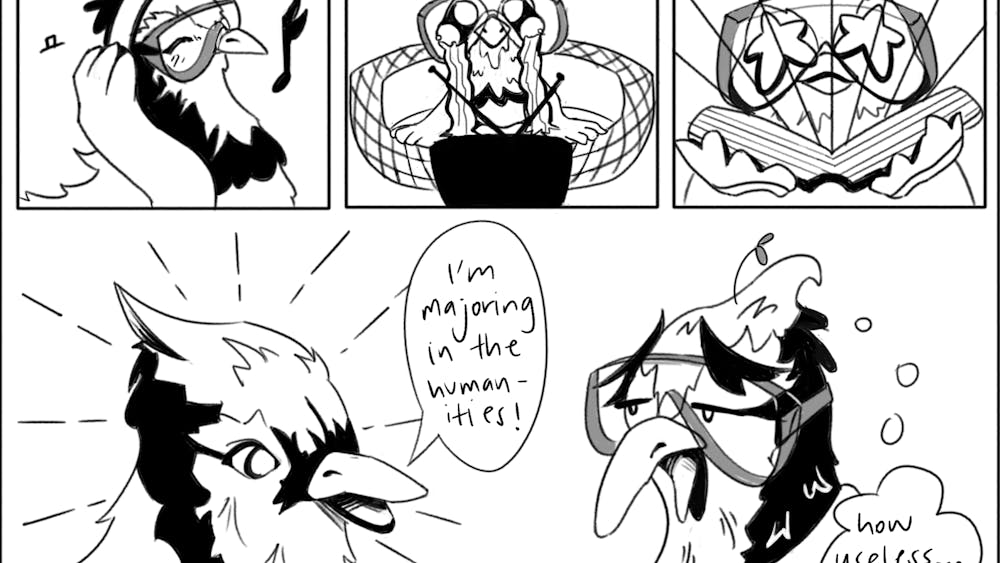
October is National Arts and Humanities Month, and perhaps it is ironic that in a month designed to celebrate music, literature and philosophy, we are reflecting on just how neglected these pursuits are on college campuses like Hopkins.
More than any previous election, this one is a test of American democracy, and one that we must answer by voting for Vice President Kamala Harris — the candidate who values political institutions, promotes American interests domestically and abroad, and who will responsibly wield the power of the Presidency.
Admittedly, Hopkins may not have much school spirit, but there is one time of the year where we all rally: the release of the U.S. News & World Report College Rankings. This year, Hopkins rose from ninth in last year’s rankings to sixth — its highest position yet.
Today is National Voter Registration Day. In recognition of the day and the upcoming national election, The News-Letter reflects on the importance of voting and encourages all eligible students to register and make a plan to vote.
The News-Letter is proud to be financially independent from the University, a tradition started by alumni of the paper that we have maintained for decades. This means that the paper does not receive funding from the University which enables us to serve as an unbiased and trusted organization when reporting on matters affecting the Hopkins community. As we begin the new school year, we want to provide readers with a greater understanding of our sources of funding and the importance of maintaining our independence.