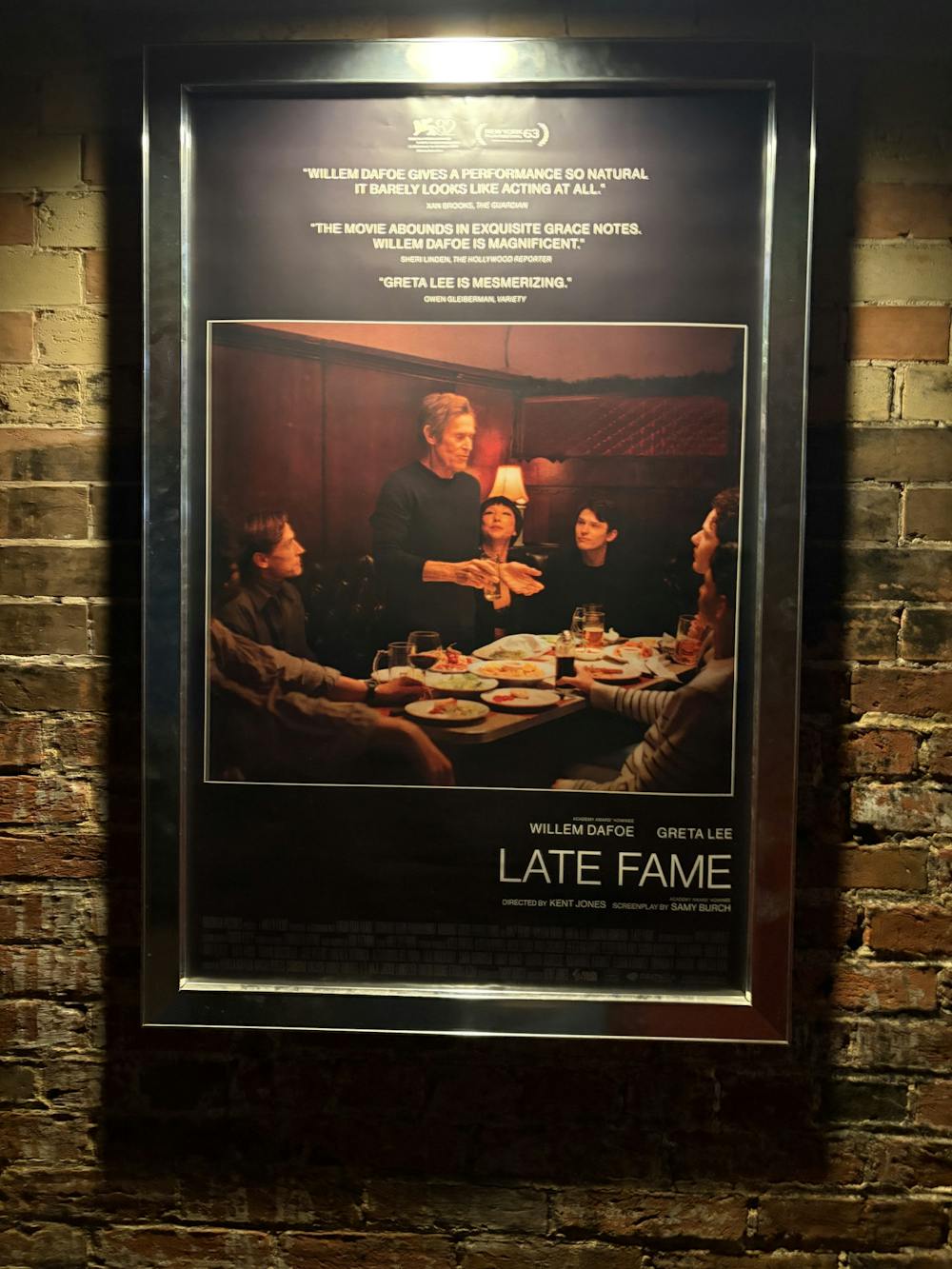
Performance runs central in critic-turned-filmmaker Kent Jones’ sophomore feature film Late Fame. Aside from the masterful performances of the talented leads, Willem Dafoe and Greta Lee, the story depicts the wayward identity of being an intellectual writer and the resulting lack of sincerity in performing for others. Written by screenwriter Samy Burch, of May December and Coyote vs. Acme fame, the script adapts Arthur Schnitzler’s novella of the same name from a late 19th-century Austrian setting into a contemporary New York portrait of vast class and generational differences amid the continuous pursuit of art.
In downtown Manhattan, Ed Saxberger (Willem Dafoe) lives as an aging, elderly postal office worker who seems content playing pool with his working class friends in his spare time. One day, he’s approached by Meyers (Edmund Donovan), a wealthy NYU graduate, who expresses great awe and reverence towards Saxberger. Meyers explains he’s obsessed with Saxberger’s mostly forgotten, unacclaimed poetry collection from the ‘70s: Way Past Go.
Meyers invites Saxberger to meet his literary group of young, rich writers called “The Enthusiasm Society,” claiming they’re also fellow fervent admirers of Saxberger’s writing. Saxberger agrees, and he’s quickly fond of the attention he receives from the group. He’s particularly drawn by Gloria (Greta Lee), the only member of the group who’s an actress. As he gets more involved with the members of The Enthusiasm Society, he discovers there’s less he has in common with the writers and their goals than he initially expects.
At one point, Saxberger describes Meyers as an “Edith Wharton protagonist.” When Saxberger visits Meyers’ massive apartment in the city, he confirms his comparison. Meyers is a truly wealthy upper-class man from a family providing significant monetary support. He shows off his first edition of Naked Lunch, which Saxberger opens to see a price tag of $1,200 inside. Later, he sets Saxberger up to meet with a literary agent who’s a family friend of Meyers.
Despite all of Meyers’ institutional credentials, like a MFA from a prestigious university and deep connections to the publishing world, he seems superficially interested in actually writing. While Saxberger struggles to overcome writer’s block in writing a new poetry collection for publication, Meyers’ primary goals are expanding the cultural reach of The Enthusiasm Society; he offers no genuine sympathy towards Saxberger when the older man confides in him about the difficulties of writing poetry again.
While the friendship between Meyers and Saxberger starts to deteriorate, Gloria and Saxberger grow closer. Saxberger realizes Gloria’s performances have extended beyond the flirty actor persona she has. Unlike the other wealthy members of the Enthusiasm Society, Gloria, like Saxberger, lives with ordinary, working-class means. He finds Gloria in her regular, almost bare-bones apartment where she’s unadorned by any elaborate makeup or costumes.
The two get into a disagreement as she urges him to leave, unhappy to be seen in this state of sincerity. Now, all his major relationships within The Enthusiasm Society seem strained. And earlier, before this confrontation with Gloria, Saxberger had abruptly left his pool-playing friends after attempting to share his poetry with them; his poetry was not received with proper consideration or respect. Saxberger reacts coldly to this reception, and his friends fight back too. They argue that Saxberger must think they’re too “low-brow” for him.
Eventually, the reading event Meyers has planned with The Enthusiasm Society comes to pass. Saxberger reads his own poetry to a crowd and Gloria also performs some of his work. The poetry reading gets mostly negative reviews, and Saxberger must navigate the group’s response and his own future as a poet.
Willem Dafoe imbues a delicate quality of subtle joy and sadness in his performance. His superb portrayal of Saxberger’s resilience and wisdom makes the poet’s moments of vulnerability much more impactful. Similarly, Greta Lee conveys all of Gloria’s nuances with appropriate depth; a glamorous actress, a struggling woman in the city and a dreamer who follows opportunity.
Although Late Fame tackles the class and generational differences between its characters, the film’s most lasting interrogation dissects the performances of all its players. As Meyers, Gloria and Saxberger accept or reject the expectations given to them, they reveal the ever-changing motives for portraying or hiding parts of their identity as an artist. Saxberger, in particular, discovers the crucial need to be true to your pursuits. After being involved in the tumultuous dynamics of the wealthy literary youth, Saxberger plays pool again with his old friends by the end of the movie. His career in poetry may have never truly actualized, but he knows who he is.