Science news in review: Sept. 13
Welcome back to Hopkins, Blue Jays! While campus was quieter over the summer, there was plenty happening in the world of science. Here’s this month’s science news in review.
Scientists locate a new target for cancer immunotherapy
Recently, scientists at the Erasmus Medical Center found that cancer may interfere with the immune system before its defenders even reach a tumor. In a study published in Nature, researchers examined lymph nodes from patients with melanoma and found immune cells producing high levels of PLA2G2D, an enzyme that appears to limit the growth of cancer-fighting T cells. These lymph nodes are normally where T cells first prepare to respond to a tumor.
Researchers used mice models to study PLA2G2D. They noticed that when PLA2G2D was blocked in mice, more tumor-specific T cells developed and tumor growth decreased. This approach was then combined with a treatment targeting PD-1, another immune-system brake. This combination showed improved benefits in the study’s models. Through this research, scientists have found a new direction for where to focus efforts in cancer treatment. However, further research is still needed to determine whether blocking PLA2G2D is safe and effective in patients.
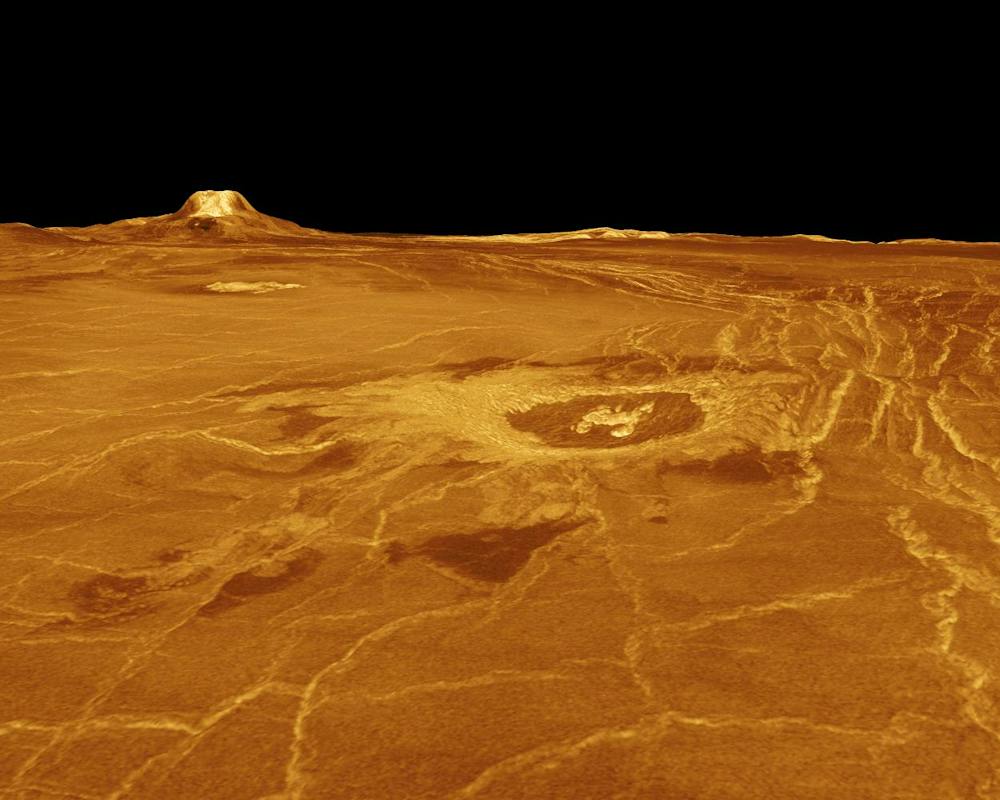
Venus’s pale clouds may contain a much darker substance
Through telescopes on Earth, Venus’s clouds appear pale yellow. In ultraviolet light, however, they show dark patterns that scientists have observed for decades without knowing exactly what causes these patterns. In a study published in Astrobiology, researchers used observations and computer modeling to estimate how much light the material inside the cloud droplets must absorb to produce those patterns.
Their results suggest that the liquid could appear surprisingly dark if it were collected and examined in a laboratory, even if the clouds look bright from a distance. This is because tiny droplets scatter sunlight, changing how the clouds appear. The study does not identify the mysterious light absorbing material. However, scientists now have a clearer idea of what measurements to test against possible ingredients in Venus’s atmosphere.
Satellites track ocean heat to improve hurricane forecasts
In order to measure changes in ocean height, scientists at NASA are using satellites to study this year's weather phenomenon El Niño, a climate pattern in which unusually warm water in the Pacific Ocean shifts weather patterns, such as storm activity. Essentially, the one of the satellites, Sentinel-6B, first begins sending data related to weather while flying shortly behind its predecessor, Sentinel-6 Michael Freilich. Together, they measure the ocean’s surface with radar by recording changes in ocean height.
These measurements matter because warmer water expands, so changes in sea level can help scientists estimate how much heat is stored beneath the surface. That heat can fuel a hurricane and affect how quickly it strengthens. Researchers plan to incorporate the newer satellite data into forecasting tools, which could eventually give coastal communities more useful warnings before a storm reaches land.