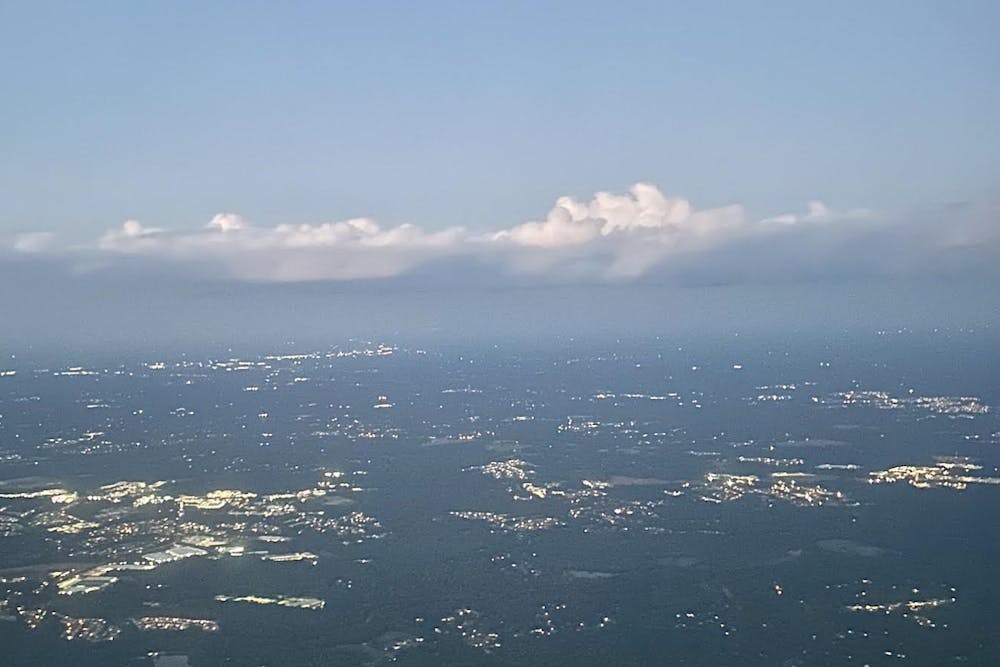

We were stranded in North Carolina after a delayed flight caused us to miss our layover. I was sitting on a metal chair stolen from a nearby Starbucks. There was a numbing pain in my arm, suggesting to me it had been a mistake to use it as a pillow. Drowsily, I attempted to focus on the fan of cards in my hand and the voice of a friend as he tried to explain the rules to a game we were too sleep deprived to understand properly. Nevertheless, we huddled around the deck of cards, shuffling and dealing until the rising sun signaled us to go catch the next flight. Somehow, the chaos of travel had shrunk into the small space between us, captured and organized by fifty two pieces of paper.
Cards followed us back to high school, where we began playing at lunch or in between classes. Near the end of eleventh grade, World History became my favorite class because the teacher let us play cards if we finished our work for the day. Because our games required four players, we began teaching more and more people. Soon it felt like half the grade knew the rules, and even on busy days, there were always enough people around to run a few hands.
Looking back now, I wouldn’t blame anyone for calling us addicted (especially if they had ever seen the group of us finding ways to play on the immensely crowded bus ride home). I’ve heard stories about having to use backpacks as tables, or having to dig around under seats to look for dropped cards. But somehow, in the cramped aisles of public transit, the game would carry on. It makes me wonder how it became this way. Why do we do so much to be able to play a few rounds?
My theory is that these games functioned to ground us; they wrapped ordinary school days in something familiar, something simple and steady. They involved the perfect balance of mental stimulation and social connection. When the days began blending into each other, cards gave us a reason to sit down and just enjoy the present for a while. That could be why they followed me to college too. Even now, as I write this, I find myself fiddling around with the deck of cards I always leave on my desk.
When I found new friends at the beginning of freshman year in college, we exchanged the card games we knew, each introducing the other to a small part of our past lives. We spent late nights in the Wolman common room playing hands during study breaks, making up new rules once the old game became trivial. We sat in empty classrooms and built houses of cards. In the midst of attending lectures, finding clubs to join and getting used to college in general, it was nice to have a comforting pastime to share with friends. There were so many new things going on, but playing cards allowed me to continue dabbling in the familiar, offering me a bridge between who I was and who I was becoming.
What I’ve realized is that playing games like these are a way to pass time, but also a way to connect. Cards are what you reach for when you’re stuck somewhere — at an airport, in a hallway, with a stretch of time you don’t quite know what to do with. They’ve stayed with me through layovers, bus rides, cafeterias and common rooms because they give shape to the in-between spaces of life. They turn empty minutes into something shared, something suspended between people. Life keeps changing, but a deck of fifty-two stays the same, waiting to be reshuffled over and over again.