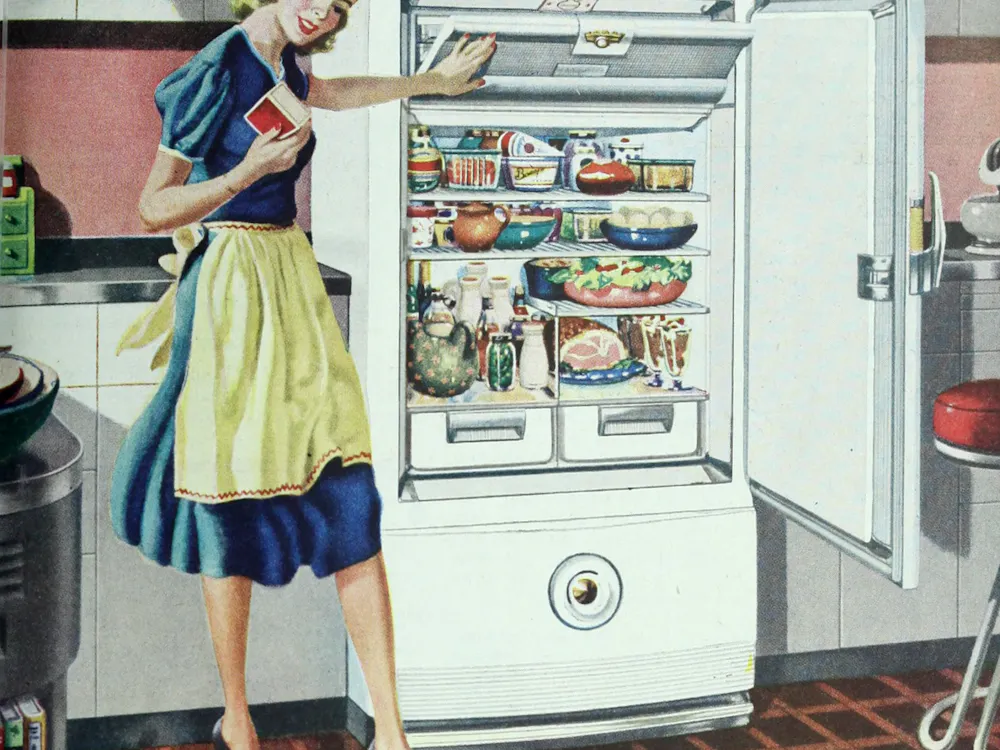
How often do you feel alone nowadays? Is it never? More than before? Did the constant barrage of bright lights and flashing faces on your phone screen make you feel more or less isolated? Somewhere in the radio waves and ethernet cable signals, did we ship away our humanity — our ability to connect?
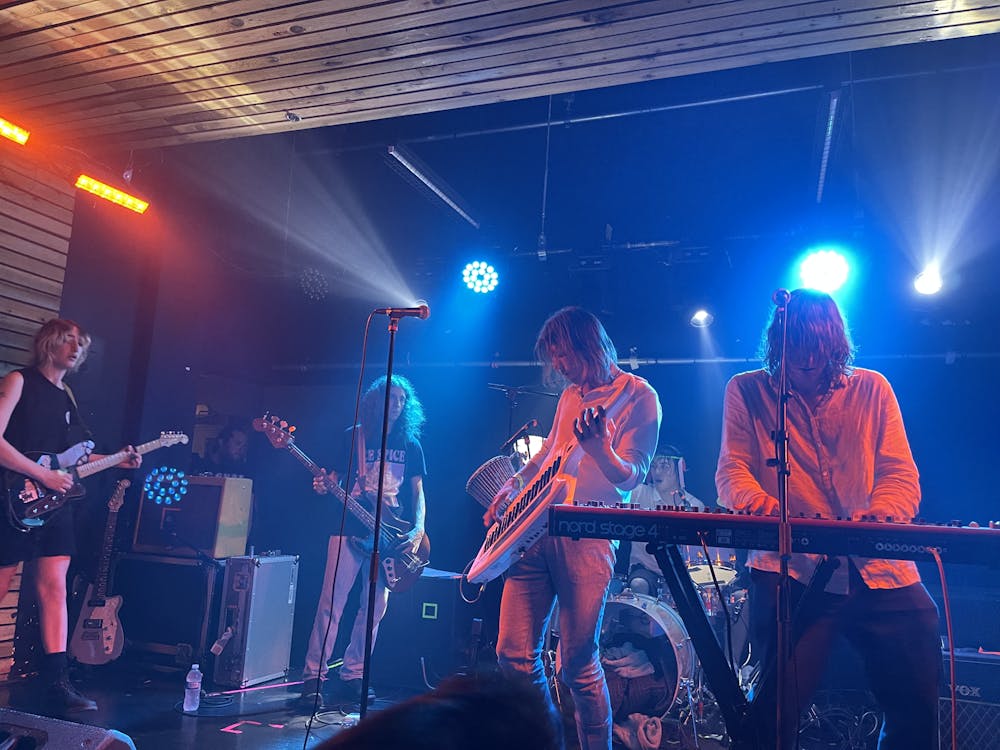
Although Geese, one of Brooklyn’s most promising indie rock bands, never exactly answers these questions for us (its music normally raises more questions than any human being could ever hope to answer), the group still manages to reach that very same part of the human soul in its newest album, Getting Killed.
The band, from the very beginning, was always a loud, unforgiving product of our contemporary times. Its first studio album, Projector, has driving dance rhythms and intelligent yet chaotic instrumentals that caused the band of high school friends to receive widespread acclaim and begin to establish itself within post-punk circles online. Geese only continued to deliver on its potential with 3D Country, an album with an unexpectedly heavy dose of Southern, country and blues influences, given the band’s New York origins.
One may expect that a band is supposed to eventually find its sound: It grows into a particular style and carves out a niche for itself as band members get older and more entrenched in their ways. However, with 3D Country and its follow-up deluxe edition, 4D Country, Geese only seemed to grow even more chaotic and unpredictable in its sound as it started earning its stripes in the rock scene.
The transition between 3D and Getting Killed was characterized by the departure of founding guitarist Foster Hudson (if I had a nickel... maybe two...), an absolutely breathtaking cover of Justin Bieber's hit single “Baby” and the release of a heart-wrenching solo album, Heavy Metal, from lead singer Cameron Winter. After such a tumultuous period of growth, if we were to expect any single thing from Geese, we would inevitably be proven incorrect. In signature Geese style, the now-quartet managed to find new ways to give people, music and life the biggest middle finger you’ve ever seen on Getting Killed.
The album’s opener, “Trinidad,” is about as smooth as a transition into the album as a plane crash into the Pacific. As listeners, we are forced to sit through the full brunt of an auditory airbag to the face and have our lifeless, comatose body dragged into an apocalyptic, industrial soundscape. With hi-hat reminiscent of steam valves and glitched out, distorted guitar screeches indistinguishable from Winter’s impression of the souls of the damned, “Trinidad” is a deeply destructive, personal Hell of a song. The narrator seems to have nothing left to lose in life, including anything to place his anger on, painting a listless and vengeful picture of dead daughters, “burning lead” and a people “force-fed or else baked into bread.” The song is perfect at deconstructing its listeners, leaving at least me feeling like nothing but a detached heap of atoms discarded into empty space. If a good album opener is like a meat tenderizer, opening up the listener’s heart for the experience that is yet to come, then “Trinidad’ is one powered strictly by nuclear fusion and hydrogen bombs.
One of the most poignant decisions on the album comes immediately after the opener, with “Cobra” suddenly giving way to a heartfelt yet acutely bitter, pleading ballad. Even in isolation, the song is an incredible exploration of the conflicts of love, with Winter comparing a speaker resisting romantic temptations to a cobra refusing to be hypnotized by a pungi. But, when contrasted with “Trinidad,” “Cobra” feels like love as absinthe: a beautiful, addictive experience that feels like it's going to kill you on the way down.
If Geese was able to “see [itself] in” other people on 3D Country, then it has never been more alone than on Getting Killed. In an age where 80% of artists on one of the world’s biggest platforms garner fewer than 50 monthly listeners, Winter’s cries on the album’s title track begin to make a lot more sense. What does it even mean to be together when everybody’s “trying to talk over everybody in the world”? How can we cope with a world where we don’t feel allowed to be sad because our tears just go and rain on some “sadder bastard”’s leaking roof? Despite being one of the fastest songs on the album, driven by a tribal chorus, the album’s title track is one of desperation and fruitless search for meaning. It is the frantic convulsion of an absurdist living under Instagram capitalism that precedes the collapse into a sad heap of nothing.
One of the standout highlights of Getting Killed remains Winter’s unceasingly layered, cerebral songwriting paired with his uncanny ability to modulate and contort his voice into all the right esoteric drill bits to unlock all the emotions that we bolt behind the mind’s security screws. My favorite example of Winter’s command of emotion comes from “Au Pays du Cocaine,” where he sings “you can be free, you can be free and still come home” in a Will Toledo-esque lilt. That “still” stands out in my mind as a golden brick in a Great Wall of poetry — implying that, in a way, being “home” chains us to the comfortable and the known. What does it mean to be free and belong? How can we ever do both?
After the final beats of “Long Island City Here I Come” left my stream of experience for the first time, I literally took off my headphones, put on a hoodie and went on a 2 a.m. walk because I just didn’t know what to do with myself. Getting Killed is an album that will be remembered for its chaotic timelessness. Its rhythms, its melodies, its messages are all so complex that they would take lifetimes to dissect, but somehow, all it takes is 45 minutes to experience them in their entirety. I can only write so much about the album. The only way to truly experience it is to just go and listen to it.