In March 2026, a Baltimore furniture dealer signed a $25 million contract with U.S. Immigration and Customs Enforcement (ICE). The contract stated that the deal represented “support of the administration's immigration and enforcement priorities,” in addition to the material agreement of supplying furniture for ICE offices. The deal inspired outrage throughout Baltimore, especially in Fells Point.
Fells Point, a historical port city, was settled by William Fell in the early 18th century and given its grid design by Fell’s son, Edward. The neighborhood served as a major hub of movement in America during the 19th and 20th centuries, attracting European immigrants, most often Irish and German, as well as African American migrants.
Between the mid-18th century and the mid-20th century, over 2 million immigrants landed in Baltimore. Fells Point was the second-leading point of entry after only New York City’s Ellis Island. There is evidence of correspondence, such as a letter in which a sister who has arrived at Ellis Island seeks her brother, between the port cities.
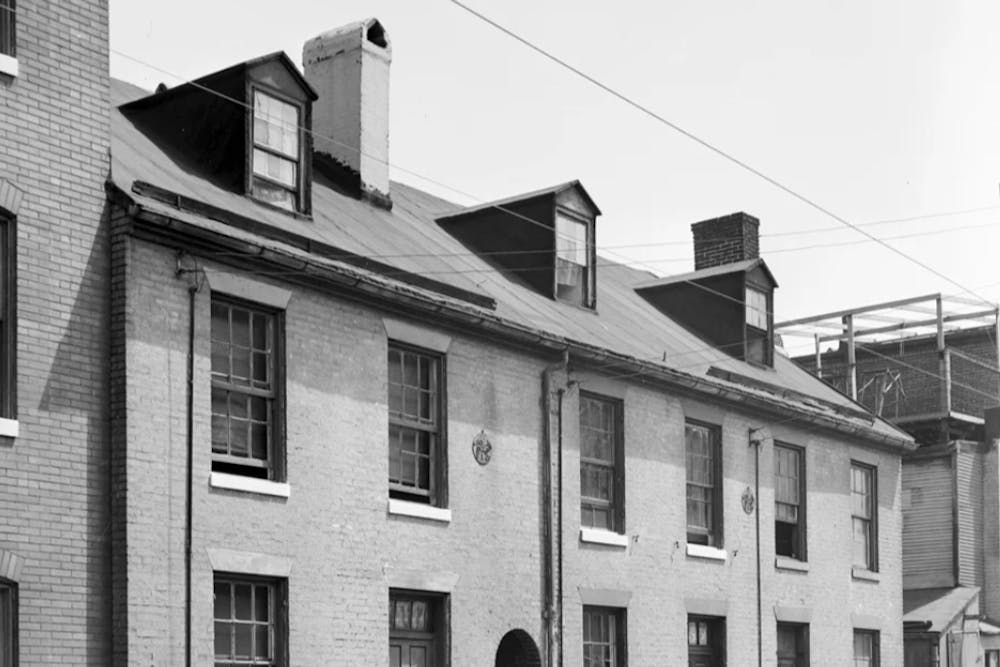
Fells Point was able to attract people with its abundance of housing and job opportunities. The Baltimore and Ohio (B&O) Railroad created geographical connections that improved travel and created jobs in construction for immigrants in Fells Point. Once settling in Fells Point, immigrants frequently inhabited row houses.
In 1868, the B&O Railroad opened the first immigration pier, Locust Point, beginning the shift of immigration away from Fells Point. The celebration of the new pier, including a parade, was held in Fells Point. Then, when Fells Point was unable to accommodate the 20th-century transition to steamships, it lost its position as Baltimore’s main port.
In the early 20th century, majority-Black streets were demolished as part of “slum-clearance” to make room for White immigrant families. In the late 20th century, Fells Point developed a reputation as an unsafe neighborhood, with high crime rates.
Fells Point became Maryland’s first historic district in 1969 and though it continues to stand as an ethnically and culturally diverse neighborhood in Baltimore, it has become increasingly occupied by White homeowners (making up 70% of residents). However, critics claim that the gentrification of Fells Point has eliminated “third places,” public and free-to-use spaces like parks and libraries, and pushed the working class out of the neighborhood. The neighborhood now has a lower-than-national-average age and higher-than-national-average household income.
The shift in national attitudes toward immigration began well before the private furniture store’s deal in 2026. In 2007, the Department of Homeland Security raided Fells Point, detaining approximately 30 immigrants. In 2018, Fells Point was one of many American cities that participated in Love Knows No Borders, holding a vigil for asylum seekers and citing the neighborhood’s immigrant history as one of many reasons to protect its neighbors. Yet, less than a decade later, in July 2026, ICE officers arrested parents at Commodore John Rodgers, a school just north of Fells Point. Private security and the Baltimore Police Department (BPD) presence are also expected to be increased in Fells Point this summer. Although the BPD cannot work directly with ICE and Governor Moore spoke firmly against ICE actions that inspire terror, he has promised that Baltimore’s collaboration with federal agencies will continue when he deems it necessary to ensure safety.
Fells Point is one of few neighborhoods in Baltimore, outside of the “Hopkins Bubble,” that Hopkins students consistently visit. Let this be a nudge to new Blue Jays, as you all now become Baltimore community members, to take a moment to notice historical markers, police presence, emerging infrastructure, closed restaurants and our fellow neighbors when they venture to Fells point – or anywhere else in Baltimore city.
Honora Muratori is a sophomore majoring in History and Political Science from New York City, N.Y. She is a News & Features Editor for The News-Letter.