Do you plan on marrying?
(02/14/19 5:00pm)

400 students were surveyed for this infographic.

Use the fields below to perform an advanced search of jhunewsletter.com - The Johns Hopkins News-Letter's archives. This will return articles, images, and multimedia relevant to your query.
607 items found for your search. If no results were found please broaden your search.
400 students were surveyed for this infographic.

400 students were surveyed for this infographic.

400 students were surveyed for this infographic.
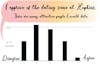
400 students were surveyed for this infographic.

400 students were surveyed for this infographic.

400 students were surveyed for this infographic.

400 students were surveyed for this infographic.

400 students were surveyed for this infographic.
I am, as my mother would say, a “sensitive person who feels things deeply.” She’s not wrong. I have atopic dermatitis — a fancy medical term for “sensitive deep-feeler.” When I’m upset, a rash breaks out on my arms; when I’m stressed, I get bacne that looks like a topographical map of a piece of pizza. Even when I try hiding my feelings, my skin betrays me.
It’s 9 a.m., and you’re trying to rush home before anyone sees you in oversized sweatpants and a T-shirt, carrying your clothes from last night. The infamous walk of shame. But why do we label it as shameful? Why do we consider sex shameful?
In seventh grade, somewhere between the classes that neither students nor teachers cared about and the hormone and Axe-filled gym period, we had one hour set aside every week to visit the library. While I’m sure I would have preferred the patented middle school time-waster coolmathgames.com, the presence of our terrifying school librarian forced me to pretend to actually read.
In a world governed by social pressure to love and be loved, knowing how to be single is key to your health and that of your relationships. Knowing how to be single can be difficult, though, when surrounded by rom-coms, love songs and Disney-happy-endings.
The act of dating is complicated, to put it lightly. To text or not to text. To Snapchat or not to Snapchat. To wait a certain amount of time before responding to the text so you seem like you’re not on your phone 24/7 and have a very cool life or to not. These decisions feel monumental in the moment, creating a pressure that other generations just don’t understand.
Each morning, a Facebook notification arrives at the same time with the same message: “On this day, you have memories with…” That’s usually accompanied by a list of seven people, five of whom I don’t talk to anymore.
I am not your Korean fetish.” That was the Tinder bio I wrote last summer, which came with some decent pictures of myself and a surprise painting of Judith slaying Holofernes. A not-so-subtle finger to the patriarchy.
Lady Gaga’s “Born This Way” is a bop — it topped charts in 25 countries and became one of the best-selling singles of all time. It’s also a monumental LGBTQ anthem in which Gaga embraces her bisexuality and affirms other LGBTQ identities, singing “I’m beautiful in my way / ‘Cause God makes no mistakes / I’m on the right track, baby I was born this way.”
As social media and online dating platforms like Tinder and Hinge become more and more visible in American society, people are beginning to question whether relationships and the concept of love are evolving. Many feel as though technology has superseded human interaction and elevated the desire for quick hookups, while others contend that modern relationships remain fundamentally the same as they were in prior generations.
Based on the media’s depiction of young adults, one would think that all college and high school students are having a lot of sex all the time. There are entire TV shows that focus on the sex lives of teenagers. But recent survey data seem to suggest that people are having a lot less sex than we think they are.
People have lots of different words for it, all with slightly different implications. “Situationship,” “seeing each other” and “hanging out” are just a few. Ultimately though, they refer to the same vague thing: two people who like each other enough to act like a couple, but who, for some reason or other, won’t commit. Though there is some overlap in terminology, I’ve found these pseudo-relationships aren’t quite a part of “hookup culture,” really. Instead, they exist in a strange gray area somewhere between “friends with benefits” and an official relationship.
First Date: Happy hour at Clavel