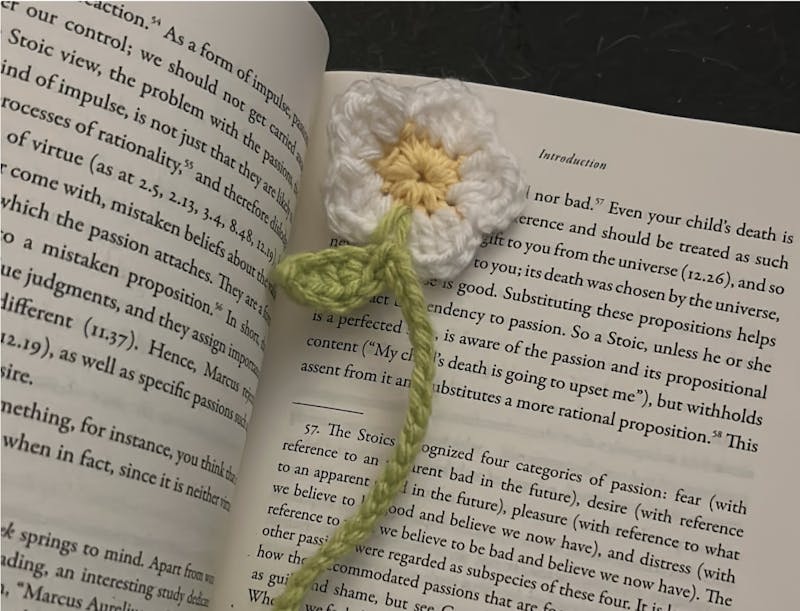
COURTESY OF MYRA SAEED
Saeed explains her unofficial process for getting into classic literature.
COURTESY OF MYRA SAEED
Saeed explains her unofficial process for getting into classic literature.
In my senior year of high school, I took Mr. Graham’s literature class out of a lack of decisiveness; I frankly don’t know what could fill the English gap in my schedule beyond the standard English Literature 101. Strangely, that small decision I made in my guidance counselor’s overstimulating office irrevocably changed my outlook on the world. Through this very rough and informal guide, I hope to open a new world to you as well, just like how a jabby and witty coffee-addicted English teacher did for me.
In my humbly conceited opinion, the books you read do matter. If you have thought to only pick up self-help, fantasy, romance, history, even propaganda books, I promise that you’ll find what you’re looking for in the stories that have stood the test of time. I think reading anything gives one focus, tranquility and the power to understand, but I’d like to argue that reading classic literature enriches the body and the soul — engaging an entirely different part of you. Classic literature digs at the human experience, grasping at the senses almost as if it’s reality and expressing the emotions within us too stuck to comprehend. If I sound completely insane, I don’t blame you, but I promise classic literature has the ability to make the mind think and feel almost as if you were transported into that same world. Classic literature is raw, real and inexplicably human, and it will teach you far more about whatever genre you fancy.
I understand if you can’t simply fathom that a boring book from your high school English class can make you feel this way, and, honestly, I agree! There are many books I simply could not push through, but likewise, there were equally as many books that put me in a bedridden state, drowning in theories and feelings. So, if you’re even the slightest bit interested, I’d like to present a guide on how I’d get into classic literature, and how I’d actually start enjoying it.
Choosing a book
There are many wonderful books that are simply way too complicated if you’re just starting to dip your feet into classic literature; simultaneously, there are incredible stories hidden among pages and pages and pages of context and description (War and Peace). There is also a very extensive range of books, plays and poems that can qualify as “classic literature,” so finding a starting book to read can be daunting. However, these are a few recommendations — incredible works on the smaller side — to start with! In any case, please pick a storyline you’re interested in to make the reading process actually enjoyable.
Little Women by Louisa May Alcott: a story following four sisters through adolescence — encompassing their love, dreams and womanhood.
The Picture of Dorian Gray by Oscar Wilde: a witty, tragically poetic narrative of uncovering one’s subconscious; it includes a descent into madness.
Frankenstein by Mary Shelley: a spiral of a scientist who tests the limits of his ambition by creating a living monster, only to abandon it in horror and live through its revenge.
The Stranger by Albert Camus: a very absurd account of an emotionally detached man processing (or rather, not processing) his mother’s death, a double murder and his own trial; it’s part of Camus’ philosophy on the absurdity of life.
In my experience, these books read faster than other classics and have incredible, hooking themes. Other notable mentions include Steinbeck’s Of Mice and Men, Orwell’s 1984 and Fitzgerald’s The Great Gatsby. I hesitate to recommend Dostoyevsky's Crime and Punishment because of its depth and length, but it’s an incredibly gripping book. If you choose a translated book, make sure to pay close attention to what critics and reviewers denote as a superior translation. It matters!
Remember, if you ever open a book you initially found interesting and find that it’s the epitome of boredom, there’s no shame in choosing another one!
Preparing to read (yes, this is necessary)
Many classics feature vocabulary, settings and innuendos foreign to our modern eye; as such, do your research on the chosen book! I really enjoy watching YouTube videos by Benjamin McEvoy (who runs a project called the Hardcore Literature Book Club). His videos contextualize a lot of notable works and highlight certain themes to look out for. However, there will be plenty of book-specific articles and videos online to understand specific themes and the historical backdrop. Taking just 15 minutes to skim the book’s environment can make it a lot easier to understand what’s going on and why it’s so important.
Reading and annotating (yes, this is also necessary)
Finally, it is time to actually read your book! I’d start slow, just to make sure you’re comprehending what’s happening and you’re enjoying the process of reading. As such, think of taking on a classic more about enjoying the process, rather than achieving a check mark; you’ll be doing yourself a service! Even if nothing is going on in the book, classic literature can dissect the human experience and emotion through magnificent prose, so it’s something of a simple pleasure to read the organization and sound of words.
Annotating is crucial, and it does not have to be painful. I highly recommend getting a paperback book and directly writing in it messily. If that irks you beyond measure, then use Post-it notes or even use a separate journal; the intention is to be simply engaging with the text. You don’t have to write incredibly sophisticated notes either; they can simply be reactions! In fact, when I was reading Jane Austen’s Emma, 90% of my notes contained fancy ways of calling Emma a snooty snob, while the other 10% begged characters to just confess their love already. As long as you are engaging and reacting with the work, you are understanding and absorbing its richness.
Journaling
Unfortunately, English teachers do have a point when they make us write long papers. Contemplating themes and arguing character traits makes one realize how truly complex classic works can be; you’ll often find that a character can be both good and bad, messy and organized, evil beyond measure and human at their core. I’m not suggesting anyone begin to write formal papers, but informally journaling about these observations and thoughts can reap great rewards. I’d highly recommend comparing characters and events to your own life to enhance your understanding.
Remember, all of this stuff is technically optional; I adored the books I read even when I didn’t annotate and script my thoughts, but I obtained significantly more appreciation when I did!
Optional — watching!
Now, many people feel as though movies do a disservice to these great works, and I agree most of the time. However, for someone who’s just beginning to gain a hobby out of literature, visualizing the book can be an amazing way to understand its content. Many works have spectacular films, and reading or watching in any order can build your attachment to the story’s world. Austen’s Pride and Prejudice has been a favorite of mine!
I once read somewhere that an old Russian writer can save you far more effectively than a modern self-help book. I promise, after being hopefully persuaded and well guided by this very intentional guide, you’ll understand what they mean. Classic literature has a way to teach you that humans through centuries can be painfully and comfortingly similar and that life — always — continues to fight and emerge. So take the time to be comforted by a book.
Myra Saeed is a sophomore majoring in Chemistry and History from Queens, N.Y. She is a News & Features Editor for The News-Letter.