COURTESY OF EESHA BELLAD
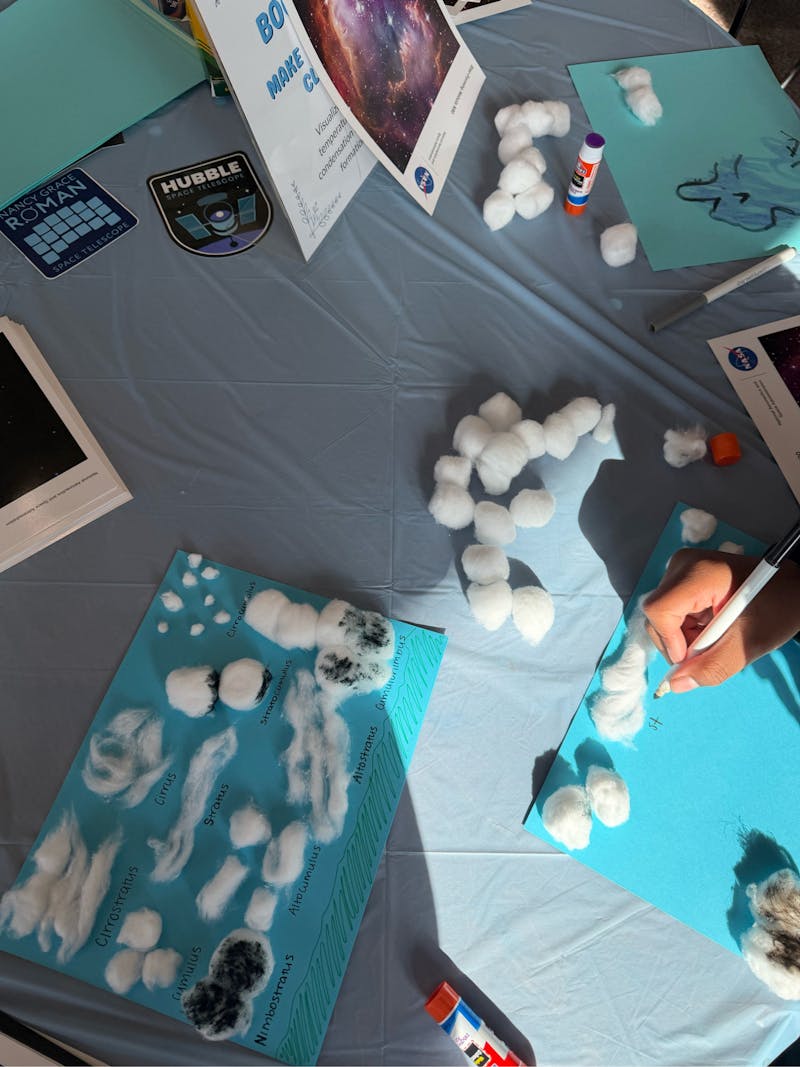
Bellad recounts her teaching experience at CCSL, a nonprofit organization dedicated to advancing STEM education in Baltimore.
COURTESY OF EESHA BELLAD
Bellad recounts her teaching experience at CCSL, a nonprofit organization dedicated to advancing STEM education in Baltimore.
The energy in a middle school classroom is quite unpredictable. On any given afternoon, I might be greeted by a whirlwind of high-energy sixth graders or a group of exhausted students winding down after a long day. As a Head Mentor for the Charm City Stem League (CCSL), I’ve learned that my most important job isn’t just teaching science; it’s meeting students exactly where they are emotionally and turning that energy into a productive, inspired hour of discovery and curiosity.
CCSL is a Hopkins program driven by a singular vision: a future where every student in Baltimore City has the opportunity to explore STEM, build the confidence to excel in technical careers and form lasting bonds with mentors. Under the leadership of Amanda Valledor, our team of undergraduate and graduate students support Maryland Science Olympiad across Divisions A, B and C. Some of our impacts are felt through tangible resources. We create custom kits, over 80 in total, that transform abstract concepts into hands-on fun. Whether that be “analyzing your own fingerprints” for Forensics or practicing “Crime Busters” techniques, these materials are designed to spark curiosity. But beyond the kits, CCSL is built on a sophisticated infrastructure of student leadership from Tournament and Curriculum Coordinators to Mentor Engagement leads, all working to ensure our volunteers are prepared to succeed.
This semester, my commitment as a Head Mentor involves leading a team of undergraduate volunteers to facilitate weekly sessions for students in grades 6–8. While I coordinate logistics and design activities for up to 23 Science Olympiad topics, the magical moments make themselves apparent in the small quiet pockets of struggle and breakthrough.
Recently, during a session at my assigned school, I was working with three students on Experimental Design. We were playing “Statistical Squares,” a dice game designed to teach mean, median, mode and range. One student, overwhelmed by converting improper fractions into mixed numbers, began to pull back. He was defeated, ready to quit as his peers moved ahead. In that moment, I drew on the scenario-based training we focus on in our CCSL mentor meetings. I tried to avoid just giving him the answer and instead stepped in with a “pizza analogy” to simplify the fractions and even throw in some humor to lower the stakes. By maintaining an empathetic tone and focusing on the process rather than the mistake, I saw his frustration melt into a soft engagement! This translational experience is what makes CCSL so valuable to me. It taught me that being a leader doesn't mean having all the answers; it means being a goal post, a present and constant source of support.
The head mentor role has fundamentally reshaped my understanding of leadership. Through our buddy system, where experienced mentors guide newcomers, I’ve participated in a beautiful exchange of knowledge. I’ve learned that effective communication isn’t limited to our session update forms or requesting kits on time; it’s about understanding the diverse backgrounds of the students we serve. My time volunteering at Baltimore middle schools has taught me that every student is genuinely special. Their unique perspectives are something to be celebrated, never discouraged. CCSL has given me the tools to be a better leader and a more empathetic person, but most importantly, it has allowed me to spread the joy of science to the next generation of Baltimore’s innovators. As I look toward the rest of the year, I am grateful for the Science Olympiad joy that innervates our community, something that I hope stays with my students long after the competitions end.
Eesha Bellad is a sophomore majoring in Neuroscience from Orange County, Calif. She is a Copy Editor for The News-Letter.